Only Ashes to Mourn
December 2025 (First Round)
Genre: Historical Fiction
Action: Quenching
Word: Other
Time Constraint: 48 hours
Length: 250 words
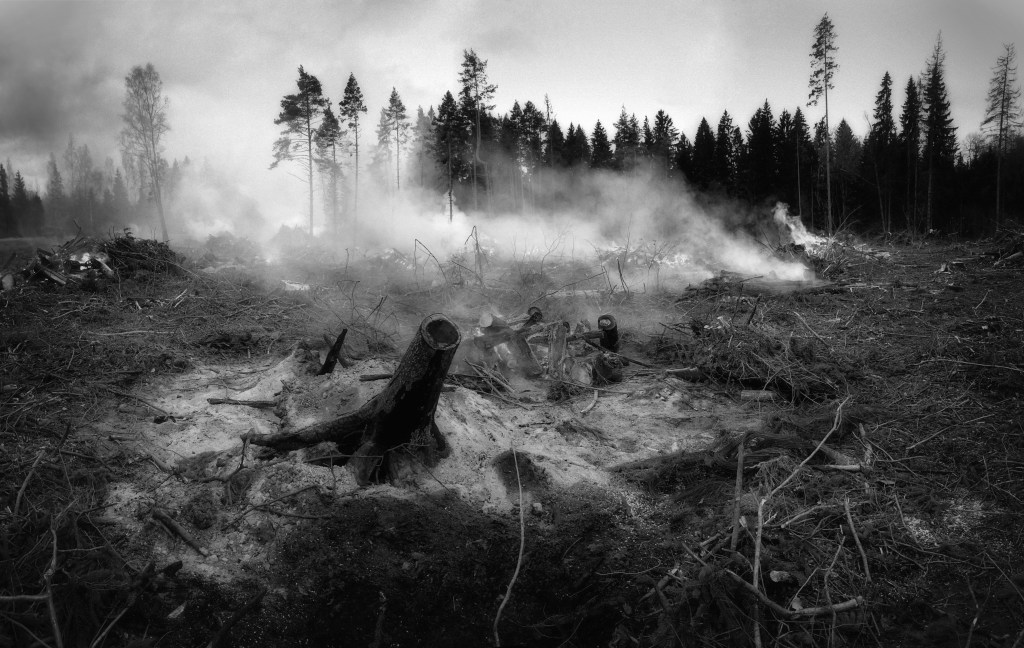
I smelled the fire before I saw it. But even with my lips chapped by drought, I paid the wind’s taint no mind. The evening chill required our hearths to warm our stews and our bones.
But the screams from the railroad were undeniable—the glow on the horizon much too late for sunset. The flames leapt from tree to tree with wicked speed, like demons racing from hell to claim us.
Peshtigo came alive with panicked shrieks. Adrenaline blotting out all else, I raced for Beth’s house. Though we had yet to speak our vows, if the reaper was to find us, I wanted to be at her side. We crashed together on main street, the flames already licking at the roofs around us—the tears on her face glowing in the inferno.
Smoke clogged our lungs and embers peppered our skin. Elizabeth’s skirt caught flame, and in desperation, I dragged her to the well. She sobbed as I lowered her down, praying she’d survive the fall. She dropped with a splash and a hiss, the icy, knee-high water quenching her smoldering dress. I clambered after her, and we clutched one another through the night. The cold nearly killing us in hateful irony.
But perhaps the greatest irony of all was that the headlines would only remember Chicago’s flames on that same October day.
I suppose because Chicago still had people to grieve her losses.
In the mass graves of Peshtigo, there weren’t enough left of us to mourn.
Unfortunately, this one didn’t place, but the feedback is below!
WHAT THE JUDGES LIKED ABOUT YOUR STORY
{2501} The description throughout this story is so vivid and creates powerful images of these devastating events, allowing for a strong emotional impact. You do a great job describing feelings of fear and the terrifying sensation of running through a burning town. Elizabeth’s skirt catching fire is a particularly effective moment of building tension before it’s revealed that the narrator saves her by getting her into the well. I also thought the comparison at the end of how Chicago’s fire is remembered more even with less deaths was a powerful ending to further showcase just how tragic this event was. Overall, some of my favorite lines throughout the story include “The flames leapt from tree to tree with wicked speed, like demons racing from hell to claim us” and “Smoke clogged our lungs and embers peppered our skin.”
{2373} There’s a truly haunting story here. The author brings the horrors of the Peshtigo fire and this narrator’s plight to life through active, sharp prose. The second paragraph alone is truly horrific and paints great images of the conflagration, namely the “screams from the railroad” and the flames leaping “like demons racing from hell to claim us.” I also like how in addition to the immediate and broader external stakes for the community, the author’s woven in the personal and emotional ones with the narrator’s desperate efforts to save Elizabeth. The description of her in the well yet again highlights the author’s powerful prose (along with the irony of the cold being an antagonist): “She dropped with a splash and a hiss, the icy-knee high water quenching her smoldering dress.” Lastly, the coda works well on several levels: It both highlights the narrator’s understandable anger, while also deftly reminding us about the more famous fire that’s consumed Chicago.
{2458} Wow—your story gripped me from beginning to end with its visceral sensory imagery, use of suspense, and final note of historical irony by contextualizing the tragedy in global awareness (or the lack thereof). I especially enjoyed how you transitioned to this larger historical context with the clever parallel use of irony; just as Beth and the narrator leap from the flames to the water, you leap seamlessly from Peshtigo to the media.
WHAT THE JUDGES FEEL NEEDS WORK
{2501} The story could be even stronger with more personal resolution for Elizabeth and the narrator’s experience. Typically, we think of wells as being relatively deep, so I wondered if they were able to get out on their own come morning or if they had to be rescued by the few other survivors. If they needed help getting out, I think there could be power in the emotions of not knowing if there was anyone left to come help them. I also wondered if they suffered any personal losses in the fire, like family members or close friends. If so much of the population perished, it would make sense if they did, and I think seeing some of that grief at that end could be effective. To make room for these details in the word count, consider removing the first few sentences to start the story with “The screams from the railroad…”
{2373} To heighten the emotional stakes, I think it might be good to get more of a sense of why the narrator loves Beth. Given that this is a time of significant duress, that will help us see what the narrator could potentially lose in this conflagration. I also think it might be good to slow down and try to describe the increasing cold a tad more, so that we can feel that dark tension; I get that the word count limits make that tough, but I do think an additional line could heighten the terror of the cold on the page. On a micro level, I’d suggest a number of trims throughout. For example, in the second paragraph, I think the author could omit “wicked speed;” that’s clear from the emphasis on the flames leaping and in that great comparison to “demons racing from hell to claim us.” In the third paragraph, I would omit “panicked;” the shrieks strongly imply the sense of panic, given the situation. In the fourth paragraph, we also don’t need to be told that the narrator drags Elizabeth to the well “in desperation;” again, we can infer that because of her skirt’s on fire. I also think the author could omit “hateful irony” when describing how the narrator and Elizabeth almost perished. We can see that irony for ourselves; the story’s far more powerful if the author doesn’t point it out, along with directly telling us how ironic it was that Chicago burned on the same day; just mentioning Chicago alone shows us that irony, especially juxtaposed against the aftermath of Peshtigo (but that coda, again, otherwise works quite well). But I wish the author well! This piece has so much potential!
{2458} The primary feedback for improvement I have about your story regards this sentence: “Though we had yet to speak our vows, if the reaper was to find us, I wanted to be at her side.” Because the vows are never mentioned again, they felt a little ambiguous and a narrative thread left somewhat uncontextualized, and thus I think you should clarify that (I think) Beth and the narrator are engaged, to prevent any excess confusion; for me personally I only realized this after multiple reads. To make room for this relationship clarification, I recommend you cut down on some of the setup description on the fire, such as the demons comparison, which isn’t absolutely necessary to conveying the utter terror of the fire.
Thanks for reading! You can find the rest of my NYC Midnight Challenge entries and feedback here.


You wrote a powerful, vivid, and intense story! Kudos. The judges gave good feedback too. Sorry to hear that it didn’t place, but I think it’s wonderful that you gave it a shot 🙂 PROUD OF YOU! 🙂
LikeLike