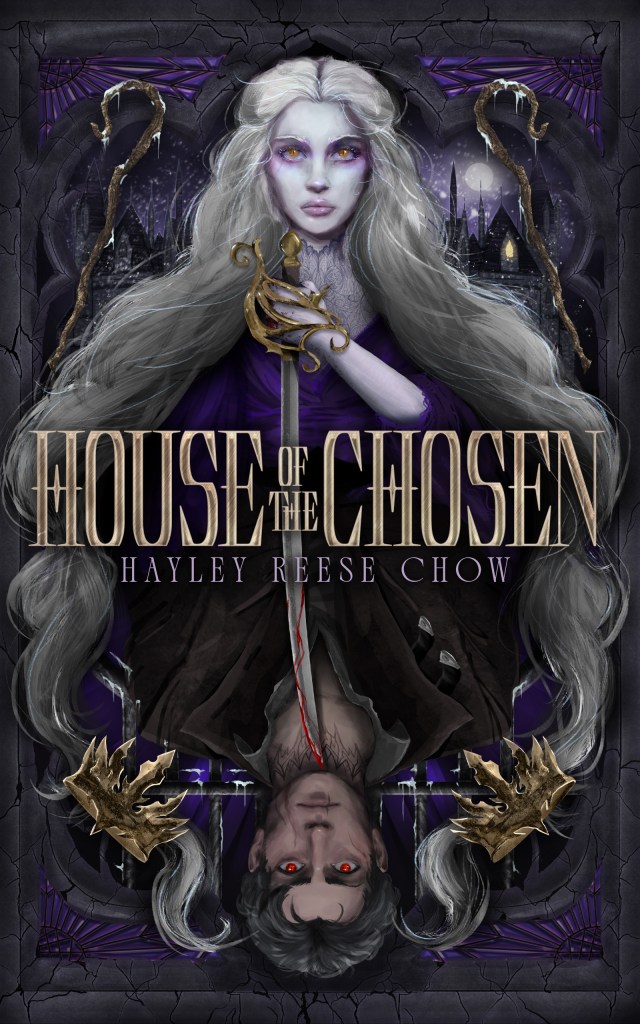
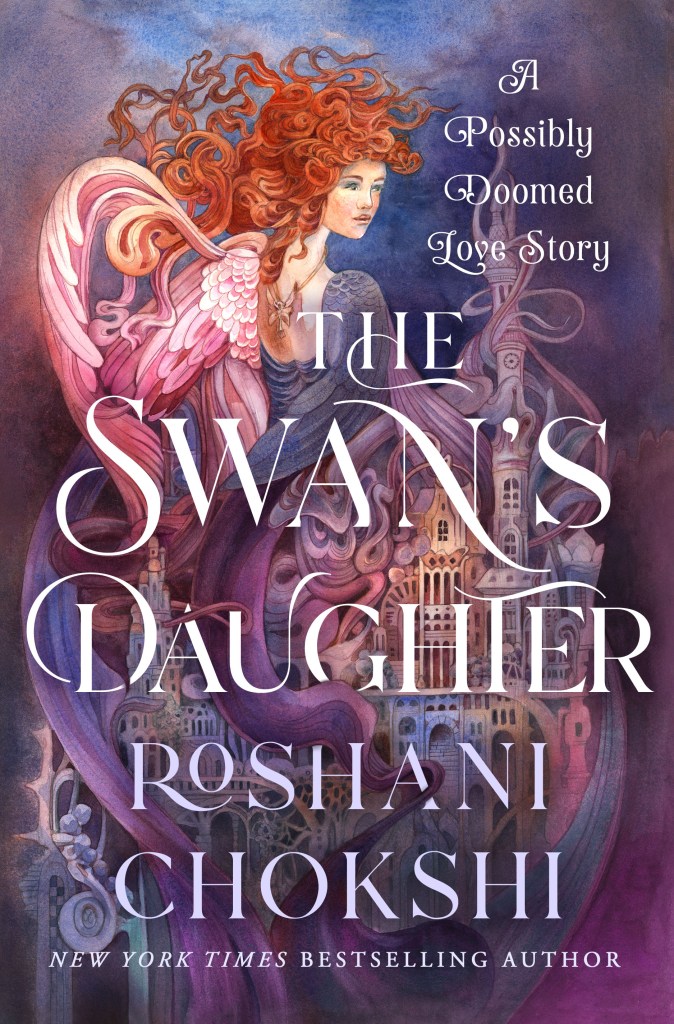
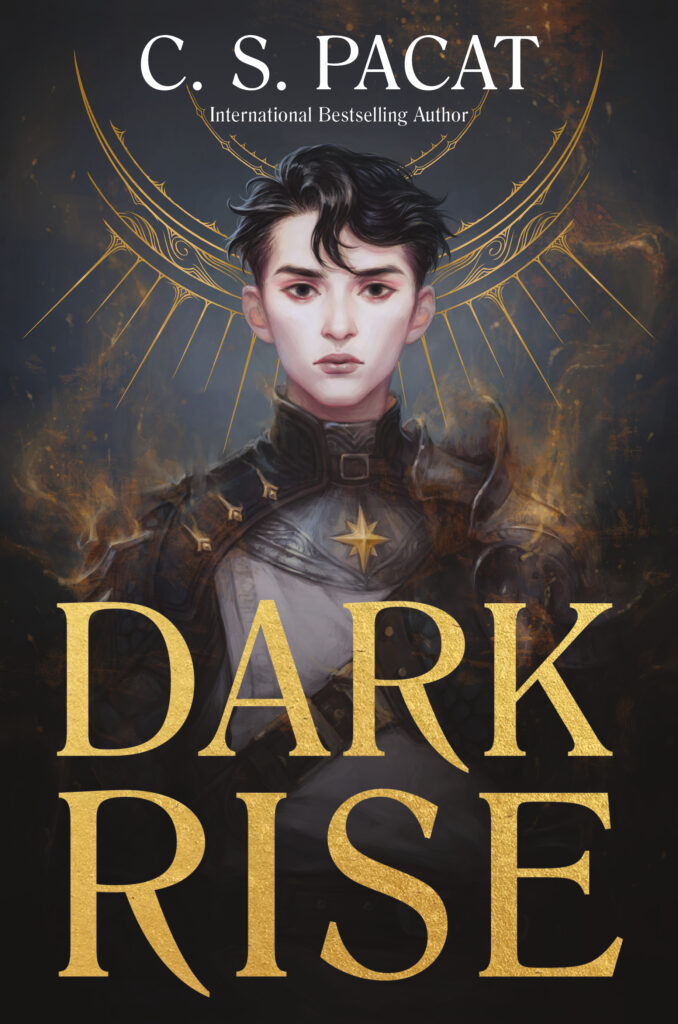
A few thoughts on this book: I wrote this book, more or less, in a fit of rage and desperation. I wanted to reflect a bleak world and the characters trapped within it. I wanted to explore themes of choice, deception, betrayal, and hope. So, I wrote a story about true enemies forced into a reluctant alliance. A story with a powerful magic that’s not what it seems. A story that doesn’t shy away from the horrors of cruelty, and a decadent setting where death lurks around every corner. Where a seemingly impossible romance builds in a torturous slowburn in time with the body count.
Which is to say, if you like: – Romantasy but in a house of horrors – Horror but with a slowburn romance – True enemies to reluctant allies to lovers – Dark magic at great cost – Found family but who will survive? – Feminine rage that comes with a crushing realization
This one is for you.
Paperbacks & hard covers with *lavender sprayed edges* (yes, they’re beautiful) available for pre-order from the Crow Shoppe. Audiobooks & ebooks available to pre-order from Amazon, & if pre-orders go well, we might get something extra cool, so spread the word!
CW: R-Level Language, Gore, On-Page Death & Injury, Torture, the Undead, Ghosts, Non-explicit steam. (If you’d like more detailed information on any of this content, please feel free to reach out to me directly.)
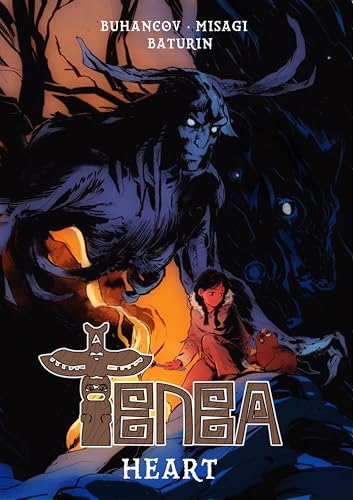
I read Tenea: Heart and parts 1-3 and enjoyed this fun adventure full of magic, action, and monsters. The art is excellent and in some ways, it reminded me of Avatar: The Last Airbender but with a more Native-North-American-inspired world. Though the stakes are high in each adventure, the young, confident Tenea gives the scenes a humorous bent that’s perfect for a Young Adult adventure. Though Heart + 1-3 gives some closure on the tribe’s current dilemma, there’s obviously a lot of world for the characters to explore with more troubles and actions ahead. Thanks to the author for the review copy!
Choosing which path to take can be a hard decision! (Photo by Oliver Roos on Unsplash)
So as a writing mentor, I find this question a lot, and honestly it’s highly dependent on your own personal goals and preferences. But since, I’ve done all three of these things, I thought I’d break down my thoughts on it in case it’s helpful to anyone.
My goal has always been for my books to reach as many readers who will enjoy them as possible. So I started out querying agents, because I knew that I wouldn’t be able to match the marketing and distribution of a big-five publisher by myself.
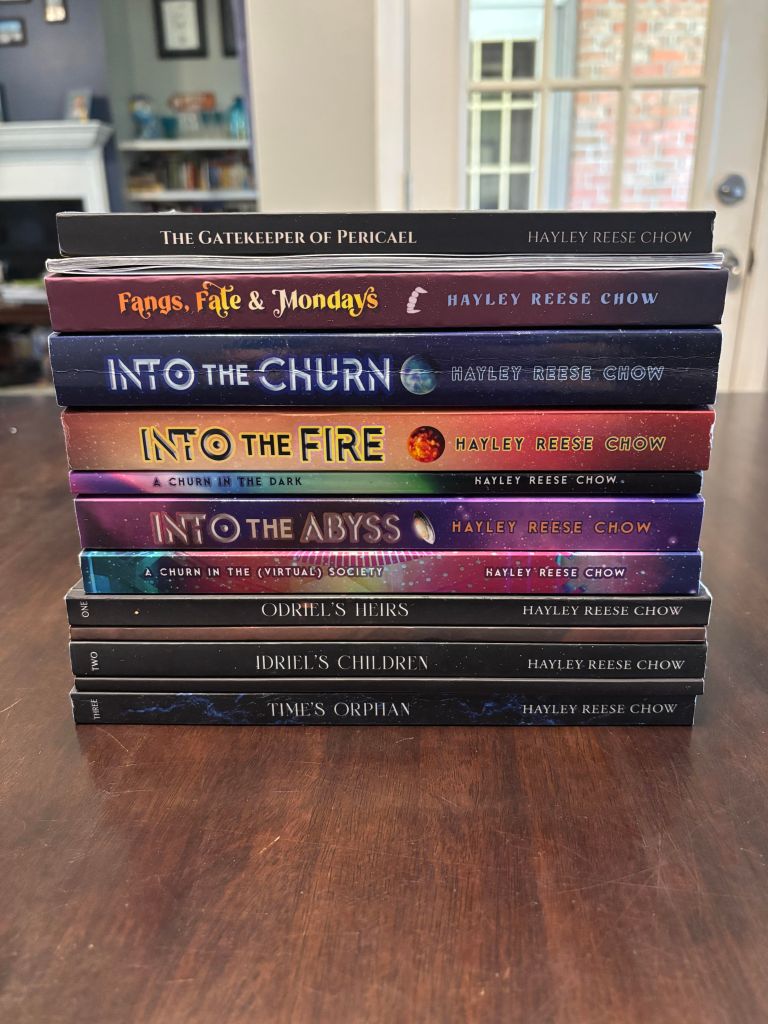
But after querying for a couple years with no dice, I decided to self-publish my first series (a YA epic fantasy, Odriel’s Heirs), and had a great experience with it! There’s a serious learning curve, but there are a *ton* of resources online, and overall, it was very doable. This was an article I wrote on how I did it back in 2020.
Self-Publishing Pros:
· You have all the control. You choose the editor, (or you can try editing yourself), and if they propose changes you don’t want to make, you don’t have to! You choose the cover artist (or you can do it yourself.) Want a jacketed special edition or an audiobook? You can make those happen too.
· You’re going at your own pace, whatever that is, and you don’t have to wait on querying, submission, or a publisher’s timeline. Many self-published authors take advantage of this to move super quickly and publish multiple books a year.
· All the profits go to you!
Self-Publishing Cons
· Self-publishing can be very time-consuming. Because not only are you responsible for writing, you’re also solely responsible for marketing, distribution, design choices, formatting, etc.
· While the stigma against self-publishing is gradually fading, getting your books onto shelves of brick & mortar stores (especially outside your local area) can be challenging.
· All the upfront costs are on you, and like any business, you’ll have to make good choices if you want to earn out. That said, you could self-publish on a dime, but in general, you will probably have to make some upfront investments on a cover & an editor (especially if you’re just starting out).
· Personally, I feel like it can be harder to market confidently when you’re standing on your own. Also, your connections & opportunities are limited to those you forge on your own.
Though I had a great experience self-publishing Odriel’s Heirs, I still wanted to expand my audience. So I continued to query. I self-published my middle-grade portal fantasy, The Gatekeeper of Pericael. But then when my YA starmance, Into the Churn, also stumbled in the query trenches, I decided to give small traditional presses a try. All my experience as a self-published author continued to help me, but I also had the support of other publishing professionals. Instead of a solo sport, it now felt like I was part of a team.
Of course, all small presses are created differently. So if you’re considering one, I’d advise you to remember the following:
1. A traditional press will not charge you ANYTHING to publish your book. NOTHING. If they’re talking about fees, that is (most likely) a vanity press.
2. At a minimum, I would expect the publisher to provide: editing, a quality cover, some marketing, and distribution. If you look at the books in their catalogue, and their books have poor (or nonexistent ratings), poor covers, or exorbitant prices, I’d consider those red flags. Also, if their physical books are only available on Amazon, that would be another red flag for me.
3. They should have a submission process. If they accept all manuscripts, they are a vanity press.
4. So when vetting a publisher, make sure to check out both their social media and their website to make sure it’s presenting the image you would expect. And then if they make you an offer, I’d ask if they could connect you with some of their authors to make sure they have good experiences.
Now, if you’ve found a solid small press, these are the benefits:
Small Press Pros:
– No cost! They take care of the editing & cover (Which will also save you time if you were thinking of doing it yourself)
– You don’t need an agent to submit! This could potentially save you a lot of time, but many small presses have small submission windows, so make sure you follow their social media to know when and how to submit.
– Small presses generally move quicker than bigger presses (who have more books on their schedule.) In my experience, if you sign with a small press, they usually get your book published in the following calendar year.
– Now you have a team of professionals behind you with publishing experience! This is a great opportunity to learn a lot, and it’s also great for confidence (in my opinion.)
Small Press Cons:
– You now have less control. You will now have an editor and a cover artist selected by the publishing press, and you may not have final say in those elements
– You will now share profits with the publisher (but you don’t have to share it with an agent!)
– You are also now the small press’s schedule, whatever that is, which introduces the risk that it may go faster or slower than you like.
– You will also have to spend time on your submission package (query & synopsis & potentially other materials) to get selected.
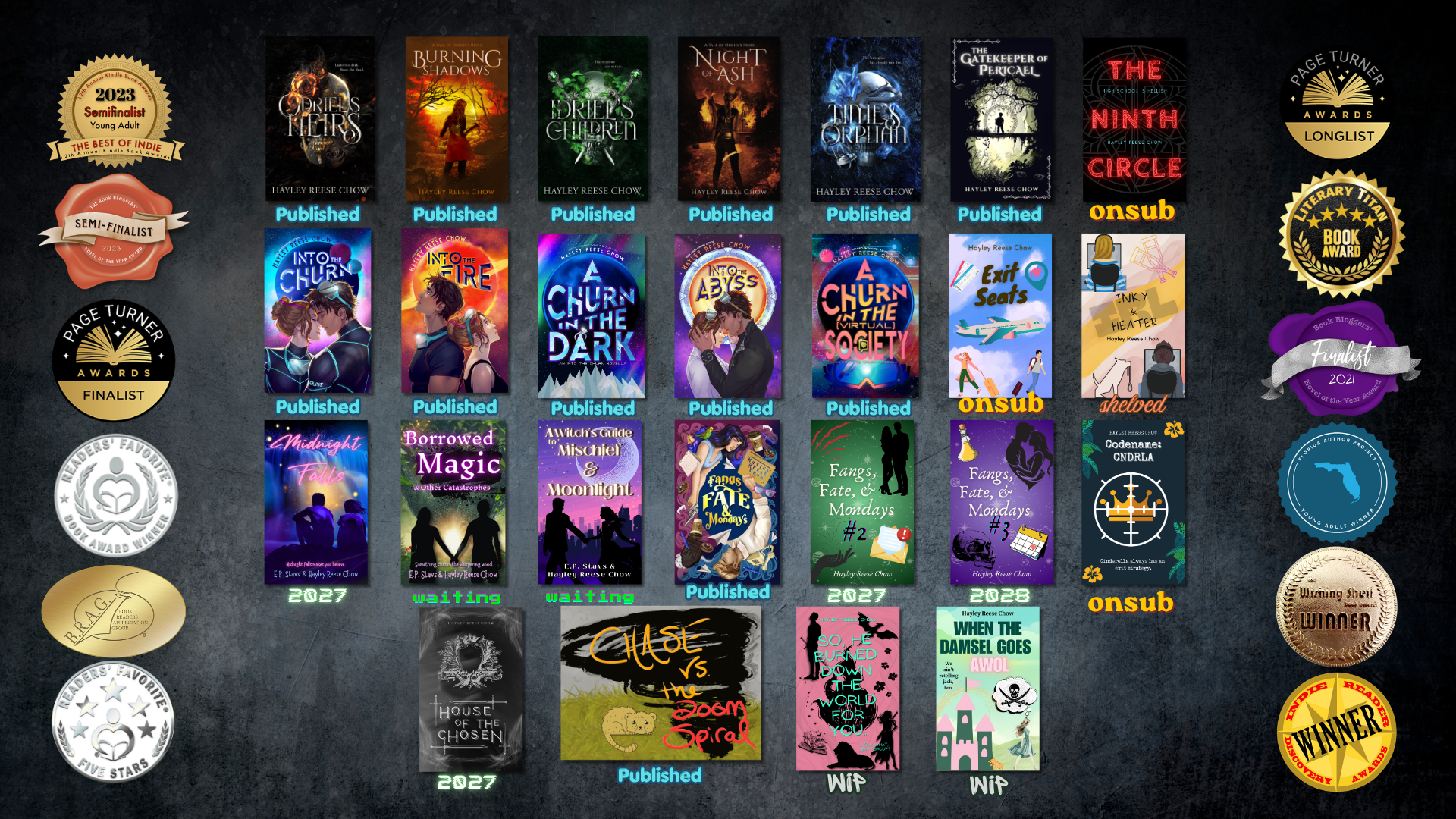
I contracted directly with Whimsical Publishing, and to date, have published 6 books with them (my 5-book starmance series, Into the Churn, & my paranormal mystery, Fangs, Fate, & Mondays) with another 3 projected in the next 3 years. I’ve had an awesome experience with them, and they definitely helped expand my readership.
However, as a multi-genre author, not all my books fit their brand, and I was still striving for the goal of a big-five deal, so I continued to query my manuscripts to agents. After about four-ish years of querying, my fifth manuscript got picked up by an agent, Kristen Terrette of Martin-Newens Literary, and I’ve had a great experience with it. (I probably sound like a broken record, but I am being serious. I have been *super* lucky in my small little author career so far.)
Since signing with my agent, she’s sold three of my books, which are set to release in 2027-2028. Though I haven’t scored a big-five deal yet, one of the publishers, Charlesbridge Publishing, is distributed by Penguin Random House.
Please remember that there are scammers posing as agents out there so please be careful. They should have a professional website & social media. You should be able to look up their track record on Publisher’s Marketplace. They should charge you *nothing.* (Their payment comes from a portion of your sales, usually 15%.) And, before you accept an author, they should be able to give you the contact info for some of their authors that you can ask about their experience.
Working with an Agent Pros:
– They are able to submit to bigger publishers that you cannot submit to by yourself. Which also saves you the time of having to submit on your own. And if you get a big five deal, you can expect a bigger advance, and there’s the potential for your books to be on brick and mortar bookshelves across the country
– Expert advice & guidance on the publishing industry
– They will review your contracts for you & advocate on your behalf to make sure you’re getting the best deal you can
– If you have an editorial agent, often they will help you revise & clean up your manuscript and submission package to really make sure it shines
– You also have the benefit of their added connections & opportunities
Working with an Agent Cons:
– The submission process is a long haul. Big publishers can take up to a year to respond, and when they offer you a book deal, the publishing date could be a couple years out.
– A percentage of your profits goes to your agent.
One last note is that there’s a common misconception that signing with a big press means that authors don’t have to market themselves. That is patently incorrect. The benefit of a small or big press is that they will use their resources to help you, but as the author you are always expected to market your own work. (It’s one of the reasons that your social media numbers are part of the submission package.)
Anyways, hopefully this article is helpful as you choose your path. With my goal of maximum distribution of my books, I’ve always had the dream of publishing with the big-5, which is why I’ve chosen the agented path. However, I know of other authors who are amazing at marketing themselves & extremely business savvy, who have chosen the self-publishing route to maintain control of their work and 100% of their profits.
Which is all to say, there really is no wrong answer as to which path to take. It’s a personal decision for each author to make depending on their goals and preferences.
No matter what you choose, I wish you all the luck & joy on your publishing journey!
All the paths can be satisfying, but luck is involved in each, so wishing you all the four leaf clovers!
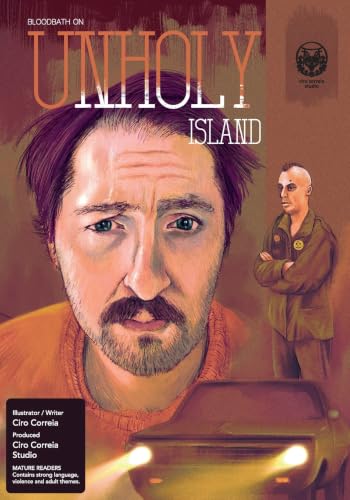
Bloodbath on Unholy Island is a unique contemporary horror graphic novel with tight tension and intense artwork that matches the dark tone. The main character is easy to empathize with as he stumbles into a deadly situation with a thread of mystery that pulls him in farther. The first issue ends on a pivotal decision, promising more horrors to come along with the introduction of a new character which I think will add an interesting dimension as the story progresses. I’m definitely interested to see where the tale goes from here, and recommend for those interested in a contemporary graphic novel with strong thriller & horror elements. Thanks so much to the author for the review copy!
– Freedom! You get to stretch different skills, experiment with different writing styles, plots, settings… literally the possibilities are endless. Also those skills you hone in one genre, you can then bring to another genre, giving you more breadth and experience as a writer.
– You reach a broader swath of readers! For example, I’ve encountered readers who “read everything but sci-fi” so it’s really helpful that I can also offer fantasy, paranormal mystery, and even a children’s picture book.
– You can flex with the market. This one is a little trickier, because while I would never recommend writing for the market alone (it’s too fickle and the risk is too high that would be a lot of unsatisfying work for no payoff), I also think ignoring it completely is also unwise. For example, lately, I’ve been hearing from a lot of industry professionals that YA (which I write the most) is struggling, so I’ve largely shifted my focus to an older market.
Cons of Being a Multi-Genre Author
– Your “brand” that you market becomes nuanced rather than straight forward. For example, I usually market that my stories lean heavily into sweet, green-flag, heartfelt relationships, fast-paced writing, and found family – whether that be in contemporary romance, fantasy, sci-fi, or paranormal.
– When you shift genres, you can’t necessarily rely on your established readership to embrace a new genre. They might, but there are many readers out there who like to stick to their established favorite genres. So, when you shift, you have to hustle a little harder in your marketing ot reach your target readership. For example, I just published a cozy paranormal workplace mystery and it may not be the right cup of tea for the readers who loved the epic stakes & intense action of my sci-fi series.
– You have to be very explicit about content. Since I write picture books, middle grade, young adult, and new adult, I try to publish content guides so people know exactly what they’re getting into. For example, if someone were to love my (unpublished) kisses-only sweet YA contemporary romcom, they need to know that my upcoming fantasy horror has violence, swearing, and a closed door scene. Because the last thing I want is for a reader top pick up a book and get content that they were expecting (in the worst way.)
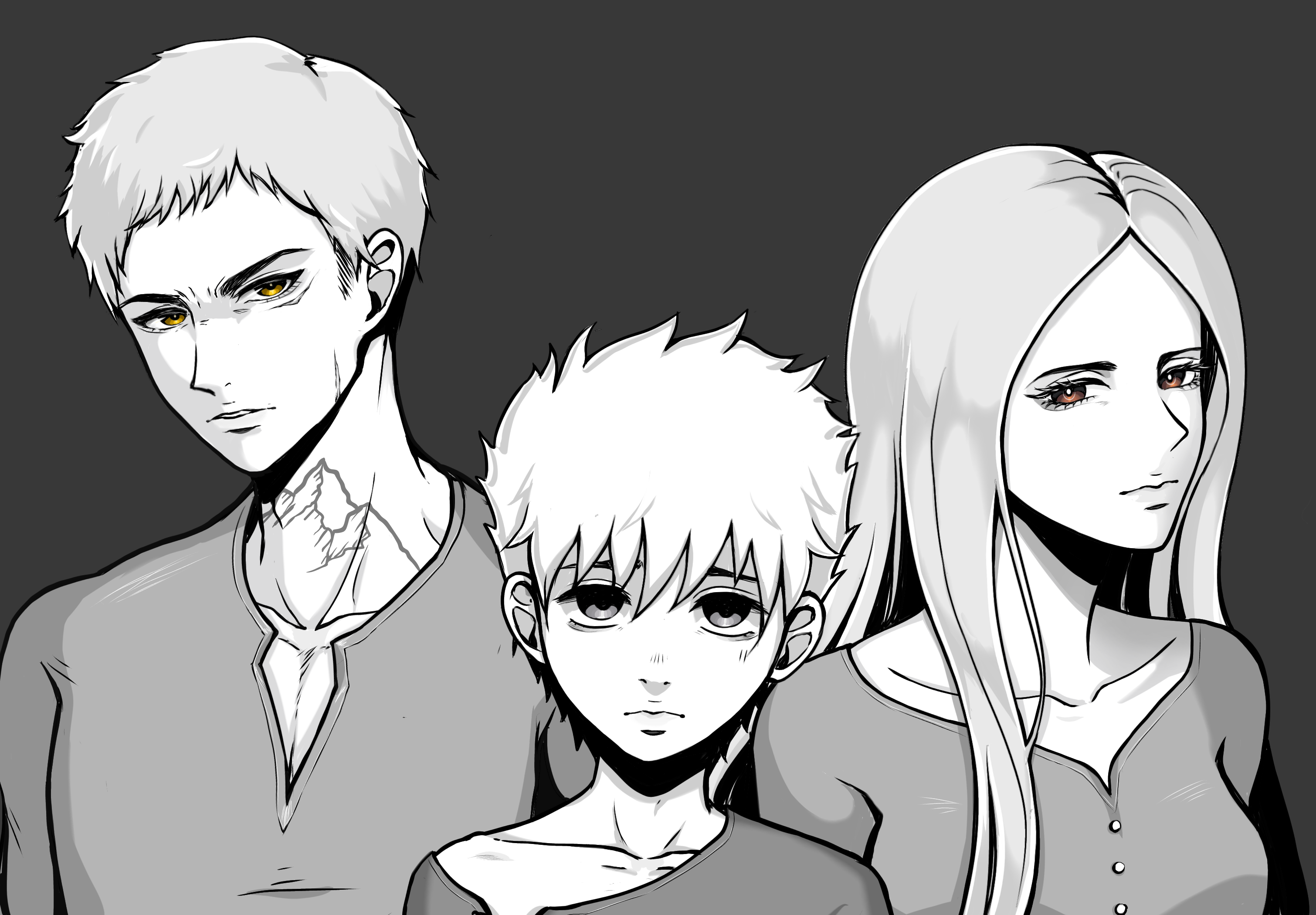
Characters from House of the Chosen, dark fantasy coming from Quill & Crown in Spring 2027. (Art by Chewy Gummo)
Since Chesney Infalt and I have been hosting our Plot-to-Publishing crash course in the local area, I’ve gotten this question multiple times: How do I develop characters? And this is kind of an interesting question, because I feel like every author I’ve talked to has a different way of going about this.
For example, I know for Chesney and several others, she comes up with the characters before she comes up with the plot. Though in the last five years or so, I focused from more of a plot-centered to focus to a character-centered focus, for me, the plot still comes first every time.
First it comes to me as a concept or a question, like: What if Cinderella was actually secretly assigned to protect the prince from a hit at midnight? (Codename: CNDRLA) Then after letting it percolate in my daydreams for an indeterminate amount of time, I’m then ready to write my Save-the-Cat plot beats, and it’s usually at this point that I start really thinking about the main characters in a hazy big-picture sort of way.
This is where I come up wtih a name, a description, and the problem they’re facing. Honestly, it’s usually like two lines, but the name means a *lot* to me. I feel like the name can create such a powerful conception for a character, so I do put a lot of thought into it. I’m less concerned with the meaning of the name, and more of the vibe & picture it conjures in my mind. Once I get that mental image right, it encapsulates so much of their pesonality (for me) in a way that’s hard to put into words. Sometimes, I’ll even sketch them out or make a little moodboard for them to make it more concrete.
From there, I write an outline with a little blurb for each chapter. Then I write what I sometimes call a “zero draft” which is very skeletal, unreadable version of the first draft which is usually like 10-20k short of the final wordcount. And *that* is when I actually meet the characters. For me, writing that zero draft is the real introduction to the characters. It’s where I start to hear their voices, the depth of their background, and their quirks.
So even though, I consider myself a plotter, when it comes to characters, that is where I think I could be described as more of a discovery writer. Often in that first draft, the characters are even a little inconsistent as I poke and prod them to see where they really fit and who they really are.
But by the time I finish that zero draft, I know them. It’s then that I can more formally write out their details, what they want, and what they need. And often, it’s only then that I’ll commission character art, now that they seem real in my mind.
So, that’s me. I start with a plot and a couple character lines and discover the characters along the way. And to be honest, that’s how I think of the reading experience as well. Going into a book, I may have an idea of the plot, but it’s the characters I’m really getting to know and learning to love or hate on the journey.
I know that’s probably an unsatisfying answer to those who want to plot out everything before they jump into a draft, but no matter how much you plan, sometimes the stories and the characters take unexpected turns. But that’s half the fun of it, so don’t be afraid to take the leap and enjoy the ride!
The Into the Churn crew wishes you luck! (Art by @valkyriefreia)
This one was totally a surprise, and kind of reminded me of T. Kingfisher’s writing style. It’s a unique, quirky fantasy with a fairytale vibe and a plot that reminded me of “The Selection.” However, though there is a very sweet, slowburn romance, it’s very understated, so I don’t know if I would label this as a Romantasy so much as a Fantasy Romance. (I know that sounds like splitting hairs, but my distinction is that I recommend Romantasy for people who prefer romance over fantasy, and I recommend Fantasy romance to people who prefer fantasy over romance.) I thought the end was a little abrupt, but overall, I enjoyed the read! 5 stars
At first this gave me some solid, old-school YA Fantasy vibes (think The Dark is Rising), with some epic scenes and some cool twists. But strangely, the ending really just didn’t entice me to continue to book two. I think in the end, the main character hadn’t won me over as much as I was looking for. Still enjoyed the read, and I think if you’re looking for a YA Fantasy with a classic, epic feel and a few surprises, you’d enjoy this one.
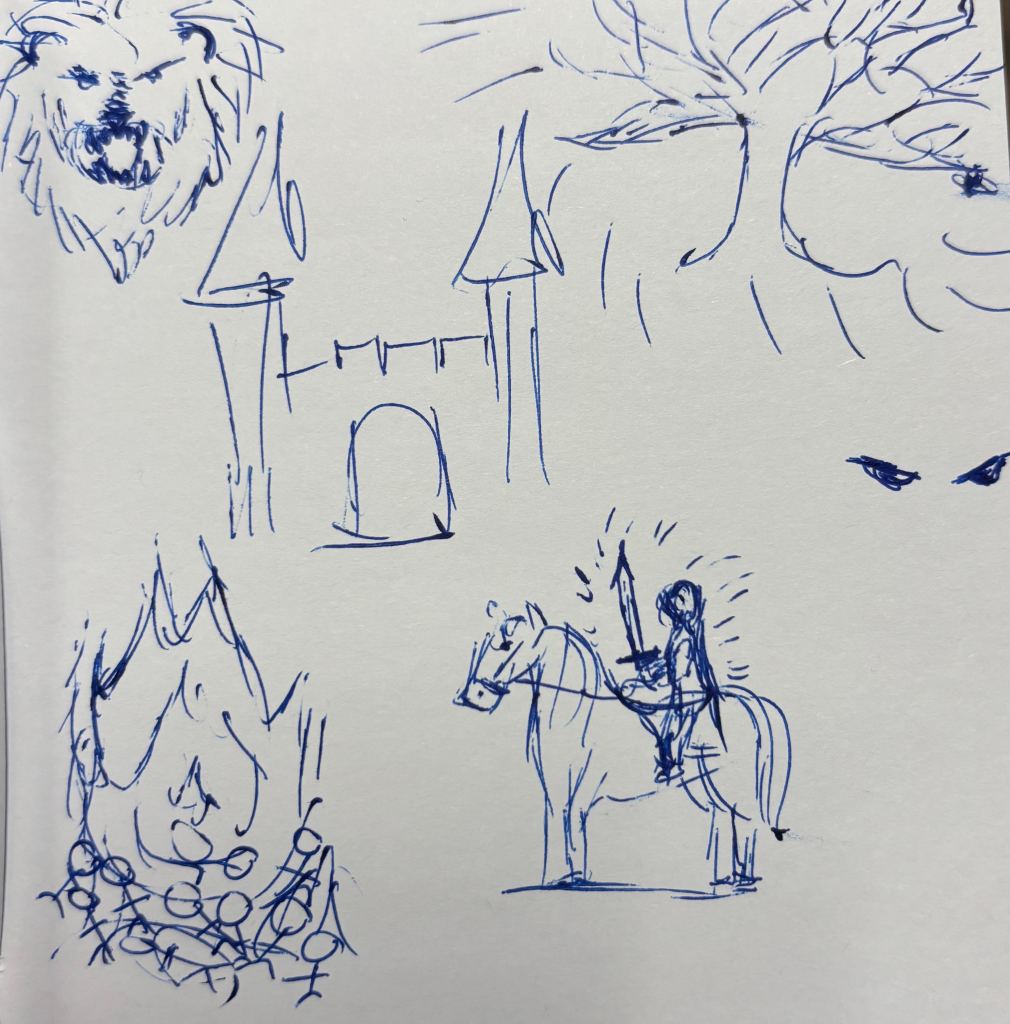
Some classic fantasy doodles for a classic fantasy adventure.
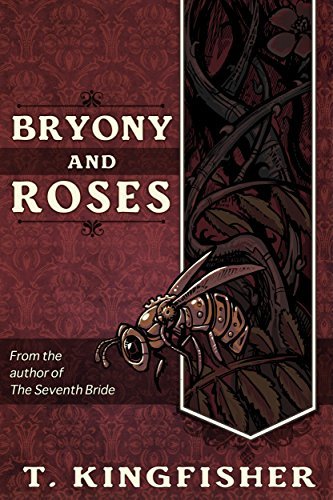
I’ve picked up most of T. Kingfisher’s books by now at some point, and I think this one will be a hit for most Kingfisher fans. It’s fairly short Beauty and the Beast retelling with T. Kingfisher’s usual flair of bugs and plants shining through. No big surprises, but an enjoyable, fast read for fans of fairytale retellings.
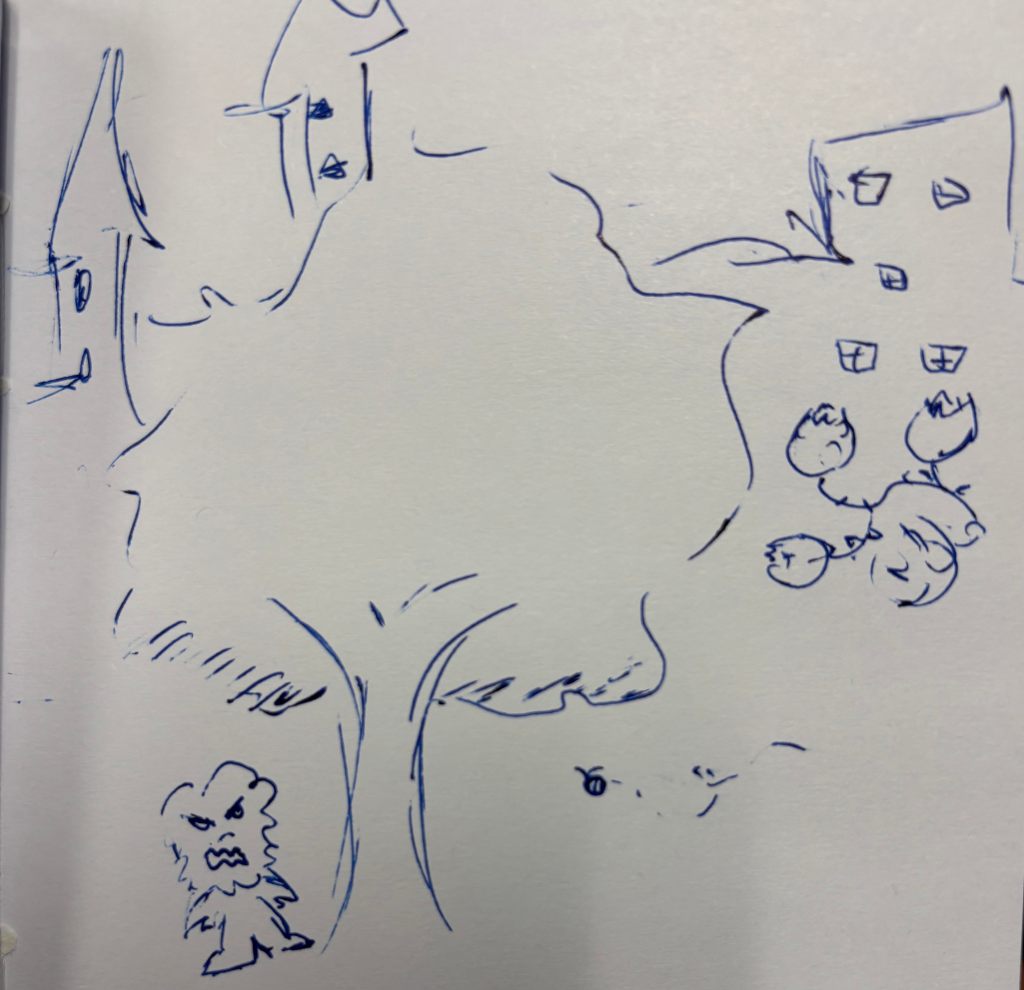
Big house. Beast with scary face. Bugs. Tree. Roses. Curse. Magic. Lost girl. Checks all around!
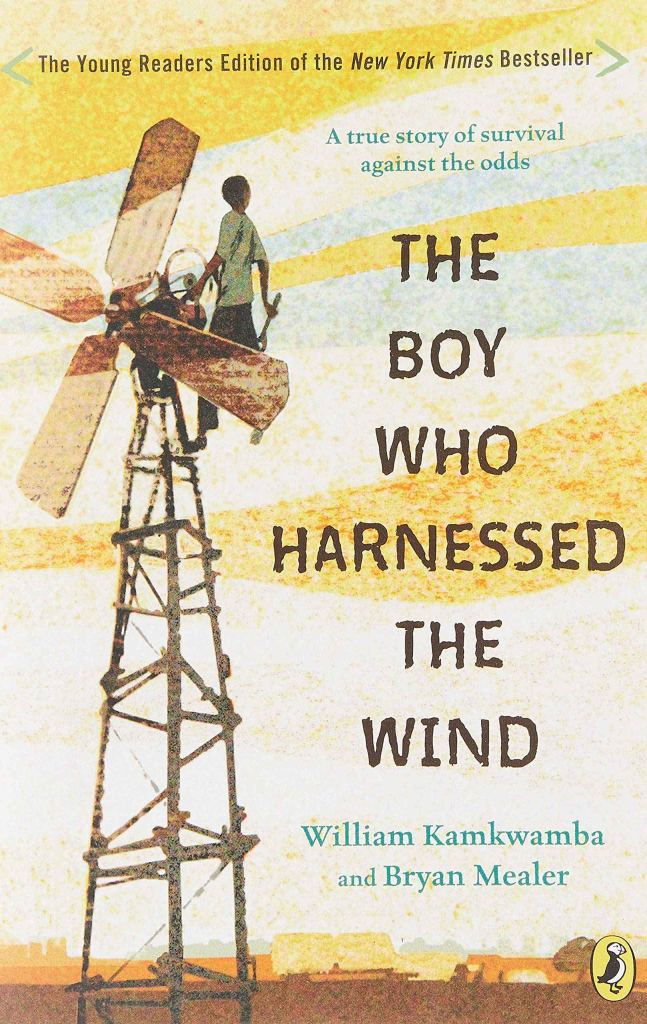
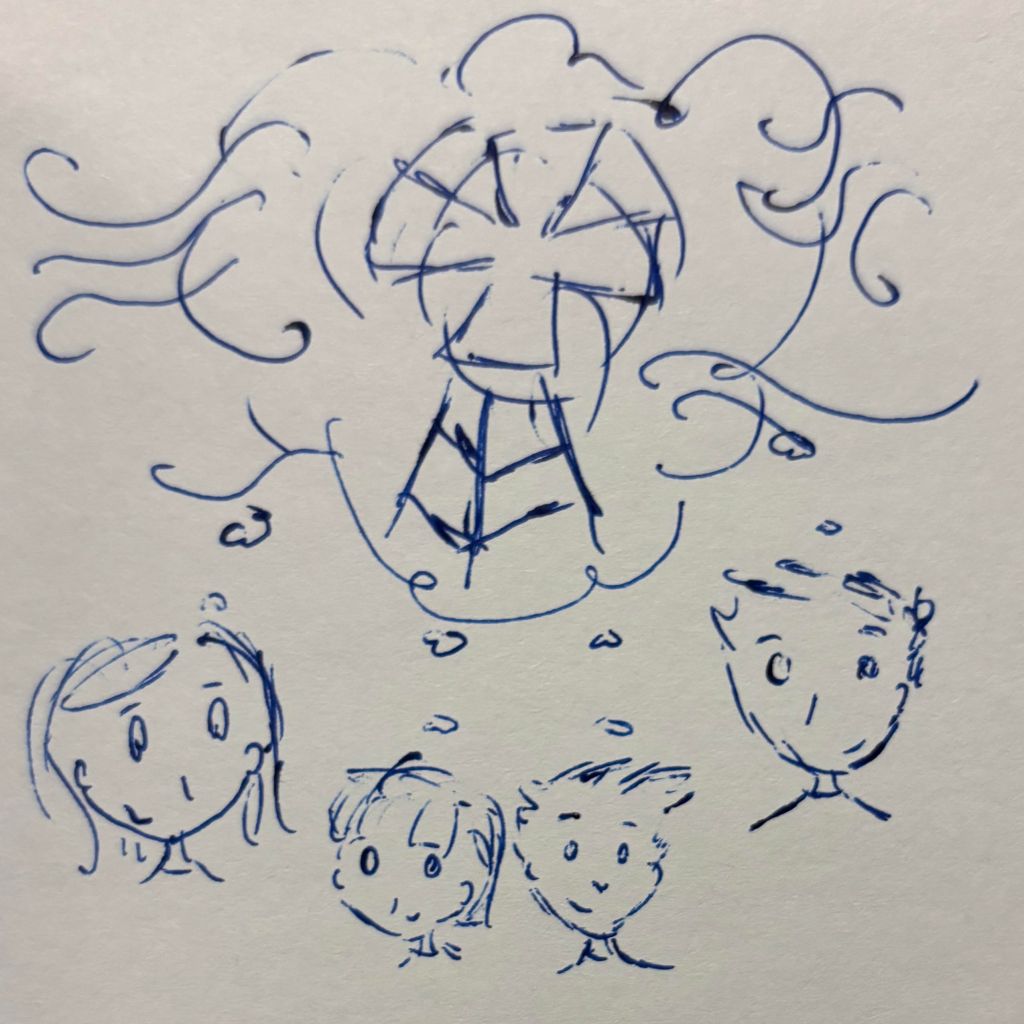
One of our friends recommended this to my kids and I for our family book club, and we loved it! My 10yo and 8yo were super invested, and it’s such an awesome true story of ingenuity and grit. Some heart-rending moments, but ends with triumph. Five stars from all of us. (We read the young reader’s edition aloud, and it also has come cool pictures of William’s village.) My friend did not recommend the movie because she said it veered too far from the book, so we skipped it.
⭐⭐⭐⭐⭐
Family book club’s kind of the best. Highly recommend.