What the Children Couldn’t Save
August 2023 (Final Round)
Genre: Open
Action: Seeing a reflection
Word: Best
Time Constraint: 24 hours
Length: 100 words
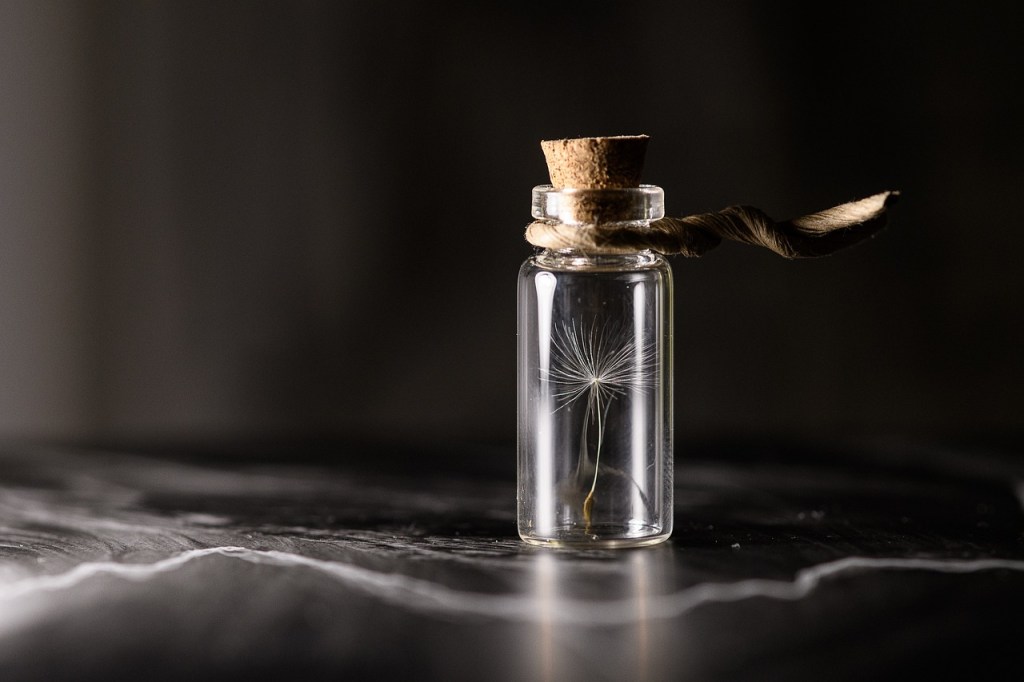
Mama tugs Ellie toward the ship that will take them sailing through the stars, saving them from acrid air and sun-cracked soil.
But Ellie stops to pluck a flat stone from the path, then the fluffy weed beside it, sending a beetle scurrying. She skips away, admiring her colorful respirator in an iridescent puddle before splashing through it.
A century later, aboard Ark C-24, Ellie clutches her treasures, telling children of wishing flowers springing from walkways, stones dancing across glassy lakes, ladybirds bestowing luck, and water falling in gems to pool in rainbows underfoot.
Then together, they dream of home.
This one didn’t place, but the feedback is below!
WHAT THE JUDGES LIKED ABOUT YOUR STORY
{1943} This was a beautiful story, full of gorgeous images. Your worldbuilding was very strong. The contrast between the description of the remnants of nature – the fluffy weed and the beetle – and the pollution – the iridescent puddle – was ingenious. I loved the fact that the respirator appeared to be colorful and thrilling to a small child due to pollution. The idea of Ellie remembering “glassy lakes, ladybirds bestowing luck, and water falling in gems to pool in rainbows underfoot” a century later was very poignant. This was a moving, thought-provoking story. Well done.
{2063} A short story spanning 2 centuries. Presumably the worst case scenario of global warming has destroyed the earth. Your visual description of the innocent little girl who skips and picks up stones, paints a picture we know well, but the the stark contrast of the respirator in the puddle brings the reality of the situation home. The second act shows Ellie, now a mother, telling stories of her past on earth, and they all imagine a life that used to be. A tragic story, but with a glimmer of hope in the resolution, even if it is through dreaming.
{2125} This story of Ellie and the rest of humanity escaping environmental catastrophe is compact and strong. The details are quite realistic and the image of a child wearing a respirator to breathe on Earth is shocking but also well done. I love the details of the items she brings on the ship. The flash forward in time works well.
{1788} Though there were only a few descriptions, the author fashioned an excellent dystopian environment. Ellie finding beauty in such a sobering setting was incredibly touching, and the fact that she held onto the objects for a century impressed the reader immensely. The children’s response to Ellie’s prized items was lovely to witness. While no one could save the Earth, it was encouraging how they embraced the remnants and held onto the history.
{1963} Generation ship stories crop up a surprising amount, but it’s heartening to see one that can find some hope in the concept of generations, rather than all being about the admonishment of humanity. It’s also nice to see how something that seems so insignificant as a stone can gain significance over the years, which feels true to life. Refreshing work!
WHAT THE JUDGES FEEL NEEDS WORK
{1943} I loved the images of the fluffy weed, the beetle, ladybirds etc. I wonder if the next step might be to see where you could make some more adventurous word choices to evoke an even more vivid picture. I would consider where you might surprise us with some word choices that evoke a sensory image, maybe creating an even stronger sense of a texture, color or scent.
{2063} Does the journey through space keep the human’s young? As Ellie is still alive a century later. Consider how you can create more conflict in act two to produce some rising tension. Even though the conflict might be that they have to evacuate the earth, there doesn’t seem to be any barrier here. Try not to make it too easy for the protagonist. Perhaps they almost don’t reach space? Or the spaceship almost breaks up on leaving the atmosphere. Something that makes the reader believe that Ellie won’t make it.
{2125} I might like to know how old Ellis is during the opening scene. Is she four? Eight? Twelve? That information might make us interpret the story differently. If she is under five, does she have memories of her home planet? Or are the objects all she has left? Is she sharing real memories with the children or are these memories that have been imposed on her by others? This is a strong and sharp story, but I might like a stronger sense of who Ellie was then so we can understand who she is now.
{1788} One of the plot elements would be more believable with further attention. Ellie living for over a century was interesting, but she did grow up in an unhealthy location, so the reason for her long life should be more clear to the audience. Why not tell the reader one phrase about the ship? For instance, maybe it’s a ship that protects its inhabitants from disease/germs. That would explain her amazing health and the author could say this briefly. The plot element can definitely work, but an explanation would make it easier to accept. “What the Children Couldn’t Save” is a beautifully written and resonant sci-fi piece. Once the author touches on one aspect of the plot more, it will be a laudable microfiction work.
{1963} The opening word “Mama” wrong-foots the reader by hinting at a first person story which remains instead in 3rd person throughout. I assume this is more about saving words than a stylistic preference, but I’d try to fix this if at all possible, as the first words are the most important for orienting the reader.
You can find the rest of my NYC Midnight Challenge entries and feedback here.
 Hayley Reese Chow
Wonderful work. You did an excellent job. It’s a beautiful story, Hayley.
You’re a good writer, friend 🙂 Take care.
LikeLike
Thanks so much, Alex! You take care as well!
LikeLike
Anytime! Happy New Year, friend!
LikeLike