
So right after I self-published my first book, I published my lessons learned here, but now that my eighth book (Into the Fire) is coming from Whimsical Publishing in April, I thought I’d reflect again on what advice I’d go back and give to myself if I could on a couple topics.
Self-Publishing Vs. Querying
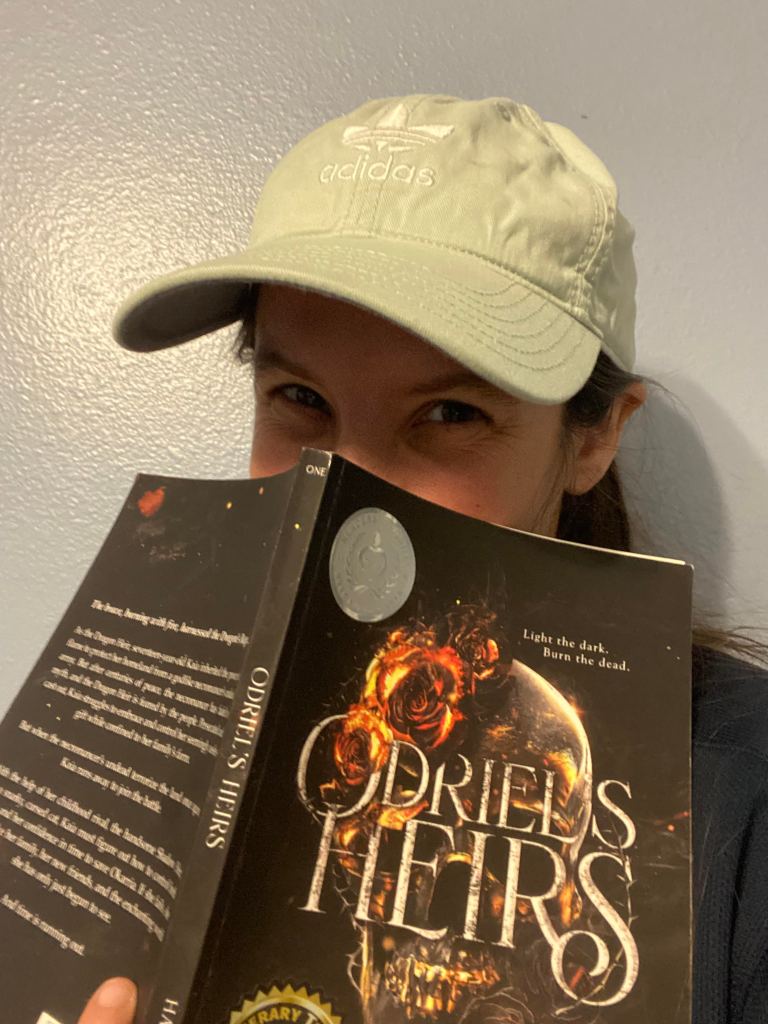
Ah, yes the question I still get asked the most. I queried agents with Odriel’s Heirs for over a year, and while I was disappointed I wasn’t able to sign with an agent then, I’m still glad I self-published. Through self-publishing, I found the writing community, learned so much about the craft, and found writing friends who helped me grow. Also, I’m not sure I would’ve continued writing without the invaluable feedback and encouragement from readers. Lastly, I was able to get closure for this story and move on to the next one to keep growing as a writer.
A part of me does wish I had investigated small presses more, who perhaps could’ve guided me in terms of marketing, but at the time, I don’t think I even knew enough how to tell a good press from a poor one.
Overall, this choice worked out for the best. These days, I’m working with an amazing Small Press (Whimsical Publishing) and now have an agent (the incredible Kristen Terrette) but I don’t think I would’ve ever gotten this far without my experiences in self-publishing first. Of course, every publishing journey is different, so I hope you follow the one that feels right for your goals!
Editor, Proofreading, & Formatter
Editing and proofreading are expenses I agonized over as a new writer (my imposter-syndrome was through the roof), but if could go back, I would tell myself to invest in my book like any publisher would. (Within your budget, of course.)
The developmental editor I hired was invaluable, and due to their amazing feedback, I made extensive revisions. After that, I wished I’d invested in a copy-editor and a proofreader. While I love how Odriel’s Heirs turned out, I was weeding out typos for some time after release, and for my first book, I would’ve preferred to put my best foot forward from the outset.
I’d still skip hiring the formatter though. In formatting it myself, I like having the flexibility of going back and fixing typos in a matter of minutes. If I was deadset on complicated formatting though, I think I’d invest in formatting software instead of hiring out.
Cover Art
Oof. This is the one where I needed most guidance on. A good cover can make or break a book, and once again as I was unwilling to invest as I should have. Also, at the time, I didn’t think I would publish more than one book, but if I knew I was going to write the series, I should’ve bought all five covers together so I could have a matching set. (And get a discount!) I should’ve done WAY more research into current cover trends in my genre as well investigated a variety of cover artists. (I still find cover artist research difficult, but I recommend checking out cover contests, and looking into the artists of the winners.)
But maybe I’ll still get a chance to put this lesson learned to the test when I make an Odriel’s Heirs omnibus one day. (I just have to find the perfect cover artist first!)
Going Wide vs. Amazon Exclusive
There are some who’ve been wildly successful in KDP, but I’m not one of them. I did find the Amazon-exclusive benefit of doing regular free ebook promotions critical to increasing my exposure. However if I’d gotten a competitive cover from the start and gone wide, it would’ve allowed me to start doing BookBub promo deals sooner, which has almost doubled my downloads in the last year. (After I discovered that you can ask Amazon to price-match to free.) If you don’t think you’d be able to get the BookBub promo deals though (either due to a lack of a competetive cover or reviews), I’d definitely stay Amazon-exclusive.
Audiobooks
Past self, I know you want to do this, but don’t. While ACX (Amazon’s audiobook publishing process) makes it affordable do to royalty sharing, their inflexible and expensive prices make them incredibly hard to market. Unless your book is already a best-seller, you’re going to narrate it yourself, or you’re going to shell out big bucks for a narrator with their own following, I don’t think it’s worth it. Which is SO sad considering I’m almost exclusively an audiobook listener these days. 😭
Marketing
Ah yes, the bane of my existence. I wish I had known that this process starts AS SOON AS YOU START WRITING. If you can build an engaging, bookish following on any of the popular social media sites, then you already have a huge advantage. (Still working on this one, myself.) A website is also a must, even if it’s just a professional “about you” with your links. (For example, I don’t put a whole lot of time into promoting mine, but it’s had 3000+ visitors and 5000+ views this year, so it’s still worth it.)
I tried a few recommended trade reviews and a variety of ads on different sites, but didn’t find any of them to be worth the buck.
And although it took me some time, I definitely found commissioning bookish art (ideally in the months leading up to release to build hype – Whimsical has a great database of artists here), entering awards (see ALLI’s list here), sending out ARCs in advance through BookSirens and a NetGalley Co-op, and using book promotion services (see Reedsy’s list here) to be the most effective and fulfilling methods of marketing.
Also, putting together a street team has been a super fun way to get ready for release and build hype by recruiting your other bookish friends and followers to help post about your book leading up to release. I’m still learning the best ways to utilize a street team, but definitely recommend, especially if you have a great social media following.
Conclusion
Wellp, those are the big rocks that come to mind. Hopefully this is helpful for anyone making choices about their own book baby, but if you have any questions I missed, please feel free to ask away and good luck with your publishing journey!
 Hayley Reese Chow