What does a writing process look like?


I recently had someone ask how I tackle revisions and realized the writing process I posted years ago has evolved as I’ve grown more efficient. Honestly when you’re writing the first one or two books, I think one of things you’re also doing is defining your writing process. The process is something that improves over time, and I try to look it over every now and again to see if it needs any tweaking. While everyone’s will look different, if you’re starting from a blank page and looking for a starting point, here’s how mine goes.

(I’ve delineated the thought from the writing time that these steps takes because I’m a firm believer that writing is 90% thought and 10% writing it down, but it’s very difficult to measure the amount of time you think about something. And most people seem to hyper-fixate on the amount of writing time anyway. )

1.      Plot Seed: Plot idea strikes from the aether, and I write it down My latest one came from a microfiction piece I wrote for the NYC midnight writing challenge. The one before that was just a random hypothetically that popped into my head. Just make sure you write it down! The writing portion of this process takes about 30 seconds.

2.      Outline: The idea usually percolates in the brain space for a few days before I decide that I absolutely need to write it and type up the 1-page Save the Cat Outline. The writing portion of this takes about 30 minutes.

3.      Detailed Outline / Zero Draft: I write up a chapter-by-chapter outline. Sometimes this is more detailed than others. Sometimes it’s a summary of what happens in each chapter, and sometimes it reads like the screenplay (dialogue-only) version of the chapter outline which I sometimes refer to as a zero draft. The writing time varies widely as this chapter outline/zero draft can be anywhere from like 3,000-20,000 words, which is like 3-20 hours.

If I put more time here, the next step will be quicker. If I skimp on this part, the next step takes longer. Mostly, it depends on what other projects I have going on at the time as to how much time I put into this, and how fully I’ve thought about it. You could also break this into two steps, but I’m not sure if I’ve ever done it that way. In my most recent first drafts, I’ve just done a short chapter outline which probably took me about 3 hours.

4.     First Draft: In this draft I’m just telling the story to myself. Getting the bare bones of it down on paper and maintaining momentum. I cannot understate this enough – this sucker is literally unreadable by anyone else. It will have too many inconsistencies for the story to make sense, the setting details will be minimal, and I show it to no one. So, it will usually fall about 10-15k words short of whatever the final word count will be. That said it usually takes me about 1 hour per 1000 words, and I write shorter novels, so 70,000 is usually pretty normal for me. Let’s say 70 hours. If I budget 2000 words/day, which is doable for me, that’s 35 days of writing.

5.      First Revision: This is where I make it readable for my first reader, which, these days, is one of my long-term critique partners (who are also authors). It’s honestly pretty difficult for me to gage how long this takes. I think it takes about 2-3 weeks, which at 2 hours/day, is an average of 35 hours, which sounds about right. This is definitely the hardest revision.

6.      Second Revision: After I get it back from that first reader, I revise again. This one usually goes a lot faster, since I have specific advice from another author friend, and takes me about a week, so we’ll say about 14 hours. After that, it goes out to 2-3 first-round Beta Readers. These are trusted beta readers I’ve used multiple times, and who have read many of my stories. Most of them are authors, but I have one professional beta reader I’ve been using for a long time.

7.      Sanity-Check Revision: Finally, it goes out to second-round Beta Readers, who are 2-3 readers (not writers.) This is really just a sanity check to make sure the story works, but also usually results in some very small tweaks. Maybe like 4 hours.

8.      Industry Professional Revision: This is also where I send it to my Developmental Editor at Whimsical or my agent. They will both send me edits which can take varying amounts of time. I think we usually do at least two rounds which take about 1-2 weeks each. So probably about 24 hours.

9.      Post-Submission Revision: So far, I’ve only done this once, but if the book gets picked up by a publisher from submission, there will be another editor-led round of revision. I’m sure the amount of time this takes varies widely depending on the editor, but I’d estimate about 24 hours again.

10. Line Edits and Proofing: These are super quick they come as recommendations from the copyeditor and proofreader and are generally very straight forward. I’d say 2 hours each for a total of 4 hours.

So there it is: 178 hours, 30 min, and 30 seconds of my authorly writing time to get a book ready to publish. Since I do about 2 hours of writing a day, that’s about 90 days of work spread out across varying lengths of time depending on the speed of publishing and how many projects I’m working.

Please keep in mind that this does not include the publisher’s, agent, editor, critique partner, and beta reader time that also goes into. And it doesn’t include thinking time either. Which is just to say, it takes a lot of time for myself (and the people around me) to get a book ready for publication.

It’s funny, when I started this post, I thought it would show how much my process has been streamlined and simplified, but honestly looking at it, it reads more complicated than it feels. But that’s probably just because at this point, 20+ books in, I’m just very comfortable with it.

When that writer asked me about tips for revision, my biggest advice was to use CPs and Beta Readers to help you find where and how to revise because their objective eyes will save you tons of time. Also, I think when you’re first starting out, it’s easy to want to revise a book forever with the idea that it’ll never be good enough. But just remember, every revision will bring diminishing returns, and any growth you experience in writing this book, you will bring to the next book as well.

So as you write, give thought to your process, so that you know both when to sit down and begin, when you need another pair of eyes, and when it’s time to send that book baby out in the world and hope it flies!
Happy Writing!

Thanks for reading!

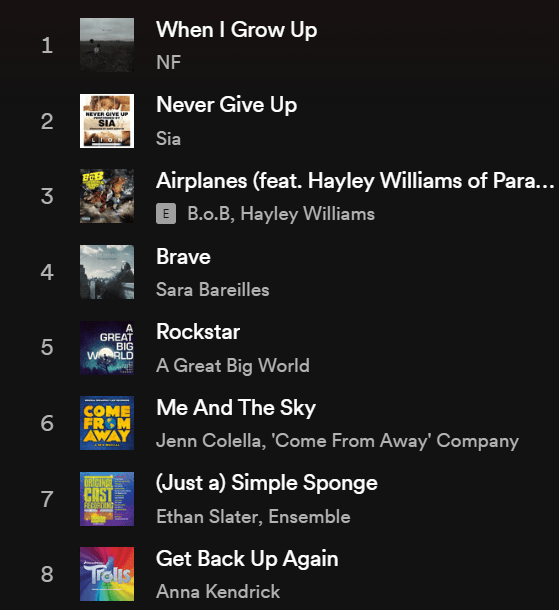
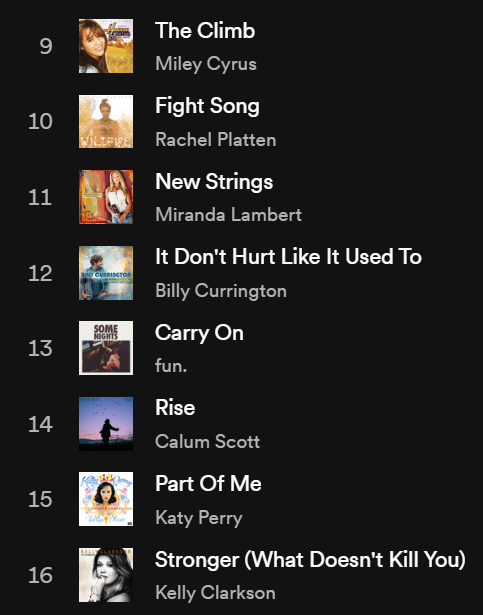
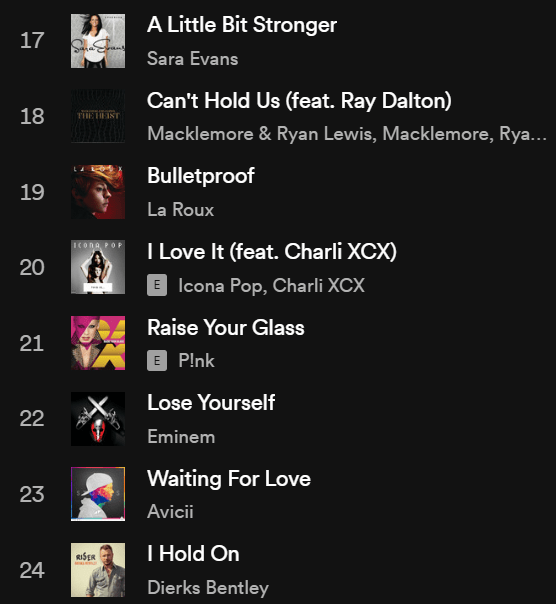
How to Deal with Rejection – A Playlist

Let’s talk about navigating rejection and negative feedback for a second. Honestly, it was something I’d never really thought about before I wrote my first book (mostly because I didn’t actually think I’d ever publish it.)

Fast forward a minute to first readers, betas, critique partners, editors, queries, and then reviews. Whoa! Negative feedback non-figuratively everywhere!

So how do you keep writing with someone calling your book baby ugly from the second it’s born until quite possibly… forever?!? How do you keep submitting when you’re getting truckloads of rejections? Well, here are the tips I can offer:

Pre-Publishing Feedback

  • Put on the playlist. (see below)
  • Let the feedback sit and percolate. Trust me, it’ll sting less the second time, and you’ll be able to more objectively see the changes you do and don’t want to make.
    • After I got the development edit back on my first book, I had to let it sit for three months before I gathered the energy to re-attack. (The feedback was BRUTAL 😆)
  • Trim the feedback to actionable bullets in your own words. It’s less overwhelming than big blocks of text, and you can cross them off when you’re done.
  • If you’re not sure if you want to accept the suggestion, ask another beta reader. If one beta thinks it’s a problem, it’s an opinion, if two betas think it’s a problem, it’s a problem. Just make sure you’re asking betas you can trust to be honest.
  • Just because you accept it’s a problem, doesn’t mean you have to accept their suggested solution. There are a million ways to address a problem. Always revise in a way that feels right to you.
  • Find critique partners and beta readers you can trust and build the relationship over time. The more trust there is between you, the more honest you’ll be with each other, and the more fun it’ll be!

Rejection

  • Put on the playlist. (see below)
  • Delete it! (After you log it in your querying excel sheet and hide that row, of course.) There’s no reason to linger on it, so get it out of your headspace as quickly as possible.
  • Reach out to a writing friend for support – they will understand.
  • Work on a different manuscript. All your eggs are not in one basket! Have many baskets!! BE THE EASTER BUNNY OF EGGS.
  • Know that: 1.) all writers have been rejected, and 2.) it will get easier. I can safely say I’ve received hundreds of form rejections. They still sting a little, but WAY less than they used to.

Post-Publishing Feedback (i.e. Bad Reviews)

  • Put on the playlist. (see below)
  • Remember the silver linings for 3 stars and below:
    • 3 stars: As a reader, these are the reviews I read before I buy a book. They usually list things they did and did not like about the book and can be very helpful. And as a writer, I have definitely used and grown from 3-star feedback.
    • 1 & 2 stars: Sure, your book wasn’t for them, but your book managed to reach people outside of your friends and family! That’s a huge win for exposure, and there’s no popular book that doesn’t have these, so try to treat it as a rite of passage.
  • Reach out to a writing friend for support – they will understand.
  • Pull up the Goodreads page for your favorite book ever, read the 1-star reviews, and have a laugh.
  • Reread your good reviews. Don’t let that single 1-star review negate those dozens of 4 and 5 stars. There are 8 billion people in the world and counting, no book is for everyone!
  • Rejoice! Someone read your book and took the time to review it, and in many instances, the number of reviews is more important than the average rating.
  • Work on your next book. Because you’re still growing as a writer, and this is only the middle of your journey. Rest if you need to, and then keep on going.

Oh, and don’t forget to jam while you’re at it:

And if you have any song suggestions, I’d love to hear them!

As always, thanks for reading! If you have any questions and thoughts, I’d love to hear them in the comments!

How I streamlined my writing process

Image by 0fjd125gk87 from Pixabay

So… I used to consider myself a “Turtle Writer.” And, my friends, it took me 8 years from when I started the first draft of my first book to when I published it. My second novel took me 4 years from start to publish.

For comparison, for my next release, Time’s Orphan, there will be 11 months between starting and publishing. And for my YA sci-fi launching in April, there were around 15 months from starting to when Whimsical Publishing acquired it.

And trust me, my two newest books are *way* better than my first two novels. (I still love my first two, but objectively, I’m a much better writer than I was 10 years ago, thank goodness.)

There are much faster writers than me out there, and much slower ones, but in any case, I halved my writing process time from Book 1 to Book 2, and by Book 8, I will have cut the time by 88%. One of my writing friends recently asked how I made that happen, so I thought I’d break it down here.

Image by Ralf Designs from Pixabay

Why did my first two books take so long?

This answer’s pretty easy. First, I didn’t actually believe I would publish it. I thought it was unsavable, and I thought by writing it, I had accomplished my writing goals, so I shelved it.

In 2017, I picked it back up, but I was still lost. I revised and edited as best as I could, but I wasn’t until I found the writing community on twitter, that I even thought about getting critique partners and an editor. After getting that feedback, I ended up *heavily* revising the first half of the book.

And there so many stops and starts during that time. I would say it’s because life got busy, which is true, but it’s also because I hadn’t found a rhythm. And more importantly, I still was unsure of my commitment to writing. I still thought Odriel’s Heirs would be the only book I would ever write. (Oh, silly me. 😂)

With the second book, I found indie author friends online as well as consistent critique partners, and that changed everything.

Image by Alan from Pixabay

So what happened with the third book?

We can break it out into a few important eureka moments:

  • I gained confidence. I’d put myself out there, been rejected dozens of times, had a few reviews that smarted, but had a lot more that encouraged me forward. With all that under my belt, I no longer had that paralyzing fear of failure that had kept me back. Even if the next book doesn’t get picked up by an agent, I can publish it myself – and that’s still very fulfilling to me.

  • Also, I realized I could work on multiple WIPs at one time. This was absolutely crucial. Right now I have *FIVE* (😱) WIPs – querying one, editing two, revising one, and plotting one. I cycle through them to give myself some perspective when I come back through drafts, and that way I can always be working on one thing while I’m waiting on responses to queries, CP feedback, editor feedback, etc.

  • Juggling WIPs also forced me to establish a process that worked for me. My experience allowed me to come up with realistic timelines and goals for myself to meet. It’s incredibly motivating for me to cross things off my list, and it lets me see the things I have to look forward to.

  • I found CPs & Betas I can depend on, and in a pinch, I knew how to find others quickly (psst critiquematch.com). Their objective feedback is invaluable to help me find problems EARLY in the process so I don’t get into the editing phase and have a huge “Oh Sh*t” moment. They also continued to teach me valuable writing lessons, and I hone my own editing skills on their work as well. These relationships are also a bulwark of support and encouragement which is also vital to a process heavy in critique.

  • I studied up on writing craft books which have given me epiphanies that also helping in every phase of the journey. But most critically, Save the Cat Writes the Novel gave me the framework I needed to learn how to plot effectively. Once again, it allowed me to identify problems very early, which eliminated a lot of time-consuming rewriting.

  • Inertia is powerful. I am *not* an every day writer by any means… but I usually do something writer-related (almost) every day, even if it’s something incredibly small like a tweet-sized story for vss365. The most difficult part of writing for me is starting *anything.* So by keeping that positive pressure, I can keep rolling without mentally having to do the thing where I show up to write and think “Um… how do I do this again?”

Anyways, those are just the tips that have worked for me. Ultimately, every writing speed is completely valid. As long as you’re enjoying the journey, that’s what’s most important.

Thanks for reading! I hope this was helpful, and if you have any other questions, let me know!