Welcome to my end-of-the-year writing review! This is where I try to take a bird’s eye view of the year and my writing year in general to sum up the big wins, the losses, areas I’m doing well in, and others I could improve. This is where I see if I hit my 2025 goals and make new goals and predictions for 2026.
Last year, I said 2025 could very well be the year that would make or break me. But naturally, there is very little that’s so black and white. My writing career took some big steps forward this year, and I had some fun surprises, but there were also some warning signs that have me trepidatious about 2026.
So, going into this post, I obviously have some big mixed feelings, and honestly, writing this post is going to be a little bit of a self-discovery adventure for me because at this moment, I really don’t know what the big rock takeaways from this year are.
The hope is, by the time I finish writing this, I’ll have a better idea—so let’s jump in and see!
first, the numbers

- Words written: 70,000 (House of the Chosen, finished drafting) + 28,000 (A Witch’s Game of Moonlight & Mischief, finished drafting with E.P. Stavs) + 88,000 (Paranormal Mystery Title TBA) + 400 (Chase vs The Doom Spiral picture book) + 64,000 (So He Burned Down the World For You) = 250,400 words (-12% from last year)
- Words revised: 90,000 (House of the Chosen) + 75,000 (A Witch’s Game of Moonlight & Mischief) + 86,000 (Paranormal Mystery Title TBA) + 400 (Chase vs The Doom Spiral picture book) = 251,000 (-14% from last year)
- Words published: 83,000 (Into the Abyss) + 41,000 (A Churn in the Dark) = 124,000 (-2% from last year)
- Words on sub: 67,000 (Exit Seats) + 75,000 (Codename: CNDRLA) = 142,000 words (-11% from last year)
- 2025 Total Words Worked: 767,400 (-11% from last year)
Sales Numbers: ~535 self-published books sold (-9% from last year, includes audiobooks but not my titles with Whimsical Publishing.). Another 10,487 downloaded for free. (+10% last year’s count)
And the Goodreads numbers.
- Odriel’s Heirs: 290 ratings (+12%) / 4.23 stars
- Burning Shadows: 48 ratings (+20%) / 4.62 stars
- Idriel’s Children: 91 ratings (+11%) / 4.40 stars
- Night of Ash: 31 ratings (+11%) / 4.65 stars
- Time’s Orphan: 98 ratings (+8%) / 4.60 stars
- The Gatekeeper of Pericael: 115 ratings (+12%) / 4.10 stars
- Into the Churn: 467 ratings (+38%) / 4.23 stars
- Into the Fire: 112 ratings (+56%) / 4.50 stars
- A Churn in the Dark: 53 ratings (+253%) / 4.58 stars
- Into the Abyss: 47 (+1075%) / 4.72 stars
- A Churn in the (Virtual) Society: 16 / 4.81 stars
My Goodreads total: 1372 ratings (+32%) / 4.34 stars
If you want to compare the totals to last year more directly, my 2024 summary is here.
As far as words go, I’m not surprised I had less words this year. At the end of last year, I was questioning why I was pushing myself to move so fast, and that mentality continued through this year. With multiple books on sub, 6 books scheduled to release in the next 3 years, and the pervasive feeling that I was out of balance, I intentionally took a step back from writing intensity this year.
While I snagged two BookBub deals this year, they weren’t quite as successful as sales I’ve run in years past. That could be due to the fact that I’m getting farther away from release, so I’m seeing diminishing returns from the BookBub audience, or potentially just that with each passing year, my books are competing with more book releases as well as books currently on the market. (I’ll touch more on this later.)
Looking forward to 2026, I wouldn’t be surprised if my words-worked number goes down again, and I fully expect my self-published numbers to go down as I pivot to promoting my newer books (such as the completed Into the Churn series and my 2026 releases.)
the highlights

- Through the work of our amazing agent, Kristen Terrette from Martin Literary, E.P. Stavs and I had two offers on our Quirky YA Paranormal, Midnight Falls, and we scored a 2-book deal with Charlesbridge Publishing for release in Fall 2027 & 2028. I cannot understate what a HUGE deal this was for us. I knew if I was going to continue moving forward, I needed to sign a deal with publisher through my agent this year, so this was truly a dream come true. It’s hard to wait, but Erin and I are SO excited for to see Midnight Falls launch in 2027.
What Book 2 will be is still up in the air. Erin and I are hoping it’ll be the second stand-alone book in our “Magical Tourism” series, but the publisher could ask for a direct sequel to Midnight Falls, so hopefully we’ll find out in 2026! - Whimsical Publishing acquired my NA Paranormal Mystery (title TBA) and book 1 of the planned trilogy is set to release on May 26th! This was also a huge deal for me. I didn’t have any releases planned after Into the Churn completed in September 2025, so I knew I had to successfully pitch to Whimsical if I wanted to have a 2026 release. Great news: they LOVED it 🥹, and I’m so excited to see what readers think of this new adventure!
- With the release of Into the Abyss (book 3) and A Churn in the Virtual Society (book 3.5), the Into the Churn series was completed! This was a hugely satisfying moment, I’m so glad we were able to complete the series for the readers, and it’s so much more fun to be able to promote a completed series!
- Codename: CNDRLA and Exit Seats went on submission, and The Ninth Circle went out to another round of editors! Being on submission is emotionally tough, but I think I finally got the hang of weathering it this year. (more on this later.) I’m beyond grateful to my amazing agent and her unending encouragement and commitment to getting these books out in the world.
- I wrote and illustrated a picture book to help my 7-year-old with his anxiety meltdowns, and it WORKED. (Trust me, no one is more shocked here, then me.) Then, my friend with an anxious 5-year-old asked for a proof copy, and it helped them as well. Writing a book purely from the heart with no regard for market other than this one goal to help my son and kids like him was such a rewarding experience. I’m so proud of it, and I’m SO looking forward to self-publishing it February. There will be no fanfare and very little promotion; just a quiet satisfaction that it exists for kids and parents who need it.
- I had three interesting opportunities pop up that I can’t actually talk about yet. While (being the pessimist that I am) I don’t expect them to transform my writing career in a significant way, I was so honored to be considered for these chances, and with some tremendous luck, maybe I’ll have an announcement or two to make next year.
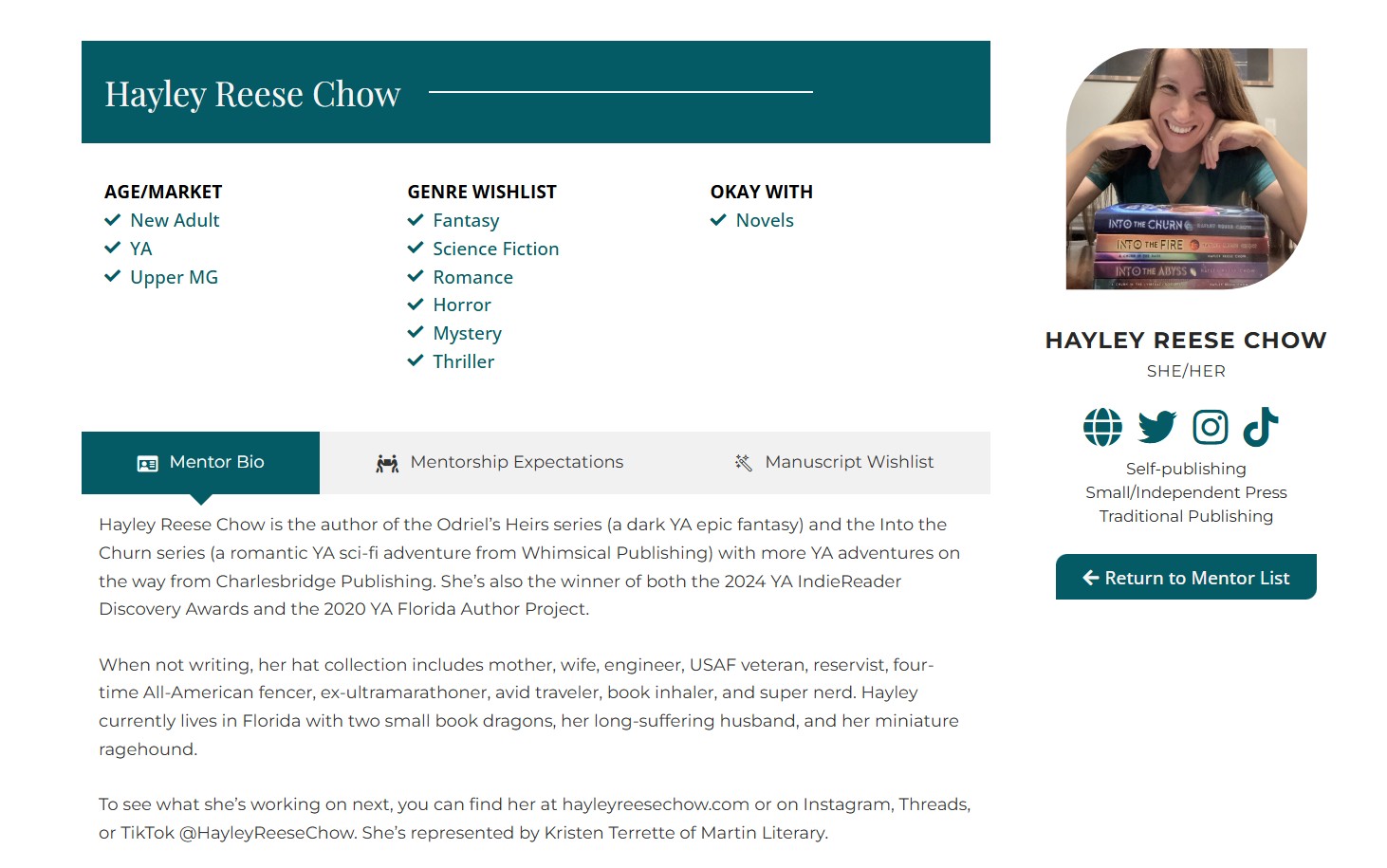
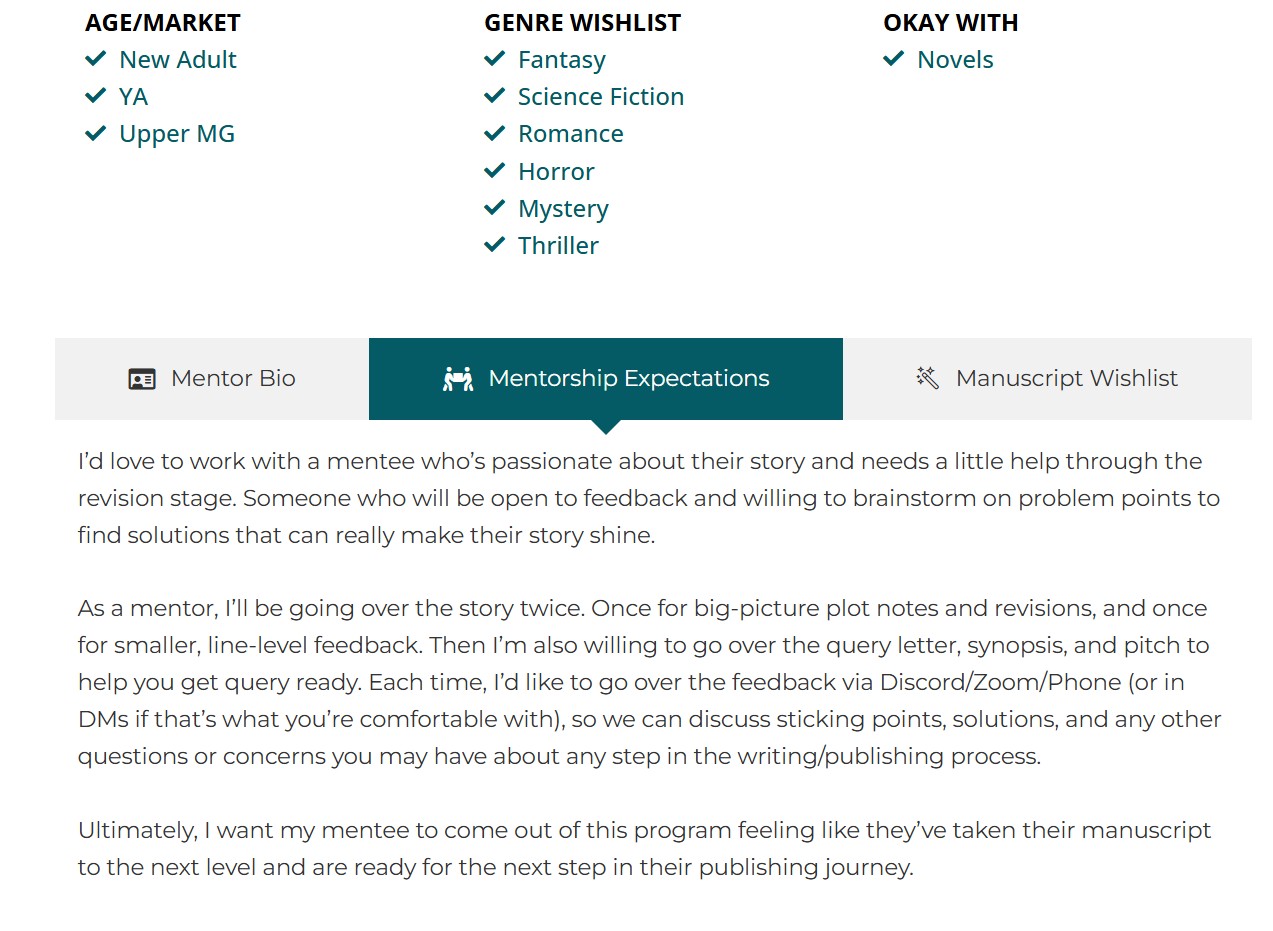
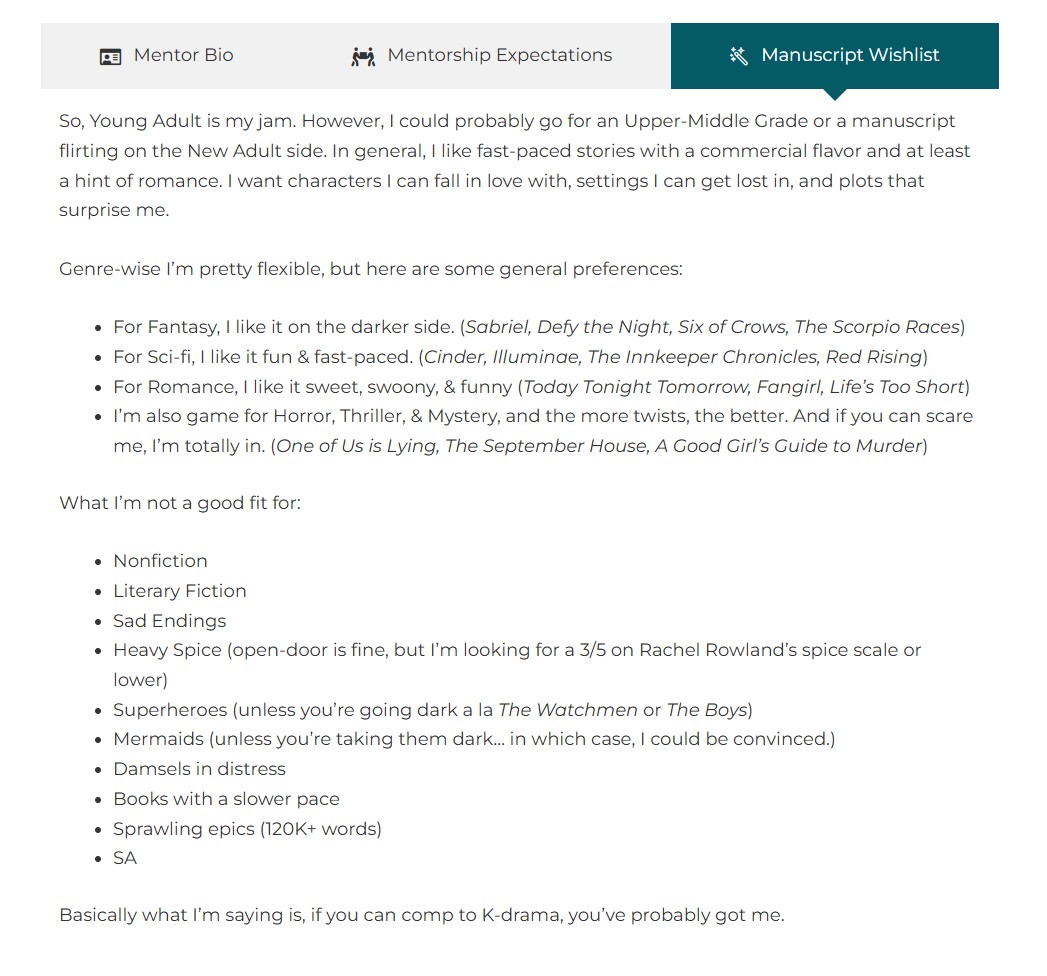
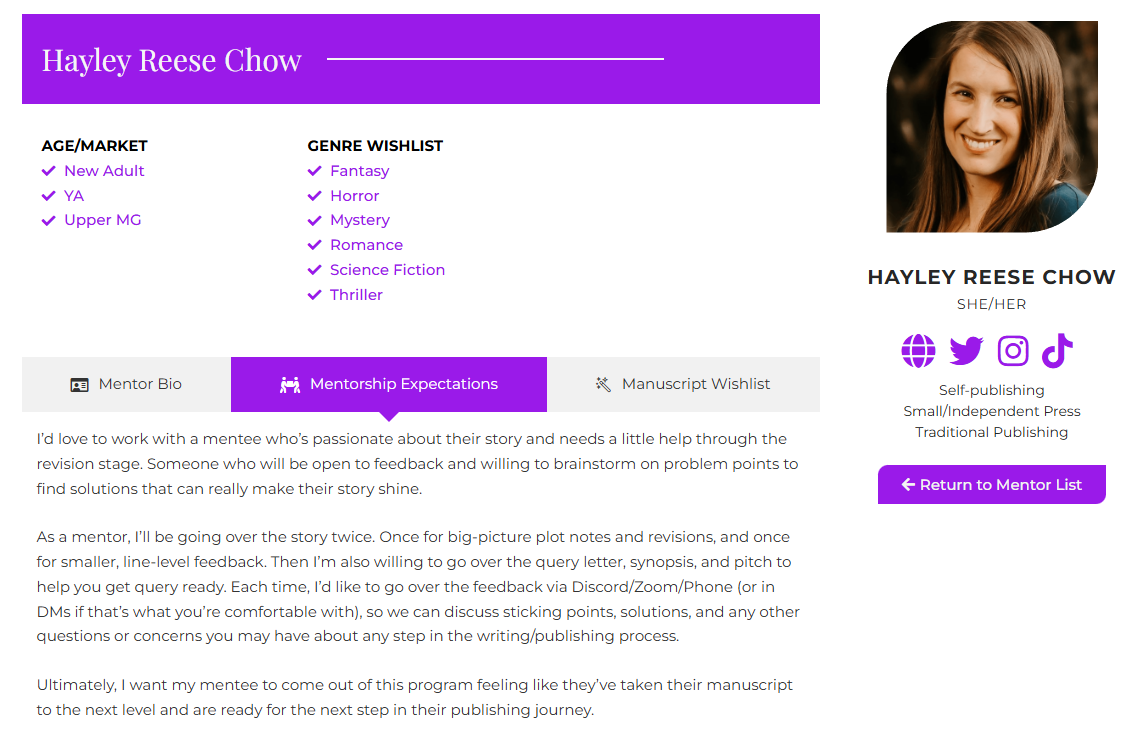
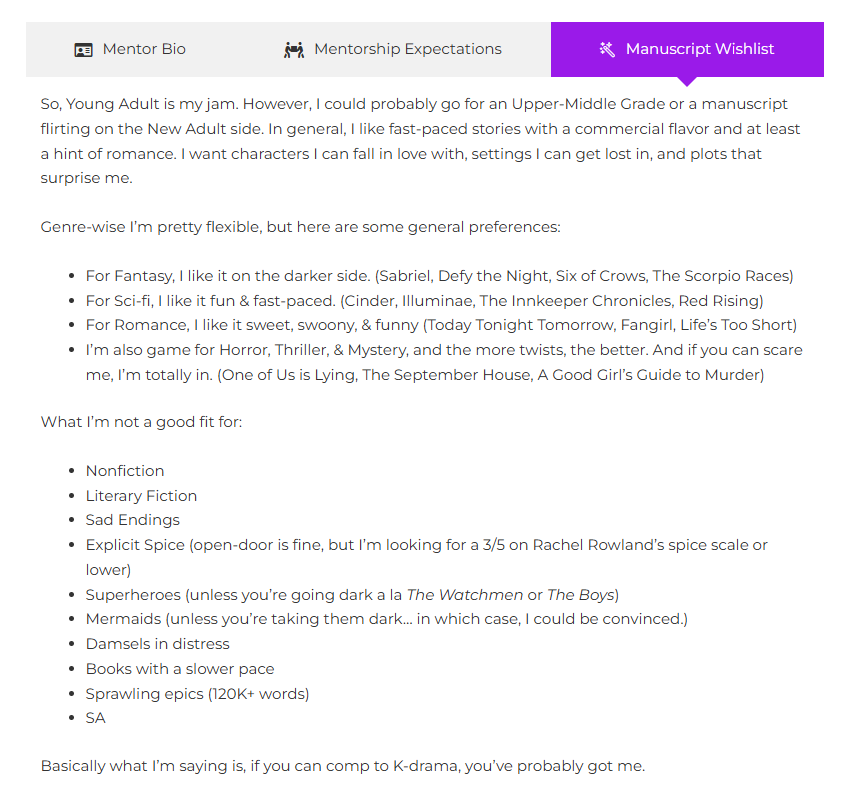
- I joined the WriteHive team for my second year as a writing mentor, and I’ve loved being able to pay forward my writing knowledge to the writing community.
- In a huge surprise to me this year, I went to *8* in-person author signing events in my community at 4 different local book shops and my local library. And now my books are stocked in all 4 shops. 🥹 My local library surprised me by putting my photo on a BILLBOARD in our town, and The Hidden Lantern in Rosemary Beach recommended my books on the LOCAL NEWS! Not only that, but I established great relationships with The Book Rack in Fort Walton Beach and the Salt & Story in Niceville, and they have reached out TO ME multiple times asking if I would come do book events. I totally didn’t have any of this on my 2025 Bingo Card, but they made me feel so valued, and I’m so grateful our local book shops for their support.
What I learned

- I have three lessons learned from last year I still feel in my bones this year and I feel like I’m still absorbing them, so I’ll list them again:
- My promotional budget and energy is limited. Therefore, I need to pivot harder away from promoting my backlist to focus on upcoming releases. (Picture me yelling this at myself because it is easy to say but harder to execute, because, dang it, I love my backlist and I’m proud of it.) However, I only have so much time and money and I *have* to look forward and make smart business decisions. *insert Friends gif here of Ross Gellar yelling PIVOT!!!*
- I have found balance and peace with my online presence as an author. While I will never be a viral sensation, I have found a style of content on each of 5 different platforms (Threads, TikTok, Instagram, WordPress, and Mailchimp) that I can be consistent with and that makes me smile. (Not as much as writing… but I’ll take what I can get.) Though my social media numbers aren’t going to knock a publisher’s socks off by any means, I’m consistent, I work hard, and I’m authentic, and honestly, I’m proud of that.
- Sequel releases are still hard on me mentally. It’s been 2 solid years of sequel releases, so I’m SO ready for new series starts in 2026 and 2027. I really have no desire to ever write a series longer than a trilogy, and while I’ll allow for novellas as a neat little marketing tool to tide passionate readers over until the next release, novella releases are perhaps my least favorite type of release. Too many readers accidentally or intentionally skip over them, missing key components to the series flow, and it pains my author heart.
- My promotional budget and energy is limited. Therefore, I need to pivot harder away from promoting my backlist to focus on upcoming releases. (Picture me yelling this at myself because it is easy to say but harder to execute, because, dang it, I love my backlist and I’m proud of it.) However, I only have so much time and money and I *have* to look forward and make smart business decisions. *insert Friends gif here of Ross Gellar yelling PIVOT!!!*
- Somewhere above I mentioned that I figured out how to handle being on submission, and fair warning, there’s a lot of you who aren’t going to like this strategy, but it’s honestly the only thing I’ve found that works. For me, being on submission is tough because it feels like every day you fail a little more… even though you legit have no control (once the book is on sub) whether an editor will fall in love with your book or not. For me, it is a slow, repeated destruction of hope under the weight of an empty, silent inbox.
I know that sounds dramatic and like, incredibly pessimistic, but I’m just being honest.
So, in order to handle that, I had to shift my thinking. Essentially now, when a book goes on sub, inwardly, I already consider it dead. I even went so far as to rename the folder for those manuscripts “Purgatory.” (Also, because it makes me smile. I survive through dark humor.)
That allows me to shift all of my mental energy to areas I can control: notably, my current works in progress and my next releases.
Furthermore, there was a time in my life where I was writing not *for* market, but with market in mind… and honestly, I’m past that now. For the record, it didn’t seem to do me a lot of good on any front. My YA books were still “too PG-13” for current trends. The market was “too glutted” for my “on-trend” books, and the market was “too niche” for my more original concepts. In general, any conversation that included “market” was not super helpful.
Once I reset my brain to consider the real possibility that none of my manuscripts might get picked up, regardless of whether they were “on trend,” or not, it made absolutely no sense to write for anyone but me and the people I love most.
Writing the picture book, Chase vs. The Doom Spiral, especially drove this home for me. Objectively, I’m a lackluster illustrator, and that book will go (relatively) nowhere. But I love it. My son loves it. I *know* there are anxious kids out there that this book will make a difference for, and even if I’m only making a difference for 1 or 2 families, that’s still making a difference, and there is immense satisfaction in that.
Continuing in this vein, I just finished drafting a book I imagine will be unmarketable, and you know, I’m fine with that too. Because it was cathartic and I loved writing it, and at the end of the day, that’s why I’m here. To process the world around me and grow as a person through writing.
It’s that mindset that reminds me that numbers are just numbers — an infinite mirage of success that does not and will never define me.
That’s not to say I might not try for a marketable book again if the mood strikes, but I’ve shifted my thinking so that’s no longer the goal. The goal is to make the book I can be proudest of. The book that is THE MOST me. And with that in mind, being on submission just becomes the footnote on my journey, rather than the journey itself.
The bumps
- Well, I think the most obvious one here is that I have to concede Inky & Heater IRL (my YA contemporary romance that reads like You’ve Got Mail + esports) is dead on sub, and has been shelved for the time being. It’s a bummer for sure, but one I’ve surprisingly come to terms with this year. I still hold the conviction that it will go out into the world one day, one way or another, so I can take this as an exercise in being patient with a smile still on my face.
- This next one though, is going to take some words. I can’t decide if this was a series of small bumps that were all interconnected on the same theme, or just one big bump, so here we go:
I was accused by a trusted Beta reader (who is also an editor) of using A.I. to write one of my manuscripts, and then they confided in me that they use A.I. in all of their writing now. When I explained that from an ethical and personal standpoint, I would never use generative A.I. in my writing, they accused me of lying. It was awful and infuriating and just so sad. I know I’m not the first author to be falsely accused and I posted reels about the situation and my feelings about it on Instagram and TikTok. Needless to say, I will never be recommending or using that editor again, and I highly recommend if you use a beta reader or editor you make sure they have an explicit anti-gen-A.I. statement on their site, because many of them are not being transparent about usage.
But it truly just made so sad for the future of humanity, art, and connection. I also posted about it here. While, in general, I do have hope that we as humans, in the long run, won’t let A.I. degrade our creativity, our art, and our connection to one another — current trends are disturbing, and they are hurting creatives of all stripes: actors, authors, artists, narrators. It has made us question everything we see, hear, and read as authentic.
As such, I can’t help but wonder what the future holds for creatives, and I know I’m not the only one. Even now, A.I. is flooding our authentic spaces with hollow replicas designed to deceive and scam; ultimately stifling the visibility & support of human thought and imagination.
If you think I’m being a ridiculous alarmist, I truly hope you are right, but I feel the shadow hanging over the human writing community all the same, and it’s another reason why I’ve redoubled my efforts to be as authentic and honest in my writing as possible. Both to underline the humanity of my work, but also because, in the near-term, I feel like there is a real possibility that A.I. generated content (and content at large) will effectively blot out what little visibility my works have.
To give you an idea of how the bookish landscape has changed in the past two decades (and this was largely before the added gen A.I. issue), here’s a post by NYT best-selling author, Jacqueline Cary, that also underscored the naturally increasing difficulty of creative visibility:
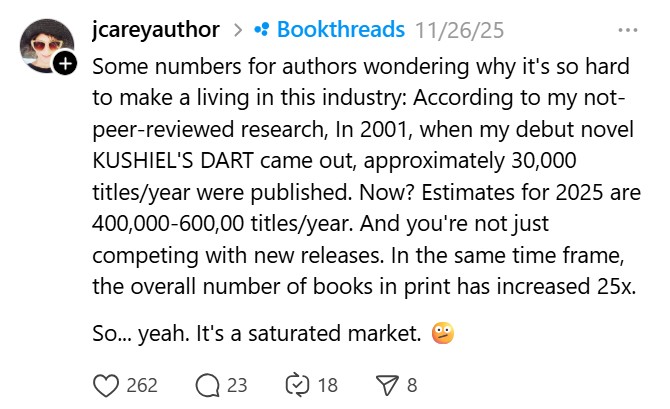
So yeah. Kind of Dark. I know. Not to mention, that AI-gen content is also flooding social media, which many authors (including myself) rely on to market their books and increase their visibility.
But I think in this moment, I, personally, feel the need to embrace the Stockdale Paradox, which I first became aware of in Brene Brown’s Dare to Lead but is well paraphrased here in Groysberg’s Article from Harvard Business School “What the Stockdale Paradox Tells Us About Crisis Leadership”:
‘Collins asked him about the personal characteristics of prisoners who did not make it out of the camps. “The optimists,” he replied. “Oh, they were the ones who said, ‘We’re going to be out by Christmas.’ And Christmas would come, and Christmas would go. Then they’d say, ‘We’re going to be out by Easter.’ And Easter would come, and Easter would go. And then Thanksgiving, and then it would be Christmas again. And they died of a broken heart … This is a very important lesson. You must never confuse faith that you will prevail in the end—which you can never afford to lose—with the discipline to confront the most brutal facts of your current reality, whatever they might be.”‘
So I guess what I’m saying, and what I’m still coming to terms with, is that the current reality is that this may very well be as “successful” as I get. In the current environment, the odds are very much against the growth of my visibility, sales, and numbers.
That doesn’t mean I won’t try to succeed.
It doesn’t mean I’ll stop learning how to adapt to this new environment.
Doesn’t mean that I’m going to stop showing up every day and giving it my all.
However, it does recage my idea of success. Because I have always viewed an increase in visibility as my litmus test for success. The desire to get my books to as many readers as I can who will love them like I do. To grow my audience.
But that friends, is a number. It is the mirage. And one that may be incompatible with the current reality.
So what do we do? What can we do under the weight of all this heaviness that neither you nor I realized we were going to get into when we started this post?!
Well, let’s talk a path forward. Let’s talk goals.
Because I am nothing if not stubborn as the stars in the sky.
Goals

If you’ve stuck with me this far, I must say, I am impressed. There was a lot more to unpack here than I thought, but *I* for one am feeling so much better. Like, so this what all the deep dark thoughts I was trying so hard to lock away were about? It’s all starting to make sense now. (Why yes, apparently my author recap this year is me processing a year’s worth of repressed brooding in real time. How exciting! This is really what writing is all about. *Self-five*)
Okay, with all of this in mind, let’s talk 2026. As always, I try to keep my goals measurable and attainable solely by own will-power. (Goal small. Dream big.) But as a theme for 2026, I want to focus less on the numbers and more from finding joy in writing and the author life. I want to take joy in reader impact and connection; in writing unapologetically authentic books that I am incredibly proud of not matter what the numbers say. I want to slow down EVEN more, put less pressure on myself to produce and focus on sustainable writing life balance.
Heck, even writing that fills me with warm fuzzies.
But because Goals are supposed to be measurable, let’s talk some specifics too. Last year I’m proud to say I hit solidly hit 2.5/3 of my goals which you can find in my 2024 post. So in 2026, I’m aiming to…
- Self-publish my picture book Chase vs. The Doom Spiral in February
- Finish my revision of House of the Chosen and send it to my Agent in Jan/Feb timeframe
- Send our co-WIP, A Witch’s Game of Mischief & Moonlight, to our agent in the Jan/Feb timeframe (this is the 0.5 goal that didn’t get completed last year, but we’re super close on this one)
- Get my Paranormal Mystery (Title TBA on January 6th) coming from Whimsical Publishing out in the world on May 26th!
- Finish book 2 of said Paranormal Mystery Series and send it to Whimsical Publishing in April
- Revise my Quirky Cozy Dark Fantasy Romance (So He Burned Down the World For You) and send to my agent
Okay, well, there were more goals than I thought, but when you boil it down, it’s: publish 2 (easy), revise 3 (medium-time commitment), and draft 1 (time-consuming.) Honestly, I expect to accomplish all of these by June 1st. As for what the rest of the year will bring, who knows? Maybe it’ll be a lot or a little or somewhere in between, but I’m excited to have fun with it.
The sum up
That was SO MUCH MORE than I expected to cover in this post. Like, geez. While the numbers were less than last year, I’m reframing to see that as a datapoint rather than the goal. There were way more highlights than I thought, the bumps (while not necessarily many) were WAY heavier than I thought, and honestly I have more goals for next year than I thought.
I described the 2023 review as ‘effervescent’, the 2024 review was the one where I was way too honest, and apparently the 2025 one is where I went kind of dark. And it’s definitely making me laugh. I’m already looking forward to the 2026 review only because I have NO IDEA what it’s going to say next.
Prediction: 2026 year was the year I gave up the harsh expectations for myself, the year I don’t really have a lot of notes to write home about, and the year I’ve been the happiest author-wise that I’ve been in a long time.
Not a measurable goal, but joy is always the dream, and I hope you all find lots of it in 2026.
Till then, friends. Cheers, happy New Year, and thanks for reading.








 Hayley Reese Chow