
So I became a WriteHive mentor because I wanted to pay forward all the wisdom and experience the writing community had gifted me over the years. And since I’ve done quite a lot of beta reading, critique swaps with partners, and also worked with quite a few editors over the years, I felt pretty comfortable that I’d be able to help someone improve their manuscript.
But what I totally wasn’t expecting was everything I learned during the manuscript selection process. I hadn’t considered that this was the first time I was on the other side of an acceptance/rejection decision. And what it brought it really home for me was that authors had actually requested me as a mentor in their queries!🤯I was so completely flattered and blown away.
In this article, I’m going to break down how I narrowed the submissions to select my mentee, the materials I looked at, and the questions I asked myself along the way. I found this a very enlightening process and thought it might be helpful for others going through the querying or submission trenches. However, please keep in mind, everyone has their own methods for selecting manuscripts for both representation, mentoring, and publication. This was simply the process and realizations I had during mine.
Here’s a quick breakdown of how many submissions came in for 17 mentors:
140 submissions (a 52% increase over 2024 – yay!)
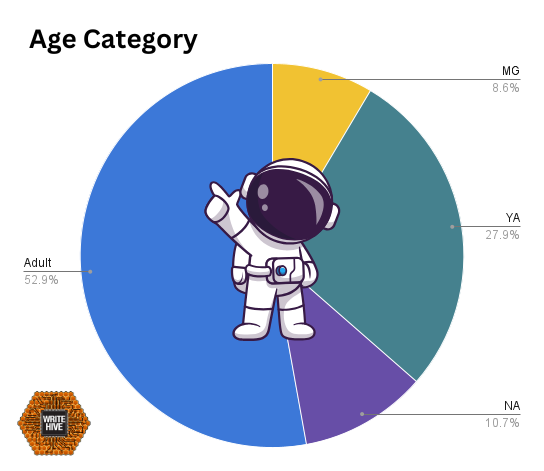
Age demographic submission breakdown:
- MG: 12 (8.6%)
- YA: 39 (27.9%)
- NA: 15 (10.7%)
- Adult: 74 (52.8%)
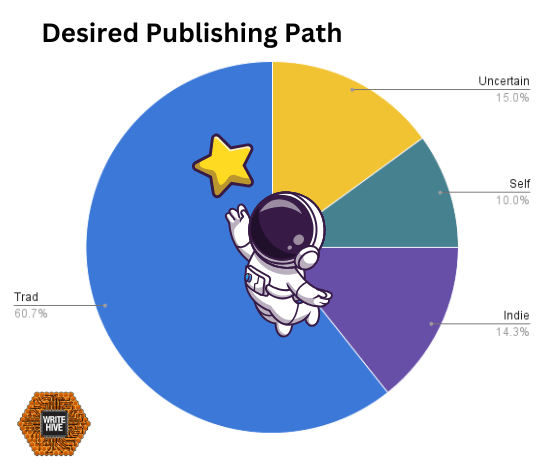
Publishing path submission breakdown:
- Unsure about Publishing Path: 21 (15%)
- Self Publishing: 14 (10%)
- Indie / Small Press: 20 (14.3%)
- Traditional: 85 (60.7%)
And genre breakdown:
- Fantasy: 51 (36.4%)
- Romance: 23 (16.4%)
- Romantasy: 23 (16.4%)
- Contemporary/Literary/Nonfiction: 17 (12.2%)
- Horror/Suspense/Mystery: 16 (11.4%)
- Sci-Fi: 10 (7.2%)

Each submission included their bio, the state of their manuscript (where was it in the writing process), pitch, their query letter, a synopsis, and their full manuscript. But how to narrow it down? I really wanted to make sure I picked the mentee who I could help most. A manuscript I could really fall in love with, but also one that I could help in a concrete way.
The first cut
So, even though I had outlined my general preferences in my MSWL (manuscript wishlist), I read the pitch, query, and first page of all 140 submissions, with one question in mind:
Does the premise grab me?
Based on that question alone (which, by the way, had *nothing* to do with the talent of the author or the quality of writing and everything to do with personal preference), I was able to cut my list down from 140 to 26.
That, in itself, blew me away. After all, I’ve received many rejections, and of course, every time, I assumed it was because I wasn’t a good enough author. My writing wasn’t good enough. The story wasn’t good enough.
But here I was, cutting 81% of the submissions with no regard to quality at all. Honestly, I probably could’ve done it based on the pitch alone.
Interesting.
So with that cut, my list was down to:
3/12 Middle Grade: 25%
9/39 Young Adult: 23%
2/15 New Adult: 13%
12/74 Adult: 16%
Total Longlist: 26/140
The Second cut
For there, I reviewed the bio, the state of the manuscript, their synopsis, and their query again. From these materials, the mentees included information on if they’d started querying it, which paths – traditional, small press, or self-publishing – they’d consider pursuing, and what they were looking for in a mentorship.
On my second cut, I was asking myself: Is this a mentee I can help? Am I the type of mentor they’re looking for?
Once again, I was not considering the quality of the story or writing at all. I was simply trying to ascertain at this point if we could be a good match based on my strengths and the kind of mentor they were looking for.
In the second cut I went from a longlist of 26 to a longlist of 12.
2/12 MG: 17%
3/39 YA: 8%
1/15 NA: 7%
6/74 Adult: 8%
Total Trimmed Longlist: 12
So at this point, I had cut 91% of the submission without considering quality of writing or story.

The third cut
The third is where I finally read the entirety of the first chapter and then asked myself: Am I drawn to keep reading? This is the first question I’d asked that could have been attributed to writing quality.
The third cut took me from a longlist of 12 to a short list of 7: 2 Young Adult Manuscripts and 5 Adult Manuscripts. From there, I read further into the manuscripts, and once again, this time, looking for the manuscript that I thought would be most suited to my tastes. In the end, I chose the story I had extremely concrete recommendations for, one which was very much suited to my personal taste, and had an author who was searching for knowledge areas I had. And just as an aside, only one of my top 3 choices showed up on another mentor’s top 3. For the most part, all of our top 3 choices were radically different.
So what’s the point?
When it came to publishing, I’d often heard the phrase “right eyes, right time.” Meaning essentially, that there are tons of quality stories out there, but you need to find the right agent/editor that’s the best fit to champion yours at the right time in the market. Which… comes down to a lot of factors outside of your control.
But once again, every time I faced a rejection, it was so easy to take it as a sign that I wasn’t good enough to be an author. Or the story wasn’t good enough to be published. But the truth is, writing, as an artform, is so personal. No one book is for everyone – and that fact is as true before publishing as after it.
So, if you submitted to the WriteHive mentorship, please don’t be discouraged in any way if you weren’t selected as a mentee. It really has no reflection on your ability as a writer or a storyteller, but rather simply, if your story was a good match for the mentors reading submissions this year.
And as I continue to trudge on in the submission trenches, I’m trying to keep the very same lesson in mind. That my stories need to find the right eyes at the right time. Whether that’s next week or next year or in three years really isn’t up to me. All I can do is be patient and keep writing the best stories that I can.
Hopefully, if you’re in the query or submission trenches, this has been helpful in some way and can also help you to find the mindset and perseverence you need on your writing journey.
Begin. Grow. Persevere.
Thanks for reading!


 Hayley Reese Chow