For Writers: How to decide whether to self-publish, submit to small presses, or query agents. (2026)


Choosing which path to take can be a hard decision! (Photo by Oliver Roos on Unsplash)

So as a writing mentor, I find this question a lot, and honestly it’s highly dependent on your own personal goals and preferences. But since, I’ve done all three of these things, I thought I’d break down my thoughts on it in case it’s helpful to anyone.

My goal has always been for my books to reach as many readers who will enjoy them as possible. So I started out querying agents, because I knew that I wouldn’t be able to match the marketing and distribution of a big-five publisher by myself.

But after querying for a couple years with no dice, I decided to self-publish my first series (a YA epic fantasy, Odriel’s Heirs), and had a great experience with it! There’s a serious learning curve, but there are a *ton* of resources online, and overall, it was very doable. This was an article I wrote on how I did it back in 2020.

Self-Publishing Pros:

·         You have all the control. You choose the editor, (or you can try editing yourself), and if they propose changes you don’t want to make, you don’t have to! You choose the cover artist (or you can do it yourself.) Want a jacketed special edition or an audiobook? You can make those happen too.

·         You’re going at your own pace, whatever that is, and you don’t have to wait on querying, submission, or a publisher’s timeline. Many self-published authors take advantage of this to move super quickly and publish multiple books a year.

·         All the profits go to you!

Self-Publishing Cons

·         Self-publishing can be very time-consuming. Because not only are you responsible for writing, you’re also solely responsible for marketing, distribution, design choices, formatting, etc.

·         While the stigma against self-publishing is gradually fading, getting your books onto shelves of brick & mortar stores (especially outside your local area) can be challenging.

·         All the upfront costs are on you, and like any business, you’ll have to make good choices if you want to earn out. That said, you could self-publish on a dime, but in general, you will probably have to make some upfront investments on a cover & an editor (especially if you’re just starting out).

·         Personally, I feel like it can be harder to market confidently when you’re standing on your own. Also, your connections & opportunities are limited to those you forge on your own.

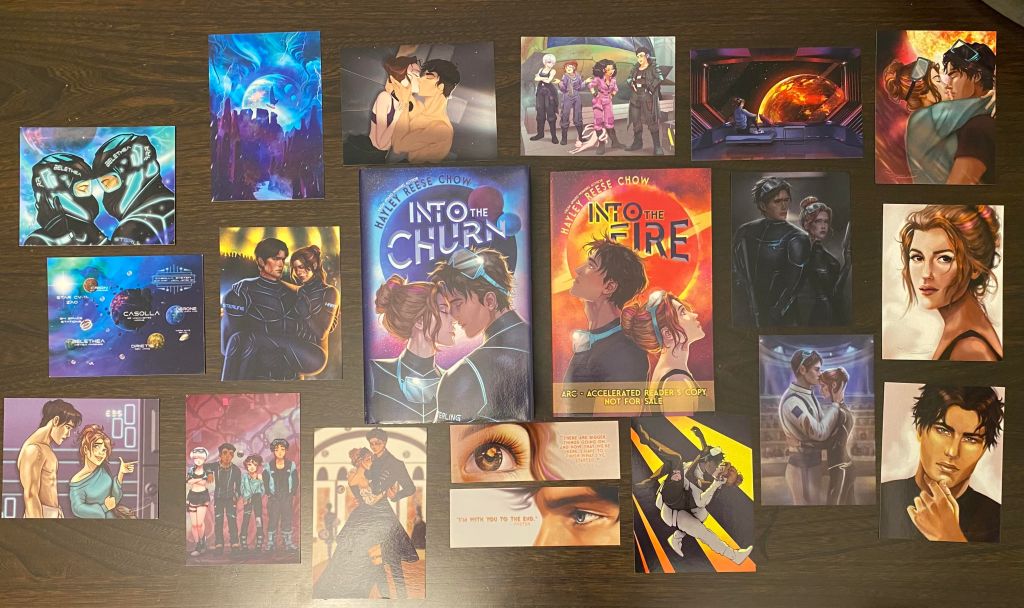
Though I had a great experience self-publishing Odriel’s Heirs, I still wanted to expand my audience. So I continued to query. I self-published my middle-grade portal fantasy, The Gatekeeper of Pericael. But then when my YA starmance, Into the Churn, also stumbled in the query trenches, I decided to give small traditional presses a try. All my experience as a self-published author continued to help me, but I also had the support of other publishing professionals. Instead of a solo sport, it now felt like I was part of a team.

Of course, all small presses are created differently. So if you’re considering one, I’d advise you to remember the following:

1. A traditional press will not charge you ANYTHING to publish your book. NOTHING. If they’re talking about fees, that is (most likely) a vanity press.

2. At a minimum, I would expect the publisher to provide: editing, a quality cover, some marketing, and distribution. If you look at the books in their catalogue, and their books have poor (or nonexistent ratings), poor covers, or exorbitant prices, I’d consider those red flags. Also, if their physical books are only available on Amazon, that would be another red flag for me.

3. They should have a submission process. If they accept all manuscripts, they are a vanity press.

4. So when vetting a publisher, make sure to check out both their social media and their website to make sure it’s presenting the image you would expect. And then if they make you an offer, I’d ask if they could connect you with some of their authors to make sure they have good experiences.

Now, if you’ve found a solid small press, these are the benefits:

Small Press Pros:

–          No cost! They take care of the editing & cover (Which will also save you time if you were thinking of doing it yourself)

–          You don’t need an agent to submit! This could potentially save you a lot of time, but many small presses have small submission windows, so make sure you follow their social media to know when and how to submit.

–          Small presses generally move quicker than bigger presses (who have more books on their schedule.) In my experience, if you sign with a small press, they usually get your book published in the following  calendar year.

–          Now you have a team of professionals behind you with publishing experience! This is a great opportunity to learn a lot, and it’s also great for confidence (in my opinion.)

Small Press Cons:

–          You now have less control. You will now have an editor and a cover artist selected by the publishing press, and you may not have final say in those elements

–          You will now share profits with the publisher (but you don’t have to share it with an agent!)

–          You are also now the small press’s schedule, whatever that is, which introduces the risk that it may go faster or slower than you like.

–          You will also have to spend time on your submission package (query & synopsis & potentially other materials) to get selected.

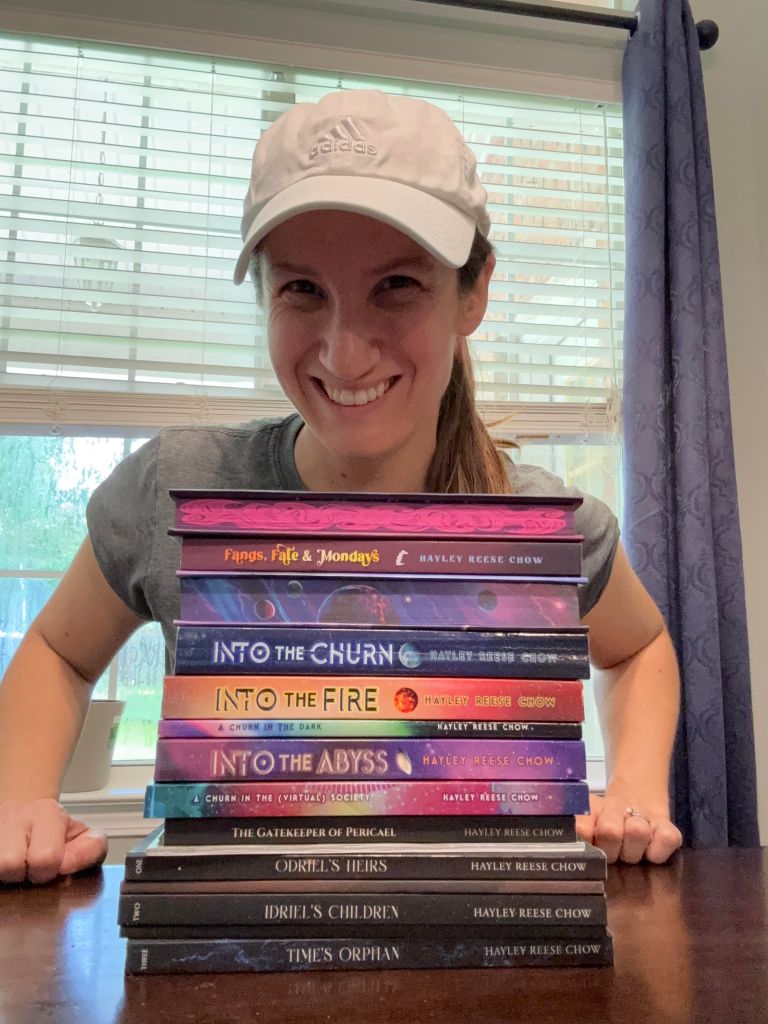
I contracted directly with Whimsical Publishing, and to date, have published 6 books with them (my 5-book starmance series, Into the Churn, & my paranormal mystery, Fangs, Fate, & Mondays) with another 3 projected in the next 3 years. I’ve had an awesome experience with them, and they definitely helped expand my readership.

However, as a multi-genre author, not all my books fit their brand, and I was still striving for the goal of a big-five deal, so I continued to query my manuscripts to agents. After about four-ish years of querying, my fifth manuscript got picked up by an agent, Kristen Terrette of Martin-Newens Literary, and I’ve had a great experience with it. (I probably sound like a broken record, but I am being serious. I have been *super* lucky in my small little author career so far.)

Since signing with my agent, she’s sold three of my books, which are set to release in 2027-2028. Though I haven’t scored a big-five deal yet, one of the publishers, Charlesbridge Publishing, is distributed by Penguin Random House.

Please remember that there are scammers posing as agents out there so please be careful. They should have a professional website & social media. You should be able to look up their track record on Publisher’s Marketplace. They should charge you *nothing.* (Their payment comes from a portion of your sales, usually 15%.) And, before you accept an author, they should be able to give you the contact info for some of their authors that you can ask about their experience.

Working with an Agent Pros:

– They are able to submit to bigger publishers that you cannot submit to by yourself. Which also saves you the time of having to submit on your own. And if you get a big five deal, you can expect a bigger advance, and there’s the potential for your books to be on brick and mortar bookshelves across the country

– Expert advice & guidance on the publishing industry

– They will review your contracts for you & advocate on your behalf to make sure you’re getting the best deal you can

– If you have an editorial agent, often they will help you revise & clean up your manuscript and submission package to really make sure it shines

– You also have the benefit of their added connections & opportunities

Working with an Agent Cons:

– The submission process is a long haul. Big publishers can take up to a year to respond, and when they offer you a book deal, the publishing date could be a couple years out.

– A percentage of your profits goes to your agent.

One last note is that there’s a common misconception that signing with a big press means that authors don’t have to market themselves. That is patently incorrect. The benefit of a small or big press is that they will use their resources to help you, but as the author you are always expected to market your own work. (It’s one of the reasons that your social media numbers are part of the submission package.)

Anyways, hopefully this article is helpful as you choose your path. With my goal of maximum distribution of my books, I’ve always had the dream of publishing with the big-5, which is why I’ve chosen the agented path. However, I know of other authors who are amazing at marketing themselves & extremely business savvy, who have chosen the self-publishing route to maintain control of their work and 100% of their profits.

Which is all to say, there really is no wrong answer as to which path to take. It’s a personal decision for each author to make depending on their goals and preferences.

No matter what you choose, I wish you all the luck & joy on your publishing journey!
All the paths can be satisfying, but luck is involved in each, so wishing you all the four leaf clovers!

Thanks for reading!

Should I write a stand-alone book or a series? Pros and Cons.

Okay, obviously this is a very personal decision, but this is a question I’ve wrestled with several times since I started publishing in 2020, and my opinion has changed over the years! So I figured I would write what I wished I had known when I started putting books out into the world.

So you’ve written a book! Congrats! Now how do you decide if you should write a sequel or leave it as a stand-alone? When I wrote my first book, Odriel’s Heirs, I had the series more or less planned out in my mind. I remember telling my husband if even *one stranger* liked it, I would write the sequel. This… is a low bar. But at the time, as a brand-new self-published author, I had exactly zero confidence anyone would read it.

Fast-forward to when I wrote Idriel’s Children, my second novel, and I thought I had made a mistake. While I had been at peace with publishing Odriel’s Heirs after attempting to query the book, it felt like a let-down to not be able to query agents with it.

Adding to that, I quickly realized that the audience for a *true* sequel (dependent on the events of book one) is extremely small, because you’re essentially only marketing it to the readers that enjoyed the first book. Therefore, if you look up nearly any series on Amazon, book 2 will have MUCH fewer reviews than book 1, and book 3 will have even less!

Now, luckily for me, each novel in the Odriel’s Heirs series has a different main character, takes place after a generation gap, and can stand alone, so I didn’t have to grapple with that particular problem. But just the very idea of it floored me.

Secondly, if the second book bombs, it would be very difficult to get readers to pick up book three. So there’s a lot of risk in writing all the books up front before you publish and see the reaction.

It was with all these thoughts swirling around my head that I decided that after I completed the Odriel’s Heirs series, I would never again self-publish a sequel.

It was that thinking that led me to leave The Gatekeeper of Pericael as a stand-alone and not pursue a sequel which would not have stood alone. (Along with the fact that I found a creepy MG fantasy incredibly difficult to market.)

Okay, well let’s fast-forward again to now when I’m marketing a completed YA Fantasy series (which feels incredibly satisfying, by the way.) And… I realize two things very quickly. Whereas previously I was thinking that I *can’t* market books #1.5, #2, #2.5, and #3… now I’m thinking I don’t have to. Because when I market book 1, there are many readers that will go ahead and pick up the whole series! Then, there are other readers, who will immediately buy the next book after finishing the previous one.

Which is to say, basically in marketing only book one, in reality, I’m marketing *5* books. This means, suddenly, my BookBub promos are actually turning a profit. And did I mention that people love series? The more time they spend in a world, the more invested they become in it, and the more likely they are to shout it out the rest of their reading friends. Plus, every time another book is released, it only reinvigorates interest and sales in book one, which of course means, more readers! Also, there’s a whole other section of readers who won’t pick up a series until it’s officially complete, which opens up even more possibilities after all the books are released.

If a stand-alone is a *really good stand-alone* that just means you’re leaving people wanting more.

Which is all to say, I get the series train now. Disney, I understand.

That said, I still prefer for each entry to end on a satisfying note. (I’m anti-cliffhangers.) So that, in case it bombs, or due to marketing reasons, it doesn’t make sense to finish the series, the fans of the books aren’t left dangling and unfulfilled.

And despite my general lack of knowledge, I don’t regret how my publishing journey has progressed. I’m SO glad I completed the Odriel’s Heirs trilogy. From a marketing standpoint, it was the right thing to do, and I wanted to prove to myself I could to it.

However, it was also the right move not to pursue the Gatekeeper series. As a self-published author, I wasn’t able to reach an upper MG audience effectively through social media (my primary mode of marketing.) The book stands alone well, and it allowed me to focus my brand on Young Adult books.

Similarly, Into the Churn started out as a stand-alone, and when sales struggled at first, the publisher and I weren’t sure if we move forward with a series. However, the second book reinvigorated both interest and sales in a way that allowed us to greenlight the full trilogy! Now that I’ve seen the 5 for 1 BOGO (buy one get one free) marketing deal with my Odriel’s Heirs series, I’m excited to be able to market the completed Into the Churn series in a similar manner.

That said, that was a lot of stream-of-consciousness. So for those who just want the straight pros and cons, here’s the TL;DR version:

Pros of a Series
– In marketing one book, you’re actually marketing the entire series
– It gives the readers more time to get invested in the world and characters
– Each release reinvigorates sales of book one
– Some readers greatly prefer series and some readers only buy complete series
– Because you’re marketing the same series over the course of years, it’s more like to gain momentum and attention

Cons of a Series
– The sequels, themselves, won’t attract new readers, so the sequel will always have less reviews than book one
– If you self-published book one, you can’t query a sequel
– You cannot enter sequels into awards contests unless they can stand alone
– If book one is hard to sell or market for any reason, selling book two will only be harder
– It takes more time/investment to write a series

Anyways, that’s just my two cents from where I stand right now—a small press author on submission, always planning trilogies but making sure each book has a satisfying ending. I’m also going to throw in the reminder that if you *do* love a series, make sure you shout it out and recommend it to your friends, because series *do* get canceled or postponed in the middle sometimes due to lack of sales, reviews, or perceived interest. So if you love a book, be sure to support it with your ratings and reviews!

Thanks for reading, and if you have any questions, just let me know!

What to put in your author media kit, press release, & how to email local news outlets.

The first time I encountered the term “Media Kit” was when I was trying to figure out how to ask libraries and indie book stores if they’d like to carry my book. The internet recommended that I bring a media kit, but that sounded kind of intimidating, so I ignored it for a long time. But now that I’m working with Whimsical Publishing and I have more self-confidence than three years ago, I really wanted to try to pick up my self-promo game. (Especially because I really want Into the Churn to do well enough for me to write a sequel. 😭)

I knew Whimsical was going to arrange for me to do a book signing, and with looming fears of no one showing up, I wanted to see if I could get it listed in our local newspapers as an upcoming event. (By the by, It’s Saturday, April 15th from 12-2pm at Niceville Public Library, so if you’re around, definitely come say hi!) But…if I wanted to contact local newspapers, I knew I needed a media kit.

But I also still had no idea what went into a media kit. So I creeped on other authors’ media kits and did some intense googling. Not only did I find out what goes in a media kit, but I also found out that I should probably make a press release as well, and then I also apparently I needed like a whole media kit google drive folder to put my graphics and files in! Overall, actually creating it didn’t take too long, and I used Canva to put together the media kit portion.

Now, I’m still by no means an expert on these things, but I wanted to put my stuff out there in case some else needs inspiration or ideas for what they should put in there own. All my media kit materials and press kit stuff is located here.

But… then I also had to figure out how to email said local news and let them know that I existed. After querying the internet once again, I came up with an email that looks like this:

Subject Line: [Simplified Version of your Press Release Headline]

Dear [Local News Name]

I really appreciate [Local News Name] as a source of informative and relevant stories in our local area. I hope you’ll be able to use the below press release as a short news item or as an inspiration for an article on a related subject. Feel free to email me or call me at ### if you have any questions, and thank you so much for your time.

Respectfully,

Hayley Reese Chow
Twitter, Instagram & Tiktok: @hayleyreesechow
Full media kit here
[Press Release Below]

So, your next question is probably: did it work!? Well, I literally sent it out 1 business day ago, but I have had one taker so far, so huzzah! I also sent out my press release through PRLog and PRUrgent and called it a day. There are a ton of other free press release sites, but a lot of them require you to have a non-free email address (read: rejected my gmail), so that crossed the line of too much hassle for me.

Anyways, like I said, not exactly an expert over here, but since I spent a lot of time trying to figure out what goes in a press release, media kit, and email to the press, I figured I’d share what I cobbled together. Hopefully it’s helpful and good luck in your book launch!

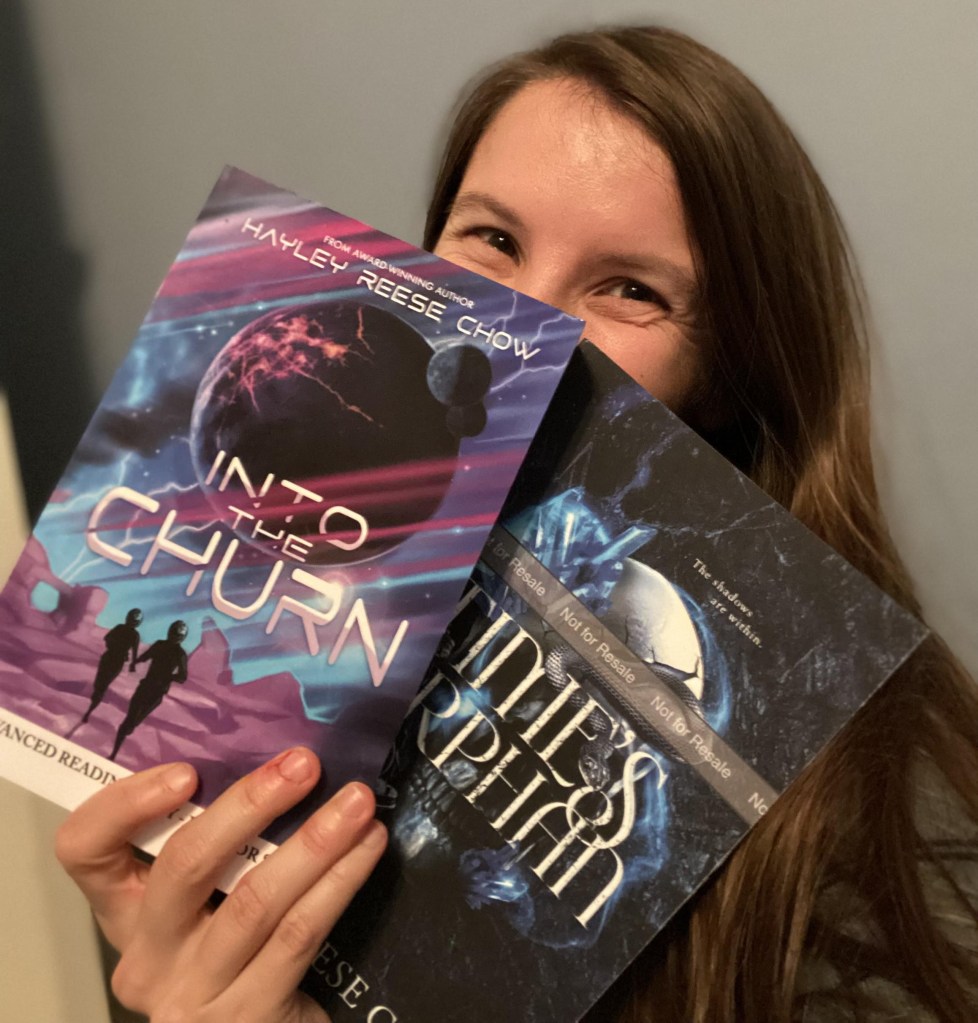
Speaking of book launches, Time’s Orphan is officially out in the world and Into the Churn comes out April 4th!

Hey, why’d you redesign your covers?

So the big news this week is that I got my Odriel’s Heirs and Idriel’s Children covers redesigned! And so many people have asked me why, I figured I’d write a post about it (mostly because I’m too tired tonight to do anything else productive. 😂)

So when I first was looking for a cover designer for Odriel’s Heirs, I’d never commissioned art of ANY kind before, and at the time, I thought Odriel’s Heirs would be the only book I ever wrote. (Seven books later, let’s all laugh together. 🤣)

So, I wanted something that could double as both character art and a cover. And although Dominique Wesson did a fabulous job of capturing the characters… based on anonymous feedback from NetGalley, the original cover designs were getting somewhere around a C-. Ouch. And to add to that, my BookBub deal requests kept getting rejected, and I suspected it had to do with the covers.

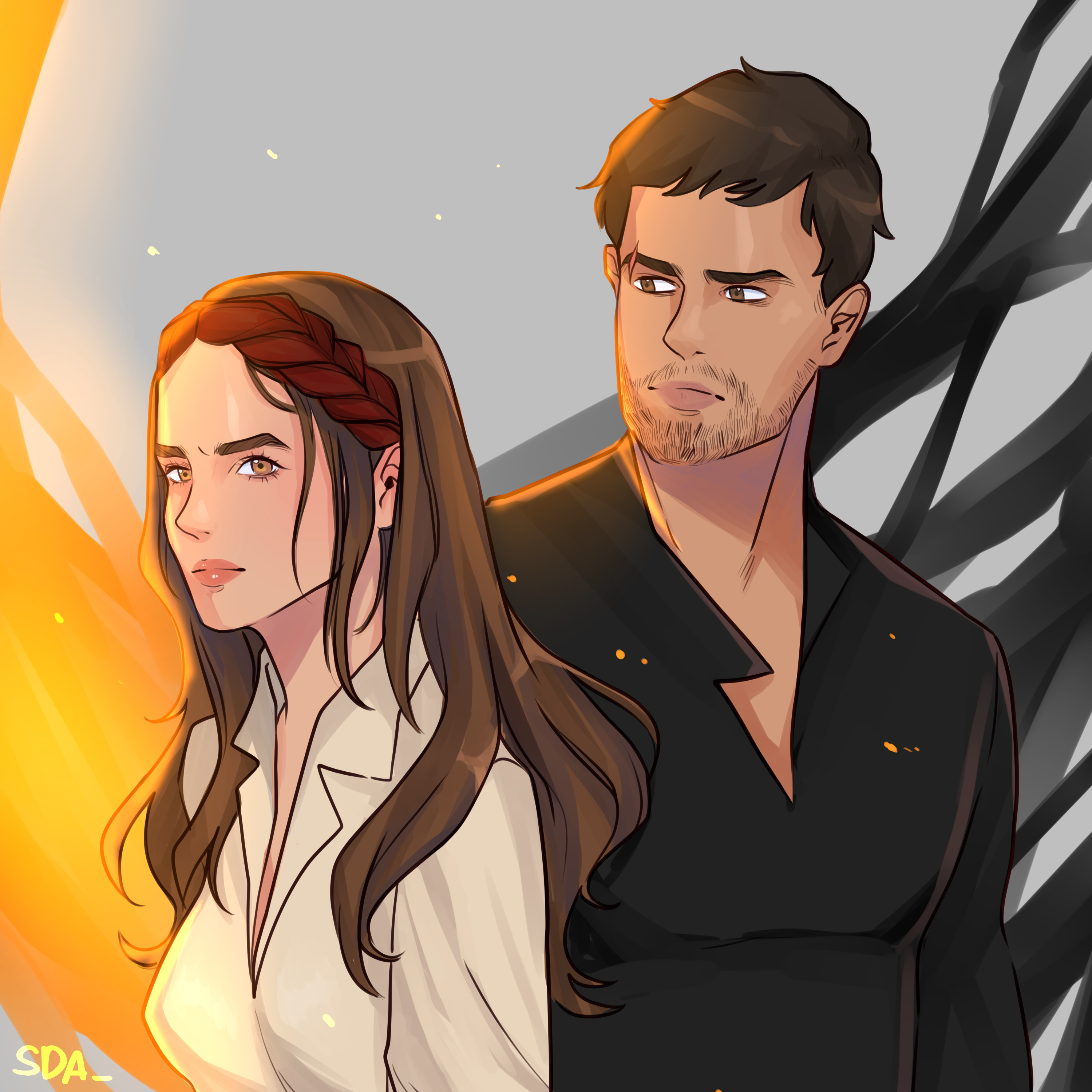
Fast forward to 2022, and the original cover designer is crazy busy and almost impossible to schedule, and I’m no longer a huge fan of seeing the character’s faces on the cover. I’d rather give the reader more flexibility to imagine the characters and commission character art separately, like the wonderful pieces by @stephydrawsart_ below. (But if you ever want to make my LIFE, I adore fanart.)

Anyways… Of course, I wanted all of the covers to match, so I briefly considered trying to get a character art cover similar to my first too… but then I saw Fay Lane’s work and totally fell in love.

And now here we are! I’m also hoping that the new covers will expand my audience, and I can still use the original covers as marketing or promotional tools. Maybe one day, I’ll shell out for a character art cover of Time’s Orphan so I can have two complete sets. But for now, I’m so thrilled with the new look and can’t wait to see them all in print together before too long!

The new paperbacks of Odriel’s & Idriel’s are now available on Amazon, and I’m hoping to release Time’s Orphan advance review copies in the fall!

As always, thanks for reading!

Is a BookBub Featured (International) Deal Worth it?

Hey everyone! So, I’m sure most of you know that discounted promotion newsletters are a big marketing tool for authors, and BookBub is the generally accepted king of promo newsletters.

And, after maybe about a year of applying for a BookBub featured deal, I finally got a $0.99 international featured deal offer for Odriel’s Heirs. 🥳 So that means I discounted Odriel’s Heirs from 2.99 to 0.99, and for a $54 fee, it was included in BookBub’s daily newsletter in the young adult category to Australia, India, Canada, and the UK.

So, I thought I’d share the results for anyone else trying for an international promo. I will say, I did not do any other additional marketing during the BookBub deal. I know that’s recommended, but honestly, March and April were pretty crazy for me, and I could barely even keep track of what day it was. As a silver lining though, we know that these sales were due only to the BookBub deal. Also, the 0.99 deal was marketed as a seven day promotion, and all my books were marked down for that period.

31 Mar: 36 amazon+16 wide
1 Apr: 18 amazon+11 wide
2 Apr: 7 amazon+7 wide
3 Apr: 4 amazon+3 wide
4 Apr: 0 amazon+3 wide
5 Apr: 1 amazon
6 Apr: 1 amazon
7 Apr: 0
8 April: 2 wide

Total ebooks sold: 109
Total royalties: $39.67
Deal cost: $54
Loss: $14.33

Although people have massively varying results with the BookBub international deals, this wasn’t terribly surprising to me.

Odriel’s Heirs did have several things going for it: it won the 2020 Florida Indie Author Project in YA, it was the 5th place finalist in the Book Blogger Novel of the Year Awards, and it had 102 Amazon reviews (and 149 on Goodreads) with an average 4.4 rating.

But I knew the cover wasn’t super strong, I didn’t stack any other promos on top of it, and I knew the US deal is typically more successful.

Still, even though it was technically a loss, I was able to get my books out to 109 more people (across. the. world. 😱), and honestly, since my main goal here is exposure, that’s a win for me. But if you have any questions, feel free to ask! In the meanwhile, I’ll still be submitting every month to try to grab that US deal. I mean… who could resist that shiny brand new cover?

I’m totally in love with it. 😍 (Thanks so much to the designer, Fay Lane!)

Thanks for reading!