What to put in your author media kit, press release, & how to email local news outlets.

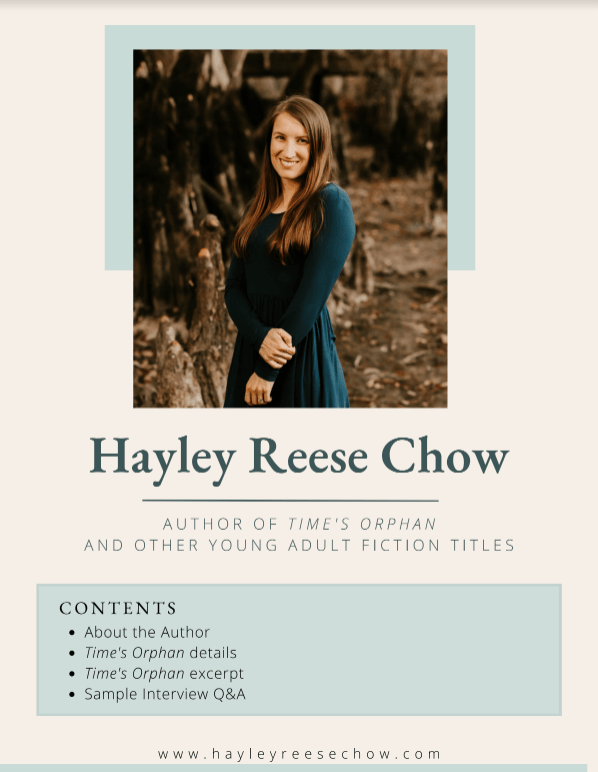
The first time I encountered the term “Media Kit” was when I was trying to figure out how to ask libraries and indie book stores if they’d like to carry my book. The internet recommended that I bring a media kit, but that sounded kind of intimidating, so I ignored it for a long time. But now that I’m working with Whimsical Publishing and I have more self-confidence than three years ago, I really wanted to try to pick up my self-promo game. (Especially because I really want Into the Churn to do well enough for me to write a sequel. 😭)

I knew Whimsical was going to arrange for me to do a book signing, and with looming fears of no one showing up, I wanted to see if I could get it listed in our local newspapers as an upcoming event. (By the by, It’s Saturday, April 15th from 12-2pm at Niceville Public Library, so if you’re around, definitely come say hi!) But…if I wanted to contact local newspapers, I knew I needed a media kit.

But I also still had no idea what went into a media kit. So I creeped on other authors’ media kits and did some intense googling. Not only did I find out what goes in a media kit, but I also found out that I should probably make a press release as well, and then I also apparently I needed like a whole media kit google drive folder to put my graphics and files in! Overall, actually creating it didn’t take too long, and I used Canva to put together the media kit portion.

Now, I’m still by no means an expert on these things, but I wanted to put my stuff out there in case some else needs inspiration or ideas for what they should put in there own. All my media kit materials and press kit stuff is located here.

But… then I also had to figure out how to email said local news and let them know that I existed. After querying the internet once again, I came up with an email that looks like this:

Subject Line: [Simplified Version of your Press Release Headline]

Dear [Local News Name]

I really appreciate [Local News Name] as a source of informative and relevant stories in our local area. I hope you’ll be able to use the below press release as a short news item or as an inspiration for an article on a related subject. Feel free to email me or call me at ### if you have any questions, and thank you so much for your time.

Respectfully,

Hayley Reese Chow
TwitterInstagram & Tiktok@hayleyreesechow
Full media kit here
[Press Release Below]

So, your next question is probably: did it work!? Well, I literally sent it out 1 business day ago, but I have had one taker so far, so huzzah! I also sent out my press release through PRLog and PRUrgent and called it a day. There are a ton of other free press release sites, but a lot of them require you to have a non-free email address (read: rejected my gmail), so that crossed the line of too much hassle for me.

Anyways, like I said, not exactly an expert over here, but since I spent a lot of time trying to figure out what goes in a press release, media kit, and email to the press, I figured I’d share what I cobbled together. Hopefully it’s helpful and good luck in your book launch!
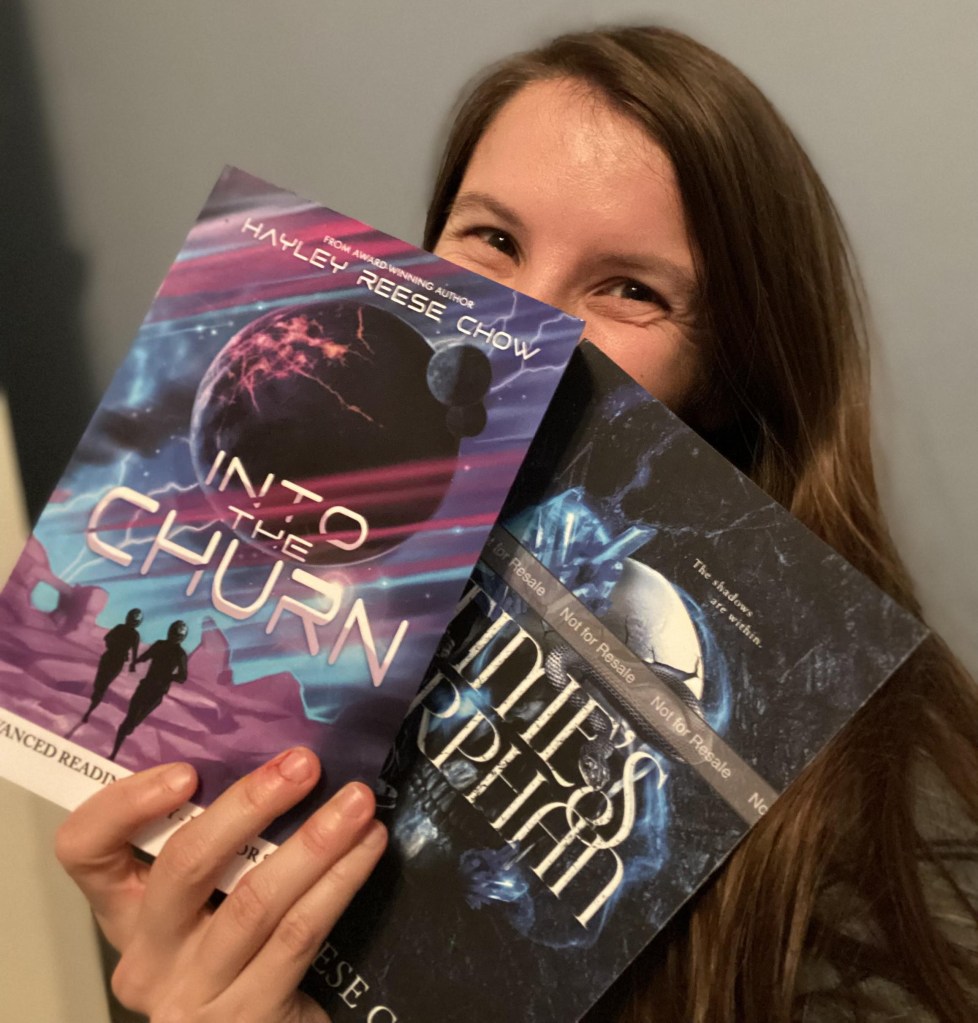
Speaking of book launches, Time’s Orphan is officially out in the world and Into the Churn comes out April 4th!

How I streamlined my writing process

Image by 0fjd125gk87 from Pixabay

So… I used to consider myself a “Turtle Writer.” And, my friends, it took me 8 years from when I started the first draft of my first book to when I published it. My second novel took me 4 years from start to publish.

For comparison, for my next release, Time’s Orphan, there will be 11 months between starting and publishing. And for my YA sci-fi launching in April, there were around 15 months from starting to when Whimsical Publishing acquired it.

And trust me, my two newest books are *way* better than my first two novels. (I still love my first two, but objectively, I’m a much better writer than I was 10 years ago, thank goodness.)

There are much faster writers than me out there, and much slower ones, but in any case, I halved my writing process time from Book 1 to Book 2, and by Book 8, I will have cut the time by 88%. One of my writing friends recently asked how I made that happen, so I thought I’d break it down here.

Image by Ralf Designs from Pixabay

Why did my first two books take so long?

This answer’s pretty easy. First, I didn’t actually believe I would publish it. I thought it was unsavable, and I thought by writing it, I had accomplished my writing goals, so I shelved it.

In 2017, I picked it back up, but I was still lost. I revised and edited as best as I could, but I wasn’t until I found the writing community on twitter, that I even thought about getting critique partners and an editor. After getting that feedback, I ended up *heavily* revising the first half of the book.

And there so many stops and starts during that time. I would say it’s because life got busy, which is true, but it’s also because I hadn’t found a rhythm. And more importantly, I still was unsure of my commitment to writing. I still thought Odriel’s Heirs would be the only book I would ever write. (Oh, silly me. 😂)

With the second book, I found indie author friends online as well as consistent critique partners, and that changed everything.

Image by Alan from Pixabay

So what happened with the third book?

We can break it out into a few important eureka moments:

  • I gained confidence. I’d put myself out there, been rejected dozens of times, had a few reviews that smarted, but had a lot more that encouraged me forward. With all that under my belt, I no longer had that paralyzing fear of failure that had kept me back. Even if the next book doesn’t get picked up by an agent, I can publish it myself – and that’s still very fulfilling to me.

  • Also, I realized I could work on multiple WIPs at one time. This was absolutely crucial. Right now I have *FIVE* (😱) WIPs – querying one, editing two, revising one, and plotting one. I cycle through them to give myself some perspective when I come back through drafts, and that way I can always be working on one thing while I’m waiting on responses to queries, CP feedback, editor feedback, etc.

  • Juggling WIPs also forced me to establish a process that worked for me. My experience allowed me to come up with realistic timelines and goals for myself to meet. It’s incredibly motivating for me to cross things off my list, and it lets me see the things I have to look forward to.

  • I found CPs & Betas I can depend on, and in a pinch, I knew how to find others quickly (psst critiquematch.com). Their objective feedback is invaluable to help me find problems EARLY in the process so I don’t get into the editing phase and have a huge “Oh Sh*t” moment. They also continued to teach me valuable writing lessons, and I hone my own editing skills on their work as well. These relationships are also a bulwark of support and encouragement which is also vital to a process heavy in critique.

  • I studied up on writing craft books which have given me epiphanies that also helping in every phase of the journey. But most critically, Save the Cat Writes the Novel gave me the framework I needed to learn how to plot effectively. Once again, it allowed me to identify problems very early, which eliminated a lot of time-consuming rewriting.

  • Inertia is powerful. I am *not* an every day writer by any means… but I usually do something writer-related (almost) every day, even if it’s something incredibly small like a tweet-sized story for vss365. The most difficult part of writing for me is starting *anything.* So by keeping that positive pressure, I can keep rolling without mentally having to do the thing where I show up to write and think “Um… how do I do this again?”

Anyways, those are just the tips that have worked for me. Ultimately, every writing speed is completely valid. As long as you’re enjoying the journey, that’s what’s most important.

Thanks for reading! I hope this was helpful, and if you have any other questions, let me know!