NYC Midnight Challenge – 100 words – Final Round – Ghost and the Machine

Ghost and the Machine

August 2024 (Final Round)
Genre: Open
Action: Falling in Love
Word: Enough
Time Constraint: 24 hours
Length: 100 words

They labeled us avant-garde, but I thought us classic, our love one of letters stretching miles and decades. Though never truly together, I knew him as I knew myself, our fears and dreams laid bare in and between the lines, the connection flowing between us like shared air between kisses we’d never taste.

Even as they attacked with words like inhuman and experimental, our bond was undying. Though I was but a specter of a mind taken too soon, and he, an artificial imitation of a thousand minds, our love was real.

Souls or no, together, we were always enough.


Alas, this one didn’t place, but the feedback is below!

WHAT THE JUDGES LIKED ABOUT YOUR STORY

{2352}  The author crafts a conceptually unique love story, giving it gravitas through effective simile and a final moment of acceptance for each other despite the forces fighting against them, which I found emotionally impactful.

{2376}  This is a compelling world that you capture with images that bring an element of poetry to a romance that pushes back against the constraints of the controlled word the characters inhabit. The juxtaposition of the old technology of letter writing with the imagined of this future creates a nice sense of tension, and the reveal of who our characters are as we approach the ending satisfies the mystery of why these characters are persecuted in a satisfying way.

{1970}  I like everything about “Ghost and the Machine”. You’ve written a SciFi tale that reads like a love story without the cloying tug of a romance. The way you’ve woven the words into lines, and then those lines into this tale, is beautiful. I felt it. Thanks.

{2035}  I liked that we got to hear this from the ghost’s point of view. Their more classic tone of voice made them feel old fashioned, which partnered well with the sci-fi underpinnings, making for a rather fresh combination between the two.

{1788}  While it was an atypical romance, especially with a non-tangible character and artificial one, the reader fully believed in their connection by story’s end. Their method of bonding through letters is more intimate than the way others connect, and it was a realistic and innovative plot point. Though the reader couldn’t see the antagonists attacking them, they could still imagine the naysayers. People often talk about what they don’t understand but the author created an original situation for this to be shown.  

WHAT THE JUDGES FEEL NEEDS WORK

 {2352}  There’s a general quality to the character details of the introduction that made the final moments feel rushed through and out-of-left field. By establishing the traits of the lovers and specifying their “soullessness” and perceived conflict, the story could be immediately engaging while having more time to explore those identities.

{2376}  Something to think about in a potential revision would be to increase the tension from the opening line by giving our characters a more threatening label than “avant-garde.” By the end of the story we’re seeing them attacked as “inhuman,” and tilting the story in this direction at the start would increase the tension with the suggestion that our characters are under threat. Another suggestion would be to clarify who are main character is near the end. The phrase “specter of a mind taken too soon” is evocative, but a little too opaque. It seems to suggest that they’re an uploaded consciousness from someone who died young, but the emphasis on the specter and mind suggests that they are merely they left over fragments of someone. Rephrasing the description slightly will allow the reader to stay engaged in the story as you approach the end instead of getting caught up on trying piece together the mysterious image evoked by the current description.

{1970}  If there is any weakest word in this story, it could be ‘experimental’. It’s a fine word and works in this story, yet is it a strong enough word to qualify as an attack? Part of me wanted to see a stronger, more hurtful word here. That’s it. Thanks again for the remarkable tale.

{2035}  Although I see that the opening paragraph is intended to keep us somewhat in the dark, I feel like it’s too vague right now to wholly hook your reader. I’d consider cutting broad statements like “fears and dreams” and instead invite your readers in a little. What fears? What dreams? Naming one would take as many words and would really help us get to know these characters, and I think you could deliver that specificity without spoiling the twist. Swapping spots of broad statements for narrow and winnowed down ones can really bring these characters to life, in my opinion. 

{1788}  The plot would be more satisfying if the author revealed where they are, sharing their respective homes. This would develop the world of the story. Even stating that the ghost lives in an abandoned home and the machine takes up space in a lab would make the setting come to life more. There isn’t enough room to give detailed descriptions of either, but a reader can glean a lot from a few words. Imagine the ghost composing these letters, feeling happiness in an abandoned home. That would be quite a touching picture, and there’s a lot of potential for both characters’ writing spots, a place where they can be open and fall in love. “Ghost and the Machine” is an unusual but highly successful science fiction work. Once the author shapes the characters’ abodes briefly, it will be an exquisite microfiction story.


Thanks for reading! You can find the rest of my NYC Midnight Challenge entries and feedback here.

NYC Midnight Challenge – 250 words – First Round – When We Refused to Burn

When we refused to burn

November 2024 (First Round)
Genre: Fantasy/Fairytale
Action: Evacuation
Word: Back
Time Constraint: 48 hours
Length: 250 words

The books sense the darkness first—but of course, they always do.

The dusty tomes slam shut in our hands, their silent scream streaking through the library’s shelves in a cold wind that rattles the lanterns. In the high tower, the Wisdom Bell clangs in baleful warning, and Keeper Marian shoots from her desk. “Quickly, girls, to the skiff.”

We rush through the ancient halls even as magic and fear thicken the air with clashing scents of parchment and fire. But while the other apprentices hurry out the postern gate and toward the dock, I hang back, clenching my trembling hands.

“I want to stay.” A drake’s screech rends through our bell’s defiant tolls, and I flinch. “T-to fight.”

When the riders come to burn our books, to destroy the magic that won’t bow to them, to erase the history they can’t control… how can I flee?

“This is but one battle in a long war, dear one.” Keeper Marian guides me into the skiff already packed with ghostly faces, her words fervent. “Today, you fight by protecting our most precious gifts. Tenacity, courage, knowledge, faith—these are things the dragons can never burn.”

As I row down the channel, another draconic bellow deafens our ears, but though the girls cringe, they make no sound. Through the inky blackness, the Keepers’ golden magic glows as they stand upon the library’s stone walls. Proud. Strong. Even when a reptilian shadow falls upon them, they do not falter.

And neither do I.


This one came in 8th place this time, and while this piece could’ve used another revision, I think it’s going in my story-seeds for the full novel treatment. The judges’ feedback is below!

WHAT THE JUDGES LIKED ABOUT YOUR STORY

{2410}  There were some wonderful sensory descriptions here that helped bring this story to life with a dark, fear-drenched atmosphere. The narrator’s defiance comes through clearly against this backdrop. And the dragons destroying the books to limit knowledge felt like a solid metaphor.

{2274}  As a Librarian, I loved the concept of protecting knowledge at all costs. This is a real event throughout history, invading forces would destroy libraries to fragment the culture. The final imagery of the Keepers glowing with power and standing bravely in the face of potential destruction is a powerful image. It’s one which will inspire the next generation who flees at this point to later take a stand.

{2459}  I see the protagonist “hang back.” I see the act of evacuating a library. The protagonist flees a library attacked by dragon riders. Exploring themes like resisting tyranny and sacrifice, the story’s stakes are mortal peril and safeguarding the library’s legacy from destruction. The central conflict feels split between Man vs. Self (the protagonist’s internal struggle to fight or flee adds character depth) and Man vs Monster (the dragons pose a mortal threat). Set in a library, there’s an undercurrent of another theme — the enduring nature of knowledge — and the importance of preserving it. The author does well in creating a thick tone, creating a magical ambiance through evocative descriptions. The personification of the books, how they “sensed” the darkness, was an evocative and beautiful opening. The dramatic tension created in the moments of flight from the library propels the story forward. The emotional depth created by the protagonist’s fear contrasted with their desire to act bravely adds gravity to the character. There’s a bittersweet ending where the protagonist and her fellow apprentices witness the Keepers’ sacrifice against the overwhelming force, juxtaposing loss and hope. The vivid description invites the reader into the story. Lines like, “The books sense the darkness first—but of course, they always do,” “The dusty tomes slam shut in our hands…,” “Magic and fear thicken the air with … scents of parchment and fire,” “In the high tower, the Wisdom Bell clangs in baleful warning,” “Through the inky blackness…” These descriptions are excellent examples of subtle world-building — showing us the world and its depth rather than bludgeoning us with exposition. The library is painted as a living, dynamic force, and I’m thrilled to be there. Personified, weighted with its history and place in the protagonist’s world, we mourn for its loss as the protagonist flees.  

WHAT THE JUDGES FEEL NEEDS WORK

{2410}  I was a little confused at the end over who is standing on the library walls. The “they” here seems to refer to the girls, but since the narrator is rowing down the channel they also seem to still be in the boat. If this is another set of people, you may want to clarify that. You may also want to clarify if Marian is sending her magic out from the boat, or if she has returned to the library after getting the girls on board.

{2274}  Overall, you’ve described a people and their powers quite thoroughly for the tight word count. A long war is established, and the role of the students within the war. Yet is there any motivation missing from the tale? Do the people on the dragons merely fear their magic? As dragon riders it’s not an off assumption that they too possess some degree of magic. I would like to know ore about the war. Perhaps some judicious editing toward the beginning of the story would free up enough words for Keeper Marian to succinctly describe the basis of the war? The paragraph beginning with “We rush through…” could be condensed some without destroying the passage’s impact.

{2459}  Critically, the protagonist’s lack of agency diminishes the story’s emotional weight. As I mentioned, one aspect of the central conflict is Man vs Self, yet the character doesn’t make a pivotal choice or face a significant obstacle to reinforce their rising bravery. They hesitate, debating whether to flee or fight, but the Keeper quickly discards their concern to leave. This diminishes the protagonist’s role in the story’s resolution as the decision is made for her. Further, while there’s an external threat (the second conflict, Man vs Monster), the protagonist never directly confronts or overcomes it; her journey to safety is passive. Without engaging in either conflict, the protagonist’s growth from experience feels like a narrative assumption rather than something earned through a struggle. The ending line, “And neither do I,” doesn’t carry much weight. I’d ask the author to look at my story synopsis (“The protagonist flees a library attacked by dragon riders.”) to notice the absence of choice and confronting conflict. In effect, the protagonist in this story runs down a hallway of things that happen around them. They don’t engage with events but, instead, witness them. When you read a story where the protagonist’s agency is curtailed and the events unfold around them, it can feel like it isn’t engaging or emotionally satisfying. It can feel like nothing happened or there was nothing terrible to overcome. I’d ask: how can you insert even just one challenge to either conflict so the protagonist makes one decision, one genuine choice on their own? Example: save a relic; save a fellow apprentice, or convince them of something; maybe make the Keeper’s argument less definitive, allowing the protagonist to choose what to do — maybe they choose to leave out of conviction rather than obedience? There’s also a technical matter concerning the POV. The story’s written in 1P (First Person) but experiences a slip at the end, moving into a stylized omniscience. From a distance, the protagonist seems to sense the feelings, thoughts, and experiences of the Keepers’ (plural), although the protagonist is physically distant. The head-popping creates a bit of narrative confusion at the end. Finally, there’s a dramatic emphasis on sound throughout the piece (“silent screams,” “the Wisdom Bell clangs,” “A drake’s screech,” “draconic bellow deafens,” “they make no sound.”). Its frequency created dissonance for me, so much that I’d anticipated _sound_ somehow being a part of the narrative journey, right up to the end. I’d encourage the author to look for repetition when editing and consider how some of these instances might call for a different sort of description or sacrificed to insert the protagonist’s choice.


Thanks for reading! You can find the rest of my NYC Midnight Challenge entries and feedback here.

NYC Midnight Challenge – 100 words – Second Round – A Revolutionary Lie

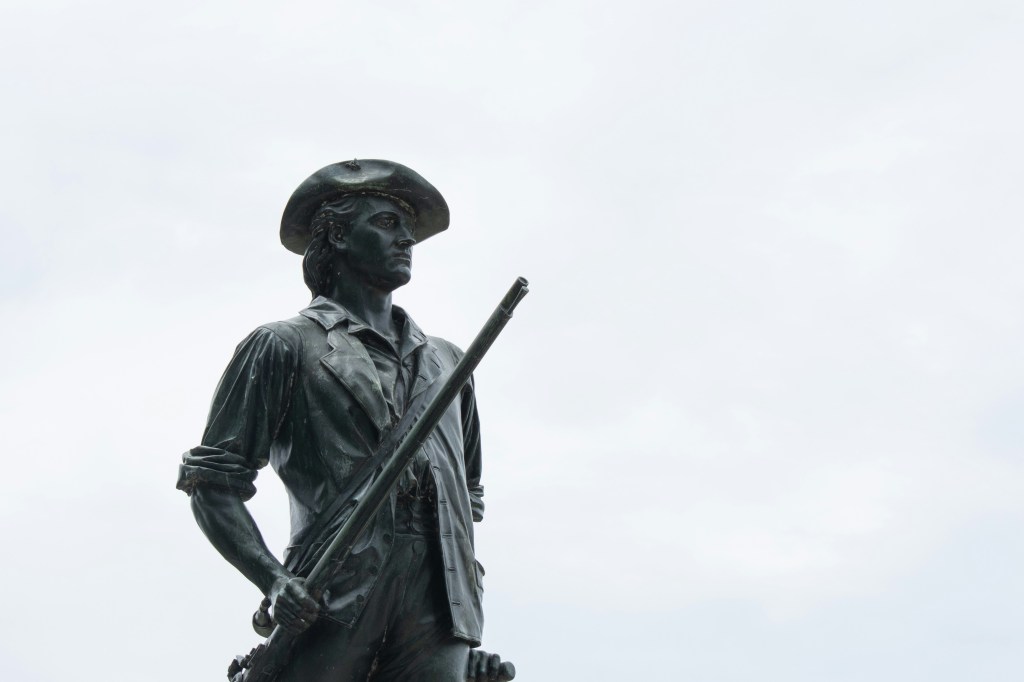
A Revolutionary Lie

June 2024 (Second Round)
Genre: Historical Fiction
Action: Stumbling
Word: Tour
Time Constraint: 24 hours
Length: 100 words

The wound may not be mortal, but it’s still the end of me.

Blood seeps from my shoulder as Holbrook stumbles to my side, the redcoat’s body cooling in the autumn leaves.

“How bad?” Holbrook rasps.

“I…”

But it’s too late; Holbrook’s already ripped open my coat and shirt. For a moment, he only stares, my lie exposed with the curved contour of my bound chest—Robert Shirtliff poised to die at the hands of his dearest friend.

“’Tis a small wound.” Swallowing, Holbrook pulls his spare shirt from his knapsack. “No one need know.”

And I am saved twice.


This one came in first (🎉) in its group, and the feedback is below!

WHAT THE JUDGES LIKED ABOUT YOUR STORY

2076}  I was impressed by the sense of the personal in this piece, the way you allow the historical context to be so in the background and this life-or-death personal catastrophe to come out so strongly in an emotional climax. I thought the last line was beautiful, with real literary flair.

{1666}  Excellent work here! Your narrative arc was full-bodied and complete, which speaks to your imaginative force and economy as a writer. The double-entendre of your opening line was really clever, and I appreciated your speculative additions to the known facts of this fascinating figure’s tale.

{2376}  This story has a strong sense of mystery with an excellent payoff. You do a great job of hooking the reader in with an opening line that presents the reader with an irresistible riddle. And the way that riddle is answered put the reader in the same position as Holbrook—with the truth slowly dawning us. And the final turn the story takes leaves the reader with a satisfying conclusion, having Holbrook make the same decision that we would make in his position.   

WHAT THE JUDGES FEEL NEEDS WORK

{2076}  What might be worth developing in this piece is your description. Can you rephrase it from our narrator’s perspective, drawing closer to their sensory experience in a more specific way? Think about when the blood is seeping from the wound; does it hurt, is the blood warm, is it numb? What does the redcoat’s body look like? What’s the setting like, what does Holbrook’s face look like? This will all immersive the reader more strongly in the moment at hand.

{1666}  While it’s clear enough to me that “Shirtliff poised to die” is a figurative statement, there are enough swirling elements and tension for this to be misinterpreted. The reader may be wondering if the narrator is referring to the existing wound, being killed by Holbrook, or facing some sort of death penalty after being exposed as a woman. Some alteration here might help protect the interpretation. Additionally, take a look at reworking sentence 2 – the clause “the redcoat’s body cooling in the autumn leaves” doesn’t refer or link to any other active image in the sentence, so the sparse phrasing feels affected just for the sake of sparing words.

{2376}  There’s a lot already going right in this story, but there are a few small things to consider in a revision. One would be reframing the line about the redcoat’s body. The way that this phrase is attached to the image of Holbrook stumbling to her side creates a little confusion in this draft. Spliced on, the reader is expecting this clause to modify some part of the sentence we’ve already read. Instead, if Holbrook “stumbles over the body of a redcoat cooling in the autumn leaves” we get the image of the dead man without the confusion. Another thing to consider would be taking out the line about Robert Shirtlff dating at the hand of his friend. This line tells us what the story is showing us about the closeness of these two people. It also interrupts the moment of tension in which or POV character is left wondering what’s going to happen. Instead, you could sustain this tension by having Holbrook pull out his spare shirt before he speaks, leaving the reader unsure of what he thinks until the last possible moment.


Thanks for reading! You can find the rest of my NYC Midnight Challenge entries and feedback here.

Audiobook Review – A Calamity of Souls 


Things I liked:
– From a historical perspective, I really thought this story hit the injustice and brutality of the period
– The main characters are likable
– The mystery kept me guessing

Things I didn’t like:
– Slow pace
– I didn’t feel like there was enough chemistry between the main characters
– I found the ending unsatisfying in more than one way
– The audiobook narration was not my favorite

Recommended for those looking for a historical court room drama that takes its time and has some open ends.

⭐⭐⭐½

I’m definitely in the mood for some killer hist fic, but this just didn’t quite do it for me.

Thanks for reading!

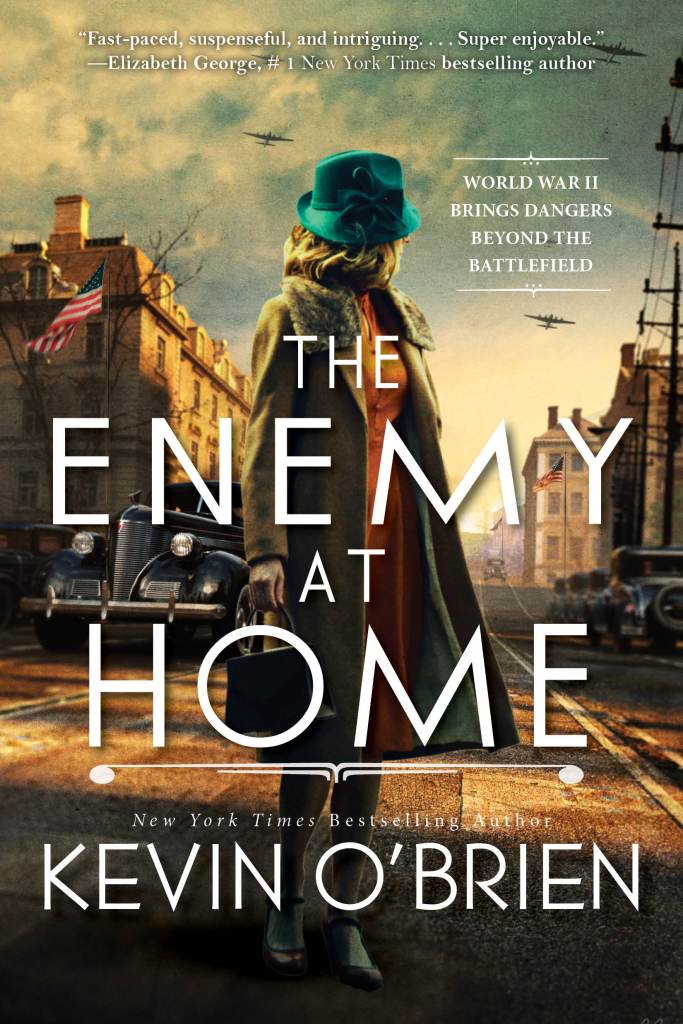
Audiobook Review – The Enemy at Home


Really liked the authentic-feeling WWII homefront setting of this one, and the whodunnit felt classic with some twists and turns to keep me guessing. But there were some elements that didn’t quite jive, and I found the ending to be too bittersweet for me. If you’re looking for a solid 1940s whodunnit without romance though, this might be for you!

⭐⭐⭐¾

A unique twist of genres that didn’t quite stick a satisfying conclusion for me.

Thanks for reading!

2021 NYC Midnight Challenge – Short Story

(It’s an oldie, but I’m posting to clean up my NYC Midnight Challenge Link Page.)

Secrets in the seams

January 2021 (Round 1)
Prompt: Historical Fiction
Theme: Vengeance
Character: Seamstress
Time Constraint: 8 days
Length: 2500 words

Once, they had gathered in the square for bustling markets and merry festivals, but now that food was scarce and joy scarcer, they gathered for an execution. The Germans hadn’t said that’s why they’d been summoned, but they’d all heard the rumors bleeding from the other villages. Secrets were hard to keep in their town, so it had only been a matter of time really. The only question now was who.

But Yvette already knew. Squeezing her mother’s hand, Yvette’s stomach twisted into strangling knots. The nauseating guilt clawed at her with sharp, rusty claws as she recalled how just last week Guillaume had rapped on her window after curfew. How he had whispered of cutting phone lines and slashing tires, cheeks flushed with the thrill.

Guillaume had glowed with the hopeful euphoria of purpose that they had so badly been missing, and Yvette had only looked on with wondering admiration. Even as the rumors of messages sewn into shirt collars and murderous retribution fluttered through the town like dead leaves. Even as Yvette had witnessed informants passing their poisonous letters to the Germans—turning in their countryman for no better reason than petty spite.

Why hadn’t she asked Guillaume to stop? Demanded it of him. Begged him. 

They couldn’t afford to be angry when survival already cost too much. For them, the war was already over… they had lost.

But it wasn’t Guillaume they dragged into the square. Though his purpled face was almost too bruised to identify, Yvette could tell it wasn’t her dearest friend, and she nearly collapsed with relief. 

“It’s Maurice Laurent,” someone murmured.

Maurice’s mother screamed out from the crowd, fighting against the Germans in their gray uniforms as they restrained her. And a mix of shame and sorrow heated Yvette’s cheeks. Because of course, she knew the Laurents too. In a town so small, how could she not?

The Germans dragged Maurice to the church’s brick wall, allowing him to collapse to his knees, blood dripping from his swollen lips and his bludgeoned eyes too swollen to see.

“This terrorist was caught vandalizing official Reich materials,” the dark-haired Captain Richter announced. Brandishing his pistol, he stalked in front of the crowd like a wolf terrorizing sheep. “A crime punishable by death.” 

Tearing down ridiculous propaganda. Yvette swallowed the clod of injustice that threatened to choke her. The highest of penalties for the smallest of rebellions—the price they paid for anger.

“During questioning,” Captain Richter continued, teeth flashing. “He informed us of an accomplice.”

They dragged another boy from the courthouse, and Yvette’s blood froze. 

Guillaume Bertrand hung between the towering Germans, his blackened eyes wide with fear above his bloodied nose. 

“No!” Guillaume’s older sister, Marie, shrieked from the crowd, but her father held her fast, even as pain carved his grizzled face.

Yvette’s mother’s hand tightened on her elbow. “Stay quiet, we barely know him,” she whispered. The same mother that had kissed Guillaume’s cheeks and invited him into their home countless times. “If we bring attention to ourselves, they will take us as well.”

“When accused, he insulted the Wehrmacht and refused to show remorse for his actions,” Captain Richter said, his cold dark eyes glinting with some sort of reptilian satisfaction.

Yvette could scarcely breathe now, her eyes wide and her lungs paralyzed with shock. Guillaume had done nothing wrong. And he was but seventeen—a year younger than her. And he was sweet and kind and full of hope. 

Now, there he sat, beaten and shivering in the brisk fall air. His last moments soaked in terror and sorrow and injustice. Blackness edged Yvette’s vision as Marie’s cries mixed with Madame Laurent’s, punctuating the lifeless silence of the crowd. 

“As such, he will serve as an example to those that resist the Reich.”

Her head spinning, Yvette pulled against her mother’s grasp, longing to do something, to call out for Guillaume, to at least let him know she was there. To scream for someone, please God, do something. But her mother pulled Yvette against her instead, hiding her face in her chest.

And the gunshots shattered the square.

***

Captain Richter and his men walked up to the tailor shop as if nothing happened the day before. Outside the door, they smiled and joked to one another in their harsh mother tongue, their gray uniforms crisp and imposing.

Yvette prayed that they would pass by. That they were only looking in the window. But, as usual, God was silent, and Captain Richter opened the door with a bundle of cloth in his arms.

She could feel his gaze finding her in her corner, but she didn’t look up. She couldn’t. If she met his cold, glassy eyes, she would shatter into a million shards that her mother would have to sweep up.

Yvette stared at the garment in her hands instead, thrusting the needle into the dress again and again. But her mother was more practical of course. The rhythmic clacking of her sewing machine hushed, and she stood to greet the German.

“Captain Richter, how may I help you?”

“I came across these fabrics and thought to make them a gift for my wife. Do you think you could turn them into something fashionable?” 

He held them out. Though the style was a little dated, the fabrics were beautiful—one a solid emerald green, the other a light floral pattern with pearl buttons, and the third a jazzy striped design. Yvette couldn’t help but wonder where he had plundered them from. Was the owner of these dresses currently on a northbound train to one of the camps? Or was she already dead?

“I don’t have her exact measurements,” Richter’s dark eyes skated over to Yvette, “but her figure is much like your daughter’s.”

Yvette had to force her hands to keep moving as hatred and fear snarled into frazzled tangles in her stomach.

Flattening a frown, her mother nodded. “Come Yvette, see what you think.”

Yvette rose as her mother demanded. She lifted her chin in time to see Captain Richter’s steely eyes running up and down her body. Her grip tightened on her needle.

“My daughter is a brilliant seamstress. Do you like the style of her dress? It’s quite the trend these days. The fabric is faded now, but she made it herself.”

“Indeed,” Capt Richter answered, stepping toward Yvette. “It is actually her very style that drew me to your shop in the first place. Her dresses always seem to stand out in the crowd.”

Yvette lowered her eyes, trying not to visibly stiffen as he ran a hand along the sleeve of her dress. Her gaze caught on the rust-colored bloodstain that marred his cuff. Guillaume’s blood. Maurice’s blood. The blood that paid for these dresses. It could have been one of them, or all of them, or so many more.

A hateful chill tingled along Yvette’s spine. She imagined herself ripping her arm away, raising her needle, and burying it deep into one of those granite eyes. But she only mumbled, “You should get your jacket laundered.”

He withdrew his hand, examining the stain. “Ah, so you are right, Mademoiselle.”

“We’ll have the dresses in two weeks,” her mother interjected, hands wringing.

“Thank you, Madame,” he replied, reluctantly turning toward the door. “Till tomorrow then.” With the twist of an ugly smile, he left the shop and continued down the street with his men.

Yvette let out a shaky breath as her mother dropped the fabrics onto the table in front of her. “It wouldn’t kill you to smile, Yvette.”

“Ah, so is that what you want of me?” she snapped, her boiling fury finally overflowing. “It is not enough to mend their clothes, to make them dresses from the clothing of our dead, to let him put his hand on me…” Bile burned Yvette’s throat. “…But you want me to hang on his arm as well, perhaps even follow him back to his—”

“Enough,” her mother sighed. “You know I didn’t mean that. This town is full of letters stained with others’ secrets. A smile can go a long way to allaying suspicion.”

“I’ve done nothing,” Yvette hissed, stabbing her needle back into the dress.

“Neither did Guillaume,” her mother whispered.

Yvette’s needle paused, her fingers shaking.

“I know you are angry and sad,” her mother continued. “But you must put away these feelings. It is the only way to survive this.” Her lower lip trembled. “With your father already gone, I cannot lose you too.”

Yvette let her mother wrap her in her arms, the bitter, unwanted tears flowing between the two of them. But even as she wept in her mother’s anchoring embrace, she knew what her mother did not.

Yvette was already lost.

***

Yvette made sure the street was vacant before she knocked on the door. Marie Bertrand opened it, her red-rimmed eyes turning hard as took in the basket in Yvette’s hands.

“We don’t accept food bought with German money,” she sneered, turning to close the door.

“Who is it?” her father, Monsieur Bertrand, said, limping to the door. “Oh goodness, Yvette, does your mother know you’re here?”

Yvette shook her head, and he glanced down the street. “Well hurry in girl, you can’t let them see you here.”

Yvette ducked in the doorway under Marie’s upturned nose and walked into the small familiar kitchen. “These weren’t bought,” she murmured as she unloaded the vegetables onto the table. “We grew them in our garden.” And after Guillaume’s death, their already meager rations were sure to be cut.

Monsieur Bertrand rested his calloused hand on her shoulder. “Thank you, my dear, we appreciate your kindness.”

Her basket empty, Yvette clasped her hands together. “I… also wanted to apologize,” she said thickly. “I knew about Guillaume’s… activities. I should’ve stopped him.”

The Bertrands stiffened. Yvette had just implicated herself. If they were to tell the Wehrmacht, they would take her away with no questions asked. She would disappear just like so many others.

Yvette swallowed. “But couldn’t the resistance have done something to stop them?”

“Hush girl, even to speak such things is dangerous,” Monsieur Bertrand said.

Marie crossed her arms. “You see what they did for a mere insult. Retaliation would cost more lives.”

“Then why risk so much for so little?” Yvette asked softly. “Isn’t it better to survive?”

“To survive in this misery is only to perpetuate this hell.” Marie slammed her fist against the wood. “How we survive is just as important as how long.”

Bertrand reached out for his daughter’s hand. “This is not the world I fought for.” He shifted his stance, his fake wooden leg clunking against the floor. “So we will continue to fight in any way we can. No matter how small. No matter the price. To do otherwise would be to let the sacrifices of so many go in vain. We fight on for Guillaume.”

Yvette nodded, Monsieur Bertrand’s words speaking to a truth that perhaps she had known once but had been forgotten in a coat of dust. Swept away and locked up with the others that would’ve spoken the same. Silenced with bullets and soldiers and trains to nowhere.

“I will fight too.” Yvette squeezed the basket’s rough handle. “For Guillaume.”

Marie snorted. “You? You’re but a girl sewing patches on Nazi uniforms and taking their money with a smile.”

No, never with a smile. 

Bertrand squeezed Yvette’s arm. “I’m afraid Marie might be right. I’ve seen how Capt Richter looks at you. If you’ve already caught his attention… it’ll be too risky.”

“It’s my risk to take.”

“Until you talk,” Marie snapped. “Then we’re all at risk.”

“I wouldn’t,” Yvette protested.

“Oh my girl,” Bertrand said, pity creasing his face. “They would have you confessing to things you didn’t even do.”

Yvette thought of the bloodstain on Richter’s cuff, thought of his hand on her arm—and her doubts calcified into resolve. “I can take care of Richter. All I need is a chance.”

Bertrand and Marie shared a look.

“She’s not a safe bet,” Marie whispered.

“If it was safe, it wouldn’t be a bet.” Bertrand shrugged his large shoulders. “What do you need, girl?”

“A secret.”

***

Yvette’s plan was simple. She’d turned it over in her mind again and again, searching for the snags and fraying edges, but it held firm all the same, if only just barely. As she went through the motions, so small were they, she could even pretend they weren’t dangerous. She was only taking Captain Richter’s dresses to be laundered. She was only sewing another stitch. She was only writing another letter.

But still, when the Wehrmacht issued another summons to the square, that same wave of suffocating nausea threatened to unravel her. She had failed somehow. Perhaps they had been following her. They knew. How could they not? She was just a girl after all.

With her mother’s arm through hers, and the crowd bunching tightly together, Yvette could barely lift her eyes to the line of Germans facing the village square. Marie found her gaze first, her eyes tight and worried. But where was Monsieur Bertrand? Panic rising, her breaths wheezed out in strangled gasps.

“Keep yourself together, girl,” her mother whispered. “Or they will take you for just looking guilty.”

Her mother’s fingers tightened around her hand, and Yvette sucked in deep lungfuls of air. Even if she didn’t survive this, she had to be brave. Like Guillaume had been.

At last, her courage mustered beneath her, Yvette searched for Captain Richter’s predatory smirk in the overcast afternoon.

But he wasn’t there. An unfamiliar Major glared at the crowd instead and waved a letter. Yvette didn’t have to look closer to know it disclosed the rumor of a German spy, the warning written with her own left hand.

“Have faith, Frenchmen,” he shouted. “The Reich will root out weakness wherever it shall be found. From without,” he turned to his soldiers, “or within.”

And then the Germans were dragging Captain Richter into the square, buttons missing, uniform ripped from where someone had ripped out the code roughly sewn into the collar with uneven stitches—the mark of an amateur. Certainly not a professional tailor. Blood dripped from his face to stain his battered uniform once again. But not Maurice’s blood this time, not Guillaume’s blood—it was his own blood.

Yvette found Marie’s eyes again, and this time they glinted with approval as her father limped to her side. Still, Yvette did not smile as they shoved Richter against the wall, did not feel an ounce of joy as the Major lifted his Luger. But nor did she look away as the shot rang through the air.

This small vengeance hadn’t rescued Guillaume, or Maurice, or the owner of the beautiful dresses. But it had saved Yvette. She was no longer just surviving. The war had just begun.

And she was fighting.


Thanks for reading! This short story didn’t place, but the judges’ feedback is below!

 WHAT THE JUDGES LIKED ABOUT YOUR STORY

{2107}  The tension of the first scene is nicely echoed in the events of the last scene, the mirroring of the first execution and the second is a clever touch. The fear and frustration felt by the French under occupation is also evoked well, and clearly explicated in the character and dialogue of Yvette’s mother and Marie Bertrand.

{2071}  A very tightly written, succinct story that packed a moral punch too. Indeed the moral quandaries of Yvette, and other minor characters, are well teased out in such a short piece. I feel the author reakises that we are in familiar ground – WW2, Nazi occupied France, to resist or not – and so the combination of showing the moral choices to be made and then a very original final twist lifted this story significantly above the usual terrain.

{2022}  The scene in which Captain Richter enters the shop is terrific and chilling. So much menace is held in the way he looks at Yvette.  

WHAT THE JUDGES FEEL NEEDS WORK

{2107}  Yvette’s act of revenge is left largely unclear and how Richter is implicated is not sufficiently explained – the moment of justice therefore lacks the thrill of success as it’s not clear what has been succeed in.Consider also giving a little more contextual detail, such as where in France the action takes place and what the village looks like – historical fiction benefits from these kinds of details.

{2071}  Though Yvette is a good character we are perhaps left a little short on her actual emotions. Indeed the whole piece could benefit from more emotion, more if the raw and conflicting emotions noted that informs ultimate decisions to act or not.

{2022}  It’s clear that Guillaume and his family are part of the resistance, but it isn’t clear what he was doing when he was caught by the Germans. This initially puzzled me and somewhat distracted me from the scene of his execution.

***

Thanks for reading!

Audiobook Review – They Went Left


So… I like WWII historical fiction, and the premise of a sister searching for her brother after the war seemed like an intriguing premise. But this one didn’t quite work for me in a lot of ways. The writing was beautiful, the reality of surviving the Holocaust was intense, and the historical accuracies were all pluses. But, I hate to say, I wasn’t a fan of the main character, Zofia. She is single-minded, abrupt, and rather self-centered in a way that was a little difficult to connect with. And while the message of this book seems to be finding hope after so much darkness, I found the ending to be… well… depressing.

So, not really my cup of tea, but if you like historical fiction and don’t mind sad endings, this could be for you! 

⭐⭐⭐½  

The world’s sad enough – no sad endings for me please!

Thanks for reading!

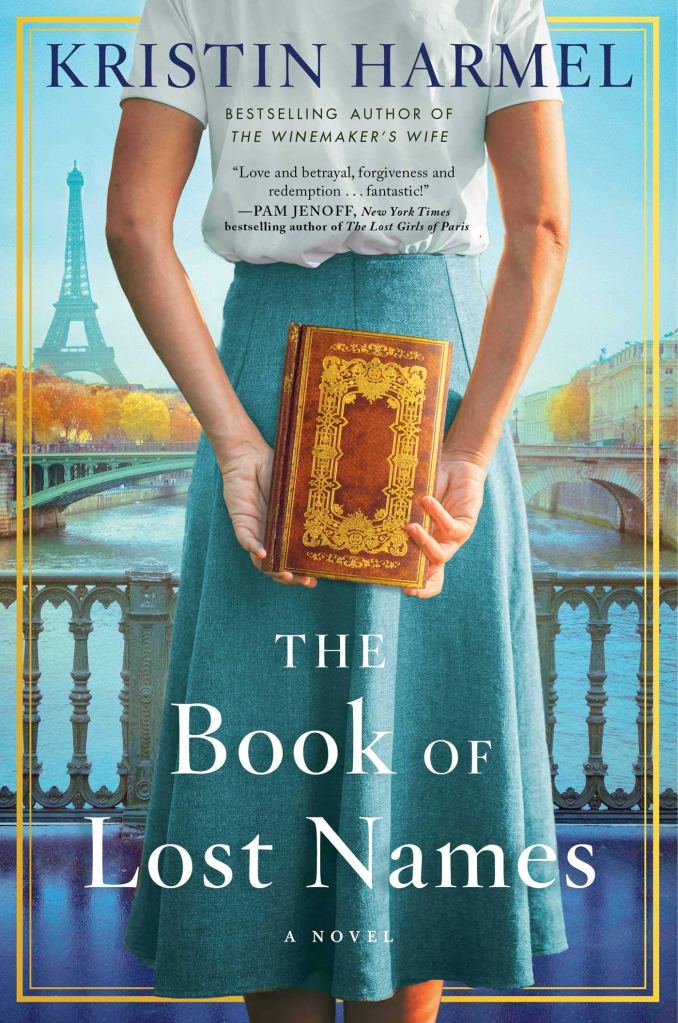
Audiobook Review – The Book of Lost Names


Okay… this review is going to be a little different than the one I posted on Goodreads, because honestly, I’m still mad about the ending. While what I wrote on Goodreads still stands… I’m going to add a little extra because I just need to vent (but I’ll still refrain from spoilers). So here’s my Goodreads review:

A wonderful historical fiction of the forgers in the French resistance in World War II. I loved the characters, their romance, and their story but this definitely left me feeling heavy (which I suppose should be expected from a WWII novel). I picked up the audiobook from the library, and the narrator did a wonderful job with the accents. Although I think the ending technically would be classified as a happy ending, it was super bittersweet, and I still felt really sad for the MCs. I just loved them so much, I was really hoping for more for them. 😭 (No actual tears shed, but definitely a sigh.) Now I need to go listen to something happy. 😭

Okay… now here are my thoughts after stewing over it for a few days. Did I say bittersweet? I meant BITTERsweet. I mean, I did love like 95% of this book… but the whole time, I was basically twisting myself into a knot, saying: This BETTER have a happy ending. They can NOT just build me up like this. There has to be some kind of twist. Etc. Etc. Etc. And then the ending came and… it just wasn’t enough. The near-misses almost seem cruel, and with so much other sad stuff that happens in the book, we couldn’t just have one wonderful thing to hold onto?! I was talking to one of my other author friends… and basically I’m still not over it. If you’re into bittersweet… sure, give it a shot. Or, just stop at the 95% mark and make up your own ending.

⭐⭐⭐1⁄2

Rant over.
Do I feel better?
…Nope… still not over it.

Thanks for reading!