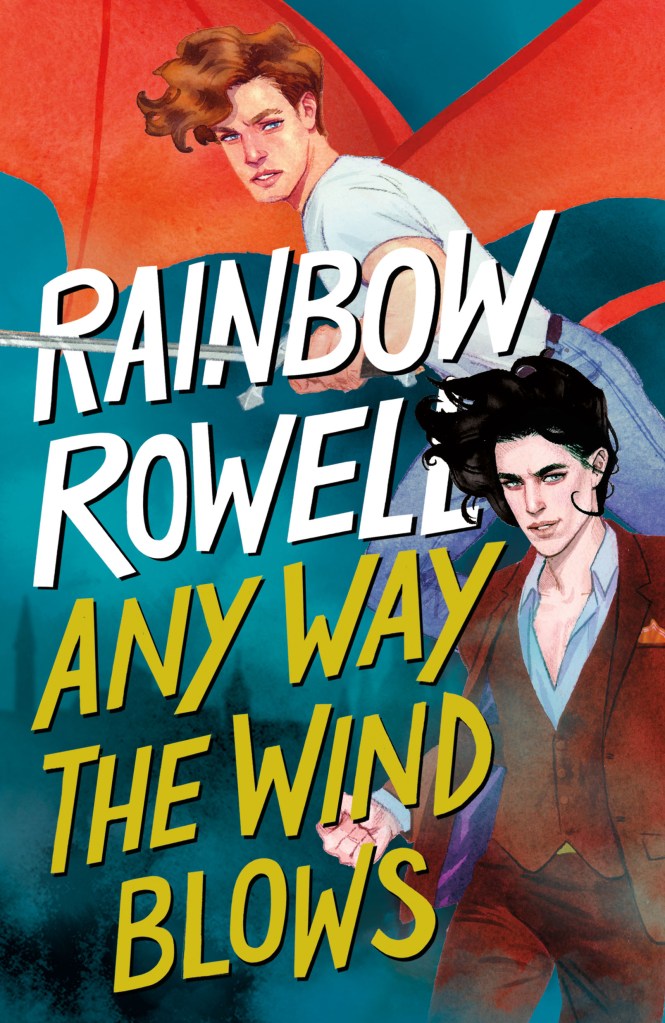
Audiobook Review – Any Way the Wind Blows (Simon Snow #3)


So I loved Simon Snow 1 & 2, and while I still enjoyed this one, it was probably my least favorite of the series. Of course, I love Simon and Baz and Penelope, but the story seemed to be a little wandering. And Agatha’s POV really didn’t come together for me this time. It felt disconnected from the others, and kind of incomplete. I’m not sure if there will be a book 4, but on the whole, I feel like Agatha has always been kind of an afterthought, and even more so in this book. Would still totally recommend this to fans of book 1 & 2, and would definitely read a book 4 if there ever is one!

⭐⭐⭐⭐¼

Cheers to more Simon Snow!

Thanks for reading!

NYC Midnight Challenge – Clark Kent Wears Tights

Clark kent wears tights

June 2023 (Second Round)
Genre: Comedy
Action: Putting on eyeglasses
Word: Member
Time Constraint: 24 hours
Length: 100 words

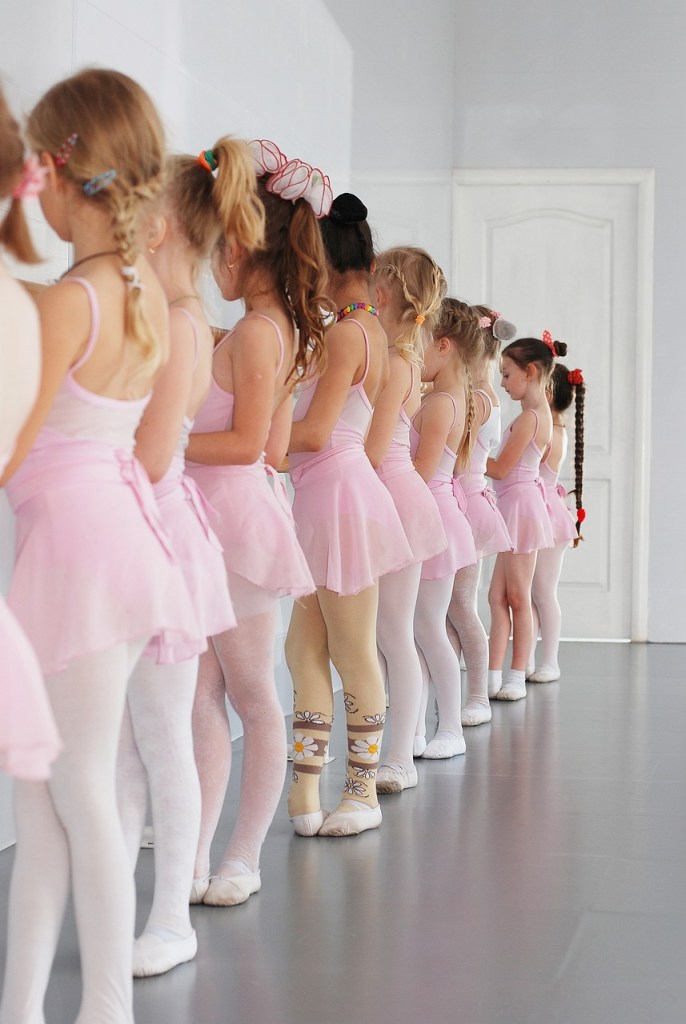
If someone recognizes me, I’ll never survive seventh grade. I don the square black glasses and face mask, desperately channeling Clark Kent before peeking into the ballet studio at the line of pink-clad girls. Oh god, I can’t go in there. When I asked Mom for dance lessons, I wanted to try hip-hop, not social suicide.

I’m about to flee when Aphrodite herself glides toward me with a smile. “You’re the new boy?”

My heart bursts into butterfly confetti, and I suddenly remember why everyone loves Clark.

He’s totally uncool.

But he always gets the girl.

“Why, yes, I am.”


This one came in second in my group, getting me into the final round! The feedback is below!

WHAT THE JUDGES LIKED ABOUT YOUR STORY

{1943}  This story had a really fun premise. I loved the image of him going in disguise because it was a ballet class. I laughed at the description of Aprhodite herself “gliding” up to greet him. So cute! The image of his heart bursting “into butterfly confetti” was lovely – this story really made me smile. Thank you for sharing it with me.   

{2138}  I really enjoyed this light and humorous piece. There’s a sweet and youthful energy throughout, and a strong sense of character via the narration: I loved his internal thought processes which also help to vividly bring the scene to life. You’ve established a great sense of pace to the narrating character’s journey too, taking him from nervous and uncertain to a quiet increase in confidence. “My heart bursts into butterfly confetti” was particularly lovely!  

{1980}  The narration in this piece is highly engaging. The narrator boasts a distinct voice, helping to establish a vivid understanding of both the immediate conflict they face and the wider world they inhabit outside of the dance studio. 

WHAT THE JUDGES FEEL NEEDS WORK

{1943}  I wonder if you needed the opening sentence. For me, the story became really engaging at “I don the square black glasses and face mask…” I think we know that he was a middle school from the fact that he wanted to try hip-hop, he used phrases such as “social suicide”, and he disguised himself to enter the dance studio. Perhaps you could work on some more middle-school style language in the opening paragraph to make sure that your characterization is very clear.

{2138}  Not much to critique here! Perhaps the only tweak I’d suggest is the combining of Clark Kent with Aphrodite – it may be a little odd for the reader to be presented with Greek mythology and the DC universe in the same piece?

{1980}  One element that could be further developed is the narrator’s body language, specifically in the moment they nearly “flee” from the studio. By fleshing out this moment of tension with imagery –are they grabbing their things, or checking to see if anyone is looking, for example — this would therefore heighten the relief as “Aphrodite” glides towards them. Perhaps by paring down some of the opening narration, this would leave more room in the word count to explore this narrative shift.


You can find the rest of my NYC Midnight Challenge entries and feedback here.

NYC Midnight Challenge – YouMask: Curing the Faces Only a Mother Could Love!

Youmask: Curing the faces only a mother could love!

May 2023 (First Round)
Genre: Sci-fi
Action: Putting something in a washing machine
Word: Card
Time Constraint: 24 hours
Length: 100 words

I lean into my daughter’s dark room, proffering a hamper. “Laundry?”

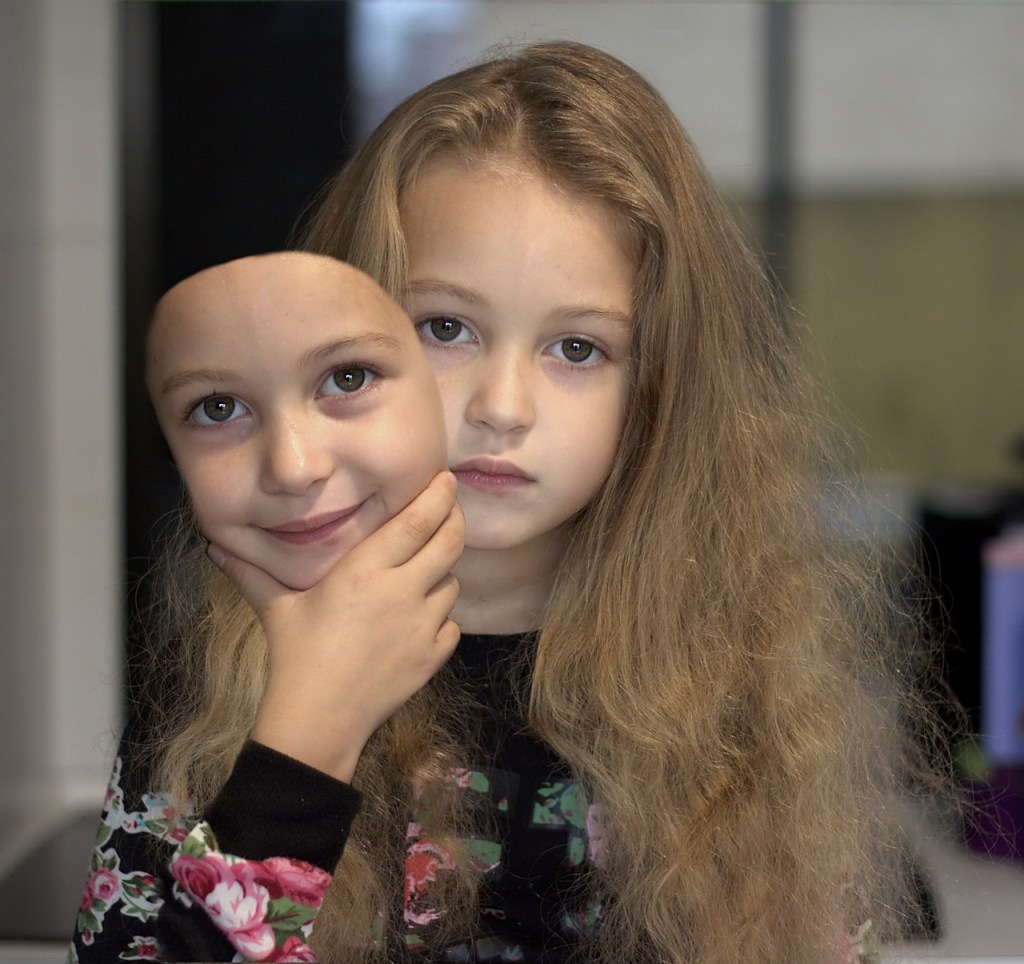
I haven’t seen her face in weeks—her crooked smile and freckles discarded for today’s trending features projected from her omnipresent YouMask. And the stupid thing’s not even washable.

An idea flutters through me like a scrap of hope.

“Can I wash your YouMask before it stinks?”

With a sleepy grumble, she pulls it from her head and drops it in my basket. I force myself not to run as I cross the house and load the washing machine.

She’ll be furious tomorrow, but at least I’ll see her.


This one came in first in my group, getting me into the second round! The feedback is below!

WHAT THE JUDGES LIKED ABOUT YOUR STORY

{2024}  I enjoyed the illustrative language in this piece, as well as the mother’s narrative voice. I appreciated the context about the YouMask told to us through the title, and then through the mother’s perspective as her daughter’s “face” projects ‘today’s trending features.” I enjoyed how her nostalgia for her daughter’s features was at odds with her discomfort for ruining the technology for her daughter’s own good. i enjoyed how this piece explored themes of coming of age and social media / body dysmorphia.  

{2147}  The author’s strong theme of re-connection between mother and daughter in the face (no pun intended) of technology. That’s entirely a prescient reality and great subject matter. A clever use for the required word “card” – “discarded”. 

{2274}  This is very depressing and sad bur that’s what comes from the truth it is speaking. Children are becoming so stigmatized and judged for their appearance that this scenario is a plausibility in our future. The mother’s yearning to see her child is such a primal instinct and should be a joyous aspect of their bond. Instead an artificial barrier appears to disrupt the norm.   

WHAT THE JUDGES FEEL NEEDS WORK

{2024}  This piece has a great foundation. Moving forward, I am most curious about whether the daughter bought the mask, or whether the mother gifted it to her? I am curious what age her daughter is, and whether there is an age limit to the technology?   

{2147}  The daughter, sleepy though she might be, consents to have the mask washed. She herself takes it off and puts it into her mother’s basket. So tomorrow, why would she be furious? She’d be furious if the mother took the mask while she was sleeping. Under these circumstances, it’s more likely she’ll be surprised, irritated at best. To improve the story adjust this one way or the other so the daughter’s reaction is appropriate.  

{2274}  Creating a fully fleshed-out vignette within such a tight word count is very challenging. It’s difficult to explain all aspects of the moment, but I can tell that a genuine effort was made. However, I was left with the following question. How old is the daughter? This simple data point would add a great deal to the story since kids become even more self-conscious as they get older. So a ten-year-old wearing the mask would be even sadder than a sixteen-yea-old. This would only need to be a few words which could be taken from some of the adjectives and descriptive phrases in the story without diminishing any section.


You can find the rest of my NYC Midnight Challenge entries and feedback here.

NYC Midnight Challenge Honorable Mention – 250 words – March 2023

When they’re ready

March 2023 (Final Round)
Genre: Open
Action: Shushing
Word: Blur
Time Constraint: 24 hours
Length: 250 words

Life was busy, death was simple, but it’s the hereafter I can’t take.

I arrived in a blur of shattering glass and crunching metal—a spike of agony and then… weightlessness. For days, I wandered familiar streets disoriented and untethered in ghastly shock, until I found the remains of my broken family and wished I hadn’t.

I desperately wanted to tear my eyes from the pudgy four-year-old impatiently asking for me while her unshaven, red-eyed father tied a messy ponytail instead of a braid and forgot Mommy’s special lullaby.

But there was no one to soothe him when he returned to our oversized bed with tears streaming into his stubble. Even as I lay with my ethereal arms around his trembling shoulders, gently shushing his heartbreaking cries, he couldn’t see me—the powerless, spectral witness wondering what crimes we’d committed for such a sentence.

Yet the moment passed, and our grief eased with the whisper of the hourglass. Their omnipresent shadow, I guided Nick’s hands with my translucent ones as he learned to braid, and I sang my lullaby alongside him as he tucked Amelia into bed.

The seasons changed, and now sweet giggles lace Mommy’s song as they hum together while Nick braids Amelia’s hair perfectly for her first day of school. She gets on the bus, laughing as she waves goodbye. Nick and I wave back, and when he finally smiles, relieved certainty enfolds me.

The hourglass falls silent, and I’m weightless once again—a shadow no more.


This one got an honorable mention in the final round! The best I’ve ever done so far! The feedback is below!

WHAT THE JUDGES LIKED ABOUT YOUR STORY

{2104}  This was a sweet and poignant story. I particularly loved the middle paragraph in which you wrote, “Even as I lay with my ethereal arms around his trembling shoulders, gently shushing his heartbreaking cries, he couldn’t see me—the powerless, spectral witness wondering what crimes we’d committed for such a sentence.” It is a lovely piece of imagery. Well done.   

{1788}  The narrator’s point of view was handled skillfully, allowing the reader to see the limitations of her new form but also her close proximity to the loved ones she couldn’t touch. It was particularly effective when she wasn’t able to comfort Nick, her “ethereal arms around his trembling shoulders.” For a wife or mother, it’s an unbearable thought, but it was heartening to see how quickly Nick found the strength to tend to Amelia.

The change in Amelia and Nick’s attitudes was more than believable, and the author showed the passage of time very well throughout the text. Even learning how to braid hair can take many days, and the sight of her perfect braid and his smile were lovely final images. 

{2206}  A tender story of loss and love with a hopeful ending.

“I wandered familiar streets disoriented and untethered in ghastly shock, until I found the remains of my broken family and wished I hadn’t.” A powerful depiction of life after death; dead but not gone. Here but separate.

“…spectral witness wondering what crimes we’d committed for such a sentence.” The agony of these words, speckled with alliteration and read like poetry.

An exquisite ending of the healing power of time and help from the unseen world.

  {1943}  Oh my gosh, this was a heartbreaking, beautifully written story. Your opening was powerful – I loved the balanced sentences and vivid description as she arrived in the hereafter and eventually “found the remains of my broken family and wished I hadn’t.” This was fabulous writing – you had me hooked right from the start. The concept of her being physically with Nick, while also being unseen by him was heart wrenching – I had tears in my eyes at “Their omnipresent shadow, I guided Nick’s hands with my translucent ones as he learned to braid”. The idea of them having a shared grief – “our grief eased with the whisper of the hourglass” – was beautiful. This image of the hourglass was wonderfully evocative, especially as it fell silent to release her at the end. Wonderful!

  {2274}  The story depicts grief through a harsh lens with not only the daughter but the husband suffering. They are both lost without her and at first all she can do is join in ineffectually. Indeed, why such a sentence? But the story takes a nice turn when the mother can help “train” daddy to improve his mothering. The ending is bittersweet but closes the most pressing part of the grief cycle. Amelia and Nick will make it and mom is finally able to move on to where she belongs. It’s a complex arc with three fully developed characters for such a tight word count.  

WHAT THE JUDGES FEEL NEEDS WORK

{2104}  Other than the middle section which I referred to above, there is still more room for showing rather than telling in your story. By showing more, you allow your readers to delve more deeply into the heart of your protagonist’s emotions. If you are able to do so, you will take your already very good story and move it up to the next level.   

{1788}  The hourglass could still be a more potent symbol. If it’s an hourglass that only exists in her mind, the author might want to make it a more vivid property. How much sand is left when it’s first mentioned? Do the falling grains unnerve her? Is she ready when the hourglass falls silent? Even if it’s not real, try to make it a more emotionally resonant entity, something she and the reader can see changing over time. The author may even want to place it in the first half. It seemed like a missed opportunity not to make it a more integral part of the piece, especially since it’s in the story’s last sentence.

“When They’re Ready” is a moving and unique microfiction work. Once the author highlights one symbol further, it will be even more wonderful. 

{2206}  The opening line didn’t seem to quite fit the rest of the narrative. In one way, her death was simple, quick even with no effort on her part. But simple doesn’t quite capture the pain of it. Likewise, the first moments of the hereafter, described so powerfully by the writer, would have been very difficult to take, yet she is able to help her husband and daughter as well as witness their healing and moving on to new life, and she seems at peace moving on, too. I would recommend beginning with “I arrived in a blur…” and use the extra words to give the reader a peek of her new life.  

{1943}  I thought your story was excellent, and I found it very difficult to find anything major to suggest that you edit. Perhaps you could consider the transition to “But there was no one to soothe him” – I paused here to reread, wondering why there was “But” at the start of the paragraph. To me, it felt a little awkward that you moved on to consider “him”, as she’d been unable to tear her eyes from the child, not the husband. After I reread, I wondered if you meant that he’d soothed Amelia when tying her hair, whereas nobody was there to soothe him, but this connection felt tenuous. I was also curious about the transition “Yet the moment passed”, as again, the tone of this felt a little disconnected to the previous paragraph. Maybe editing these two transitions could create a smoother read, but honestly, I am nitpicking as your writing was outstanding. 🙂

  {2274}  There’s never a clear explanation about how the mother is finally able to act upon her family when she couldn’t in the beginning. In this world, is it just something that must be learned? Did her spirit become stronger? It’s challenging to attack all details within a short story but this detail is relevant to the ending and some fleshing out would help the reader feel the narrative arc is complete. To gain the word count, a little could be trimmed throughout by choosing what adjectives and phrases are less necessary.


You can find the rest of my NYC Midnight Challenge entries and feedback here.

2021 NYC Midnight Challenge – Short Story

(It’s an oldie, but I’m posting to clean up my NYC Midnight Challenge Link Page.)

Secrets in the seams

January 2021 (Round 1)
Prompt: Historical Fiction
Theme: Vengeance
Character: Seamstress
Time Constraint: 8 days
Length: 2500 words

Once, they had gathered in the square for bustling markets and merry festivals, but now that food was scarce and joy scarcer, they gathered for an execution. The Germans hadn’t said that’s why they’d been summoned, but they’d all heard the rumors bleeding from the other villages. Secrets were hard to keep in their town, so it had only been a matter of time really. The only question now was who.

But Yvette already knew. Squeezing her mother’s hand, Yvette’s stomach twisted into strangling knots. The nauseating guilt clawed at her with sharp, rusty claws as she recalled how just last week Guillaume had rapped on her window after curfew. How he had whispered of cutting phone lines and slashing tires, cheeks flushed with the thrill.

Guillaume had glowed with the hopeful euphoria of purpose that they had so badly been missing, and Yvette had only looked on with wondering admiration. Even as the rumors of messages sewn into shirt collars and murderous retribution fluttered through the town like dead leaves. Even as Yvette had witnessed informants passing their poisonous letters to the Germans—turning in their countryman for no better reason than petty spite.

Why hadn’t she asked Guillaume to stop? Demanded it of him. Begged him. 

They couldn’t afford to be angry when survival already cost too much. For them, the war was already over… they had lost.

But it wasn’t Guillaume they dragged into the square. Though his purpled face was almost too bruised to identify, Yvette could tell it wasn’t her dearest friend, and she nearly collapsed with relief. 

“It’s Maurice Laurent,” someone murmured.

Maurice’s mother screamed out from the crowd, fighting against the Germans in their gray uniforms as they restrained her. And a mix of shame and sorrow heated Yvette’s cheeks. Because of course, she knew the Laurents too. In a town so small, how could she not?

The Germans dragged Maurice to the church’s brick wall, allowing him to collapse to his knees, blood dripping from his swollen lips and his bludgeoned eyes too swollen to see.

“This terrorist was caught vandalizing official Reich materials,” the dark-haired Captain Richter announced. Brandishing his pistol, he stalked in front of the crowd like a wolf terrorizing sheep. “A crime punishable by death.” 

Tearing down ridiculous propaganda. Yvette swallowed the clod of injustice that threatened to choke her. The highest of penalties for the smallest of rebellions—the price they paid for anger.

“During questioning,” Captain Richter continued, teeth flashing. “He informed us of an accomplice.”

They dragged another boy from the courthouse, and Yvette’s blood froze. 

Guillaume Bertrand hung between the towering Germans, his blackened eyes wide with fear above his bloodied nose. 

“No!” Guillaume’s older sister, Marie, shrieked from the crowd, but her father held her fast, even as pain carved his grizzled face.

Yvette’s mother’s hand tightened on her elbow. “Stay quiet, we barely know him,” she whispered. The same mother that had kissed Guillaume’s cheeks and invited him into their home countless times. “If we bring attention to ourselves, they will take us as well.”

“When accused, he insulted the Wehrmacht and refused to show remorse for his actions,” Captain Richter said, his cold dark eyes glinting with some sort of reptilian satisfaction.

Yvette could scarcely breathe now, her eyes wide and her lungs paralyzed with shock. Guillaume had done nothing wrong. And he was but seventeen—a year younger than her. And he was sweet and kind and full of hope. 

Now, there he sat, beaten and shivering in the brisk fall air. His last moments soaked in terror and sorrow and injustice. Blackness edged Yvette’s vision as Marie’s cries mixed with Madame Laurent’s, punctuating the lifeless silence of the crowd. 

“As such, he will serve as an example to those that resist the Reich.”

Her head spinning, Yvette pulled against her mother’s grasp, longing to do something, to call out for Guillaume, to at least let him know she was there. To scream for someone, please God, do something. But her mother pulled Yvette against her instead, hiding her face in her chest.

And the gunshots shattered the square.

***

Captain Richter and his men walked up to the tailor shop as if nothing happened the day before. Outside the door, they smiled and joked to one another in their harsh mother tongue, their gray uniforms crisp and imposing.

Yvette prayed that they would pass by. That they were only looking in the window. But, as usual, God was silent, and Captain Richter opened the door with a bundle of cloth in his arms.

She could feel his gaze finding her in her corner, but she didn’t look up. She couldn’t. If she met his cold, glassy eyes, she would shatter into a million shards that her mother would have to sweep up.

Yvette stared at the garment in her hands instead, thrusting the needle into the dress again and again. But her mother was more practical of course. The rhythmic clacking of her sewing machine hushed, and she stood to greet the German.

“Captain Richter, how may I help you?”

“I came across these fabrics and thought to make them a gift for my wife. Do you think you could turn them into something fashionable?” 

He held them out. Though the style was a little dated, the fabrics were beautiful—one a solid emerald green, the other a light floral pattern with pearl buttons, and the third a jazzy striped design. Yvette couldn’t help but wonder where he had plundered them from. Was the owner of these dresses currently on a northbound train to one of the camps? Or was she already dead?

“I don’t have her exact measurements,” Richter’s dark eyes skated over to Yvette, “but her figure is much like your daughter’s.”

Yvette had to force her hands to keep moving as hatred and fear snarled into frazzled tangles in her stomach.

Flattening a frown, her mother nodded. “Come Yvette, see what you think.”

Yvette rose as her mother demanded. She lifted her chin in time to see Captain Richter’s steely eyes running up and down her body. Her grip tightened on her needle.

“My daughter is a brilliant seamstress. Do you like the style of her dress? It’s quite the trend these days. The fabric is faded now, but she made it herself.”

“Indeed,” Capt Richter answered, stepping toward Yvette. “It is actually her very style that drew me to your shop in the first place. Her dresses always seem to stand out in the crowd.”

Yvette lowered her eyes, trying not to visibly stiffen as he ran a hand along the sleeve of her dress. Her gaze caught on the rust-colored bloodstain that marred his cuff. Guillaume’s blood. Maurice’s blood. The blood that paid for these dresses. It could have been one of them, or all of them, or so many more.

A hateful chill tingled along Yvette’s spine. She imagined herself ripping her arm away, raising her needle, and burying it deep into one of those granite eyes. But she only mumbled, “You should get your jacket laundered.”

He withdrew his hand, examining the stain. “Ah, so you are right, Mademoiselle.”

“We’ll have the dresses in two weeks,” her mother interjected, hands wringing.

“Thank you, Madame,” he replied, reluctantly turning toward the door. “Till tomorrow then.” With the twist of an ugly smile, he left the shop and continued down the street with his men.

Yvette let out a shaky breath as her mother dropped the fabrics onto the table in front of her. “It wouldn’t kill you to smile, Yvette.”

“Ah, so is that what you want of me?” she snapped, her boiling fury finally overflowing. “It is not enough to mend their clothes, to make them dresses from the clothing of our dead, to let him put his hand on me…” Bile burned Yvette’s throat. “…But you want me to hang on his arm as well, perhaps even follow him back to his—”

“Enough,” her mother sighed. “You know I didn’t mean that. This town is full of letters stained with others’ secrets. A smile can go a long way to allaying suspicion.”

“I’ve done nothing,” Yvette hissed, stabbing her needle back into the dress.

“Neither did Guillaume,” her mother whispered.

Yvette’s needle paused, her fingers shaking.

“I know you are angry and sad,” her mother continued. “But you must put away these feelings. It is the only way to survive this.” Her lower lip trembled. “With your father already gone, I cannot lose you too.”

Yvette let her mother wrap her in her arms, the bitter, unwanted tears flowing between the two of them. But even as she wept in her mother’s anchoring embrace, she knew what her mother did not.

Yvette was already lost.

***

Yvette made sure the street was vacant before she knocked on the door. Marie Bertrand opened it, her red-rimmed eyes turning hard as took in the basket in Yvette’s hands.

“We don’t accept food bought with German money,” she sneered, turning to close the door.

“Who is it?” her father, Monsieur Bertrand, said, limping to the door. “Oh goodness, Yvette, does your mother know you’re here?”

Yvette shook her head, and he glanced down the street. “Well hurry in girl, you can’t let them see you here.”

Yvette ducked in the doorway under Marie’s upturned nose and walked into the small familiar kitchen. “These weren’t bought,” she murmured as she unloaded the vegetables onto the table. “We grew them in our garden.” And after Guillaume’s death, their already meager rations were sure to be cut.

Monsieur Bertrand rested his calloused hand on her shoulder. “Thank you, my dear, we appreciate your kindness.”

Her basket empty, Yvette clasped her hands together. “I… also wanted to apologize,” she said thickly. “I knew about Guillaume’s… activities. I should’ve stopped him.”

The Bertrands stiffened. Yvette had just implicated herself. If they were to tell the Wehrmacht, they would take her away with no questions asked. She would disappear just like so many others.

Yvette swallowed. “But couldn’t the resistance have done something to stop them?”

“Hush girl, even to speak such things is dangerous,” Monsieur Bertrand said.

Marie crossed her arms. “You see what they did for a mere insult. Retaliation would cost more lives.”

“Then why risk so much for so little?” Yvette asked softly. “Isn’t it better to survive?”

“To survive in this misery is only to perpetuate this hell.” Marie slammed her fist against the wood. “How we survive is just as important as how long.”

Bertrand reached out for his daughter’s hand. “This is not the world I fought for.” He shifted his stance, his fake wooden leg clunking against the floor. “So we will continue to fight in any way we can. No matter how small. No matter the price. To do otherwise would be to let the sacrifices of so many go in vain. We fight on for Guillaume.”

Yvette nodded, Monsieur Bertrand’s words speaking to a truth that perhaps she had known once but had been forgotten in a coat of dust. Swept away and locked up with the others that would’ve spoken the same. Silenced with bullets and soldiers and trains to nowhere.

“I will fight too.” Yvette squeezed the basket’s rough handle. “For Guillaume.”

Marie snorted. “You? You’re but a girl sewing patches on Nazi uniforms and taking their money with a smile.”

No, never with a smile. 

Bertrand squeezed Yvette’s arm. “I’m afraid Marie might be right. I’ve seen how Capt Richter looks at you. If you’ve already caught his attention… it’ll be too risky.”

“It’s my risk to take.”

“Until you talk,” Marie snapped. “Then we’re all at risk.”

“I wouldn’t,” Yvette protested.

“Oh my girl,” Bertrand said, pity creasing his face. “They would have you confessing to things you didn’t even do.”

Yvette thought of the bloodstain on Richter’s cuff, thought of his hand on her arm—and her doubts calcified into resolve. “I can take care of Richter. All I need is a chance.”

Bertrand and Marie shared a look.

“She’s not a safe bet,” Marie whispered.

“If it was safe, it wouldn’t be a bet.” Bertrand shrugged his large shoulders. “What do you need, girl?”

“A secret.”

***

Yvette’s plan was simple. She’d turned it over in her mind again and again, searching for the snags and fraying edges, but it held firm all the same, if only just barely. As she went through the motions, so small were they, she could even pretend they weren’t dangerous. She was only taking Captain Richter’s dresses to be laundered. She was only sewing another stitch. She was only writing another letter.

But still, when the Wehrmacht issued another summons to the square, that same wave of suffocating nausea threatened to unravel her. She had failed somehow. Perhaps they had been following her. They knew. How could they not? She was just a girl after all.

With her mother’s arm through hers, and the crowd bunching tightly together, Yvette could barely lift her eyes to the line of Germans facing the village square. Marie found her gaze first, her eyes tight and worried. But where was Monsieur Bertrand? Panic rising, her breaths wheezed out in strangled gasps.

“Keep yourself together, girl,” her mother whispered. “Or they will take you for just looking guilty.”

Her mother’s fingers tightened around her hand, and Yvette sucked in deep lungfuls of air. Even if she didn’t survive this, she had to be brave. Like Guillaume had been.

At last, her courage mustered beneath her, Yvette searched for Captain Richter’s predatory smirk in the overcast afternoon.

But he wasn’t there. An unfamiliar Major glared at the crowd instead and waved a letter. Yvette didn’t have to look closer to know it disclosed the rumor of a German spy, the warning written with her own left hand.

“Have faith, Frenchmen,” he shouted. “The Reich will root out weakness wherever it shall be found. From without,” he turned to his soldiers, “or within.”

And then the Germans were dragging Captain Richter into the square, buttons missing, uniform ripped from where someone had ripped out the code roughly sewn into the collar with uneven stitches—the mark of an amateur. Certainly not a professional tailor. Blood dripped from his face to stain his battered uniform once again. But not Maurice’s blood this time, not Guillaume’s blood—it was his own blood.

Yvette found Marie’s eyes again, and this time they glinted with approval as her father limped to her side. Still, Yvette did not smile as they shoved Richter against the wall, did not feel an ounce of joy as the Major lifted his Luger. But nor did she look away as the shot rang through the air.

This small vengeance hadn’t rescued Guillaume, or Maurice, or the owner of the beautiful dresses. But it had saved Yvette. She was no longer just surviving. The war had just begun.

And she was fighting.


Thanks for reading! This short story didn’t place, but the judges’ feedback is below!

 WHAT THE JUDGES LIKED ABOUT YOUR STORY

{2107}  The tension of the first scene is nicely echoed in the events of the last scene, the mirroring of the first execution and the second is a clever touch. The fear and frustration felt by the French under occupation is also evoked well, and clearly explicated in the character and dialogue of Yvette’s mother and Marie Bertrand.

{2071}  A very tightly written, succinct story that packed a moral punch too. Indeed the moral quandaries of Yvette, and other minor characters, are well teased out in such a short piece. I feel the author reakises that we are in familiar ground – WW2, Nazi occupied France, to resist or not – and so the combination of showing the moral choices to be made and then a very original final twist lifted this story significantly above the usual terrain.

{2022}  The scene in which Captain Richter enters the shop is terrific and chilling. So much menace is held in the way he looks at Yvette.  

WHAT THE JUDGES FEEL NEEDS WORK

{2107}  Yvette’s act of revenge is left largely unclear and how Richter is implicated is not sufficiently explained – the moment of justice therefore lacks the thrill of success as it’s not clear what has been succeed in.Consider also giving a little more contextual detail, such as where in France the action takes place and what the village looks like – historical fiction benefits from these kinds of details.

{2071}  Though Yvette is a good character we are perhaps left a little short on her actual emotions. Indeed the whole piece could benefit from more emotion, more if the raw and conflicting emotions noted that informs ultimate decisions to act or not.

{2022}  It’s clear that Guillaume and his family are part of the resistance, but it isn’t clear what he was doing when he was caught by the Germans. This initially puzzled me and somewhat distracted me from the scene of his execution.

***

Thanks for reading!
Audiobook Review – Book Lovers


Dannnnnng. This was a good friggen book.

Okay. THIS BOOK. This was another one that I came into with big expectations. The hype has been CRAZY, and I loved Beach Read (though not People We Meet on Vacation, so this was an Emily Henry tiebreaker for me.)

And boy, did she deliver. The characters are likable and relatable, they had great chemistry, the concept is fun, and the twists fit perfectly like missing puzzle pieces. One thing I love about this book and Beach Read is that while it is, at its core, a romance, it goes so much deeper than just the relationship and I love the growth her characters undergo in her novels. Her writing is beautiful as she peels back the onion layers of her characters, and I am so here for every word. Also the audiobook narration is fantastic. There is some steam and language so if you’re not into that, beware, but otherwise, I’m recommending this one to all romance fans, and I’ll definitely be picking up Emily Henry’s next book, whatever it is.

My favorite read of the year so far. Five glittering stars.

🌟🌟🌟🌟🌟

Eeeee! This one made me so happy!

Thanks for reading!

Book Review – World Departed


I loved Fleming’s Until the End of the World series so I was totally ready to jump back into another novel from this universe. And I have to say, one thing Fleming does AMAZINGLY well is the redemption arc. Seriously, she gets me every time, and I love it. Rose, Clara and Tom were all great, but Craig’s POV kind of fell flat for me here, and while I always felt like Until the End of the World moved really fast, this one seemed to drag on, and I don’t feel like the danger and tension were quite as tense as in the original series. While I probably won’t pick up the sequel, I think I’ll still try out Mordacious, the other series in this universe. Still, if you’re a fan of Until the End of the World, I’d definitely give it a look. More apocalypse zombie fun, just maybe a bit on the slower side.

⭐⭐⭐⭐

I love me some zombie books.

Thanks for reading!

Audiobook Review – The Dead Romantics


Okay, so I feel like this book has been crazy hyped, and I loved Ashley Poston’s Geekerella so it’s important to know I came in with some INTENSE expectations. Which were… mostly met. This book is basically like Just Like Heaven (romcom with Mark Ruffalo and Reese Witherspoon—if you haven’t seen it, you should) meets The Adams Family. While the story was charming, the writing is fun, and the characters were likable, the chemistry between them just wasn’t quite there for me, and I knew immediately what the twist was. Still a really solid read I would recommend to all romcom fans out there, but I’m not sure it quite lives up to the super intense hype.

⭐⭐⭐⭐½

Aw it’s just so cozy!

Thanks for reading!

Audiobook Review – Marigolds for Malice


Marigolds for Malice has many of the same charms as the first two books, but in this one it seems to come off a little more forced or formulaic. It’s still a cozy and charming mystery with feel-good vibes, cute characters, and a sprinkle of magic, but I didn’t find the case or the stakes quite as high here for Elliana. I think probably most of the problem lies in that the love interest is back, and he seems very… lukewarm. Like, it actually occurred to me that the characters could amicably part ways, and I’d be totally fine with it. Still, though, after reading a few gritty thrillers, this one was a pleasant listen, and I’d still recommend to fans of the first two.

⭐⭐⭐½

C’mon, Ritter, you need to step up your game.

Thanks for reading!

Audiobook Review – Nightshade for Warning


Nightshade for Warning basically has most of what made the first entry in the series so charming- cute town, fun characters, interesting light paranormal aspects. Once again, Elliana is forced to help solve another mystery that hits a little too close to home for comfort, and overall I just found this to be a relaxing, enjoyable read – another cozy mystery that plays on the olfactory senses and a subtle type of magic.

However, in book 2, the love interest is pretty much out of the picture, so I missed the sweet romance from the first book. So, maybe not quite as good as book 1, but would still definitely recommend to readers of the first entry.

⭐⭐⭐⭐½

Aw it’s just so cozy!

Thanks for reading!