So as a writing mentor, I find this question a lot, and honestly it’s highly dependent on your own personal goals and preferences. But since, I’ve done all three of these things, I thought I’d break down my thoughts on it in case it’s helpful to anyone.
My goal has always been for my books to reach as many readers who will enjoy them as possible. So I started out querying agents, because I knew that I wouldn’t be able to match the marketing and distribution of a big-five publisher by myself.
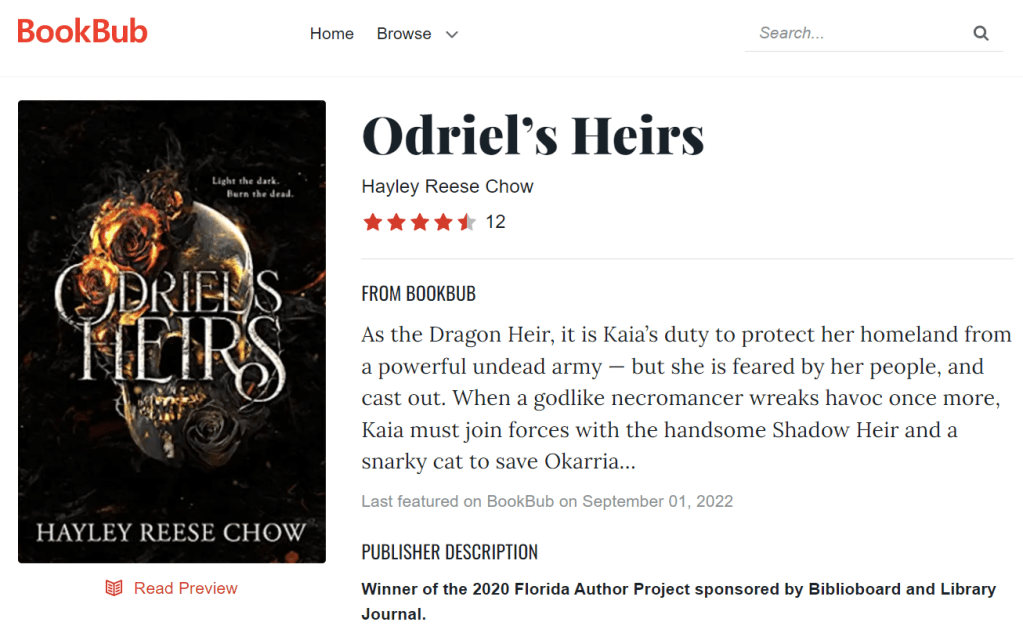
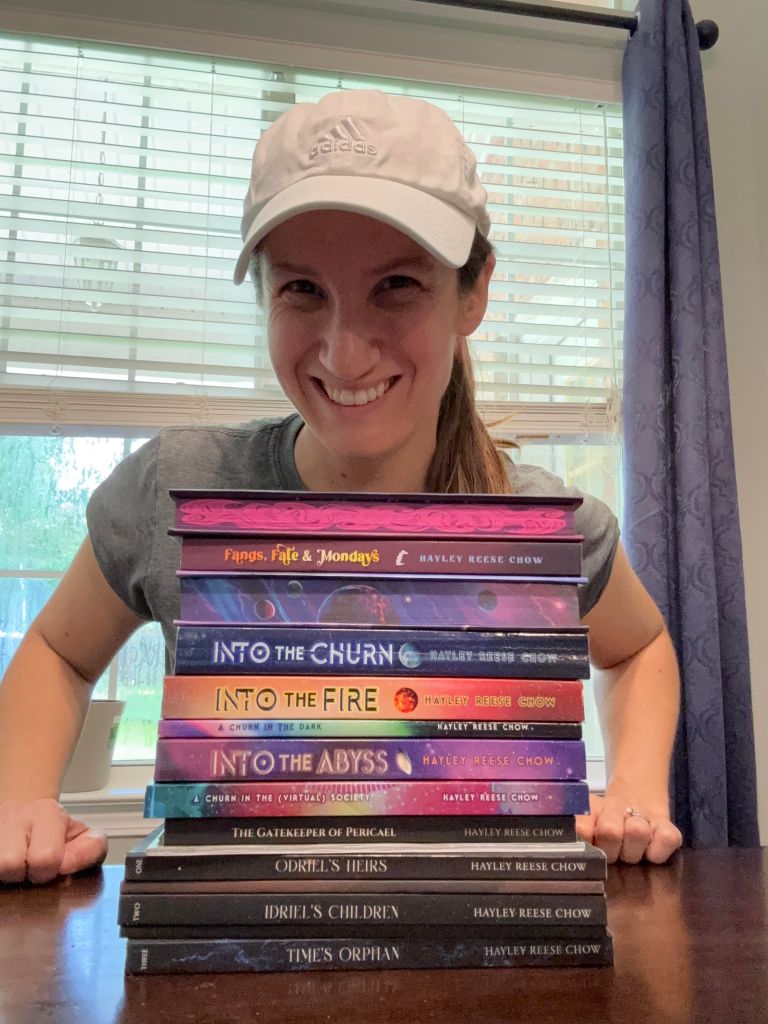
But after querying for a couple years with no dice, I decided to self-publish my first series (a YA epic fantasy, Odriel’s Heirs), and had a great experience with it! There’s a serious learning curve, but there are a *ton* of resources online, and overall, it was very doable. This was an article I wrote on how I did it back in 2020.
Self-Publishing Pros:
· You have all the control. You choose the editor, (or you can try editing yourself), and if they propose changes you don’t want to make, you don’t have to! You choose the cover artist (or you can do it yourself.) Want a jacketed special edition or an audiobook? You can make those happen too.
· You’re going at your own pace, whatever that is, and you don’t have to wait on querying, submission, or a publisher’s timeline. Many self-published authors take advantage of this to move super quickly and publish multiple books a year.
· All the profits go to you!
Self-Publishing Cons
· Self-publishing can be very time-consuming. Because not only are you responsible for writing, you’re also solely responsible for marketing, distribution, design choices, formatting, etc.
· While the stigma against self-publishing is gradually fading, getting your books onto shelves of brick & mortar stores (especially outside your local area) can be challenging.
· All the upfront costs are on you, and like any business, you’ll have to make good choices if you want to earn out. That said, you could self-publish on a dime, but in general, you will probably have to make some upfront investments on a cover & an editor (especially if you’re just starting out).
· Personally, I feel like it can be harder to market confidently when you’re standing on your own. Also, your connections & opportunities are limited to those you forge on your own.
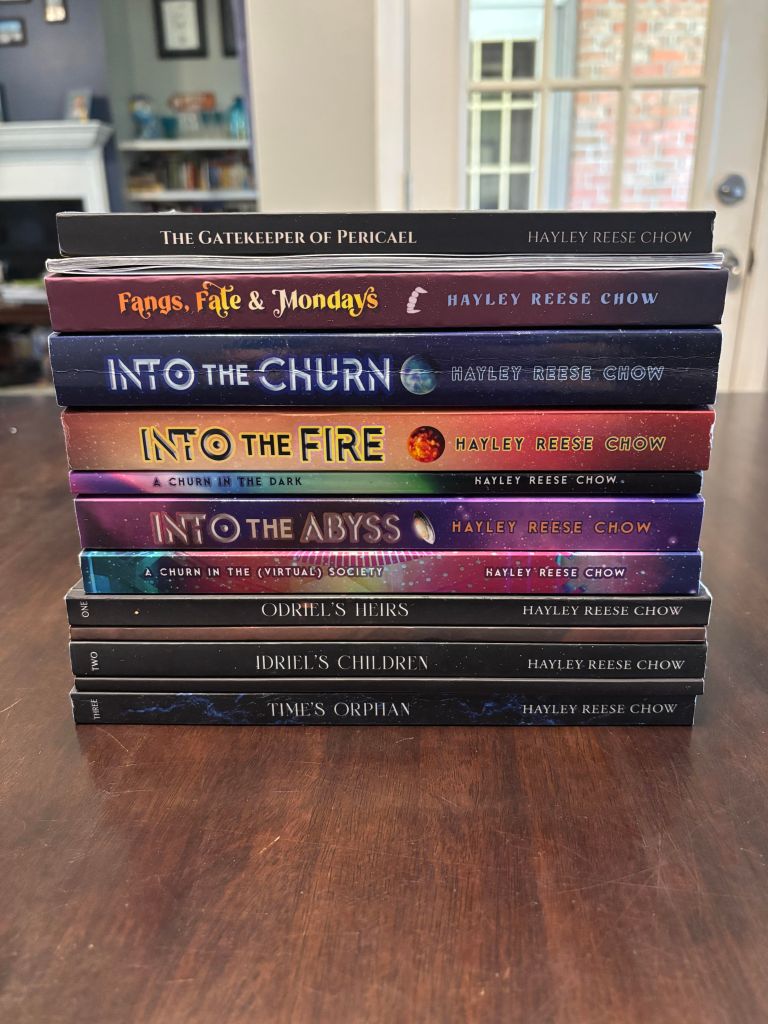
Though I had a great experience self-publishing Odriel’s Heirs, I still wanted to expand my audience. So I continued to query. I self-published my middle-grade portal fantasy, The Gatekeeper of Pericael. But then when my YA starmance, Into the Churn, also stumbled in the query trenches, I decided to give small traditional presses a try. All my experience as a self-published author continued to help me, but I also had the support of other publishing professionals. Instead of a solo sport, it now felt like I was part of a team.
Of course, all small presses are created differently. So if you’re considering one, I’d advise you to remember the following:
1. A traditional press will not charge you ANYTHING to publish your book. NOTHING. If they’re talking about fees, that is (most likely) a vanity press.
2. At a minimum, I would expect the publisher to provide: editing, a quality cover, some marketing, and distribution. If you look at the books in their catalogue, and their books have poor (or nonexistent ratings), poor covers, or exorbitant prices, I’d consider those red flags. Also, if their physical books are only available on Amazon, that would be another red flag for me.
3. They should have a submission process. If they accept all manuscripts, they are a vanity press.
4. So when vetting a publisher, make sure to check out both their social media and their website to make sure it’s presenting the image you would expect. And then if they make you an offer, I’d ask if they could connect you with some of their authors to make sure they have good experiences.
Now, if you’ve found a solid small press, these are the benefits:
Small Press Pros:
– No cost! They take care of the editing & cover (Which will also save you time if you were thinking of doing it yourself)
– You don’t need an agent to submit! This could potentially save you a lot of time, but many small presses have small submission windows, so make sure you follow their social media to know when and how to submit.
– Small presses generally move quicker than bigger presses (who have more books on their schedule.) In my experience, if you sign with a small press, they usually get your book published in the following calendar year.
– Now you have a team of professionals behind you with publishing experience! This is a great opportunity to learn a lot, and it’s also great for confidence (in my opinion.)
Small Press Cons:
– You now have less control. You will now have an editor and a cover artist selected by the publishing press, and you may not have final say in those elements
– You will now share profits with the publisher (but you don’t have to share it with an agent!)
– You are also now the small press’s schedule, whatever that is, which introduces the risk that it may go faster or slower than you like.
– You will also have to spend time on your submission package (query & synopsis & potentially other materials) to get selected.
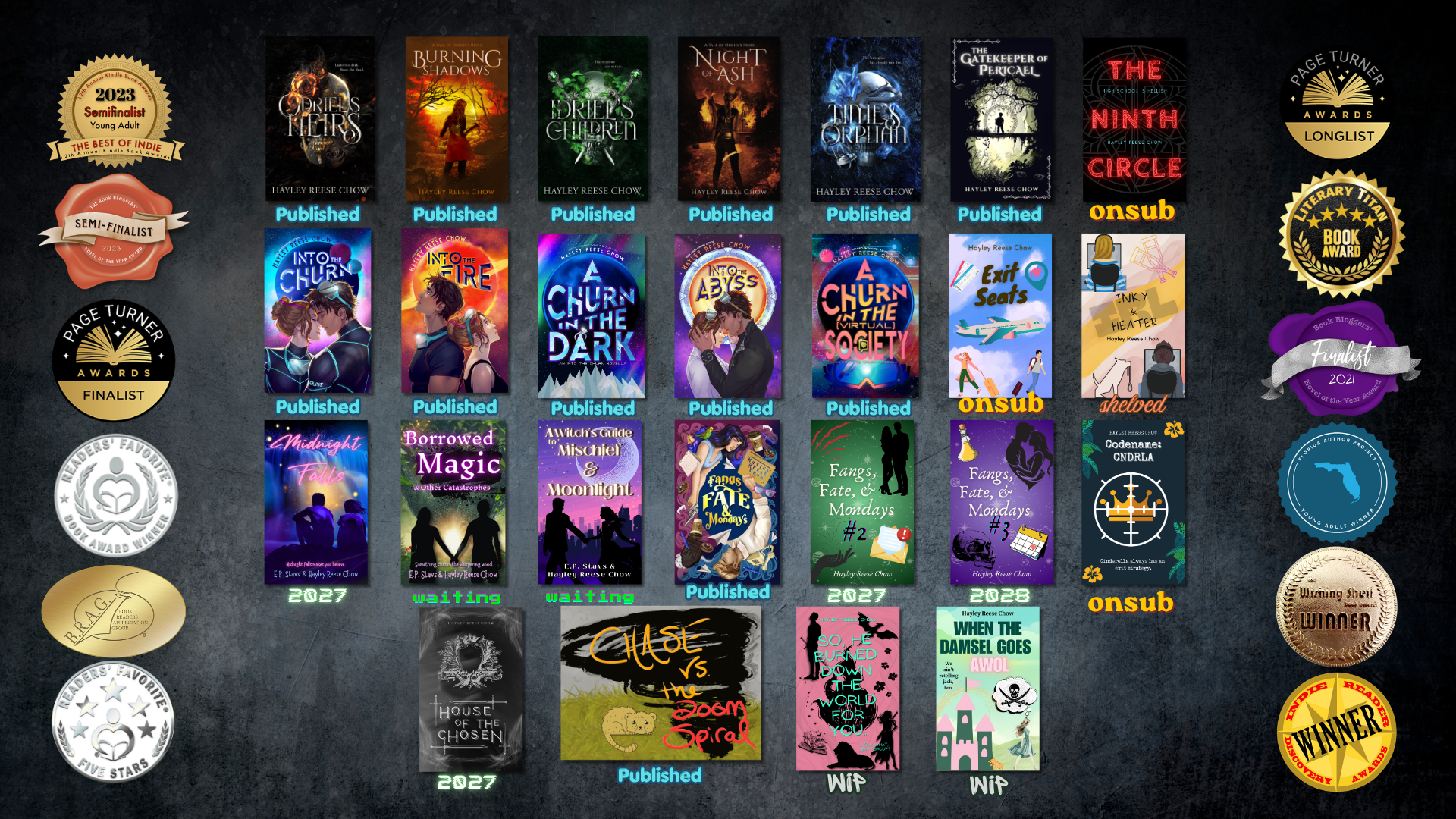
I contracted directly with Whimsical Publishing, and to date, have published 6 books with them (my 5-book starmance series, Into the Churn, & my paranormal mystery, Fangs, Fate, & Mondays) with another 3 projected in the next 3 years. I’ve had an awesome experience with them, and they definitely helped expand my readership.
However, as a multi-genre author, not all my books fit their brand, and I was still striving for the goal of a big-five deal, so I continued to query my manuscripts to agents. After about four-ish years of querying, my fifth manuscript got picked up by an agent, Kristen Terrette of Martin-Newens Literary, and I’ve had a great experience with it. (I probably sound like a broken record, but I am being serious. I have been *super* lucky in my small little author career so far.)
Since signing with my agent, she’s sold three of my books, which are set to release in 2027-2028. Though I haven’t scored a big-five deal yet, one of the publishers, Charlesbridge Publishing, is distributed by Penguin Random House.
Please remember that there are scammers posing as agents out there so please be careful. They should have a professional website & social media. You should be able to look up their track record on Publisher’s Marketplace. They should charge you *nothing.* (Their payment comes from a portion of your sales, usually 15%.) And, before you accept an author, they should be able to give you the contact info for some of their authors that you can ask about their experience.
Working with an Agent Pros:
– They are able to submit to bigger publishers that you cannot submit to by yourself. Which also saves you the time of having to submit on your own. And if you get a big five deal, you can expect a bigger advance, and there’s the potential for your books to be on brick and mortar bookshelves across the country
– Expert advice & guidance on the publishing industry
– They will review your contracts for you & advocate on your behalf to make sure you’re getting the best deal you can
– If you have an editorial agent, often they will help you revise & clean up your manuscript and submission package to really make sure it shines
– You also have the benefit of their added connections & opportunities
Working with an Agent Cons:
– The submission process is a long haul. Big publishers can take up to a year to respond, and when they offer you a book deal, the publishing date could be a couple years out.
– A percentage of your profits goes to your agent.
One last note is that there’s a common misconception that signing with a big press means that authors don’t have to market themselves. That is patently incorrect. The benefit of a small or big press is that they will use their resources to help you, but as the author you are always expected to market your own work. (It’s one of the reasons that your social media numbers are part of the submission package.)
Anyways, hopefully this article is helpful as you choose your path. With my goal of maximum distribution of my books, I’ve always had the dream of publishing with the big-5, which is why I’ve chosen the agented path. However, I know of other authors who are amazing at marketing themselves & extremely business savvy, who have chosen the self-publishing route to maintain control of their work and 100% of their profits.
Which is all to say, there really is no wrong answer as to which path to take. It’s a personal decision for each author to make depending on their goals and preferences.
No matter what you choose, I wish you all the luck & joy on your publishing journey!
Thanks for reading!