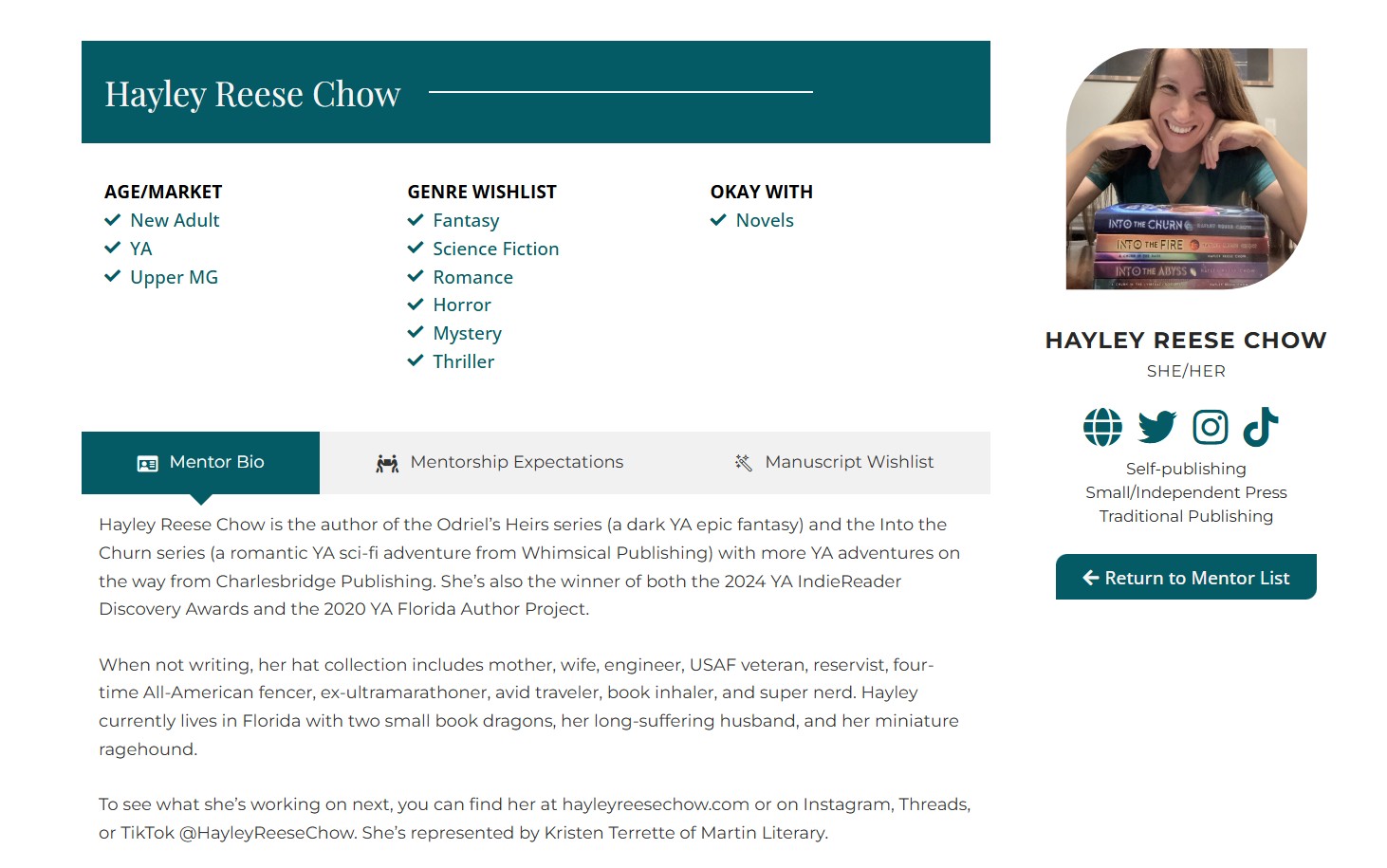
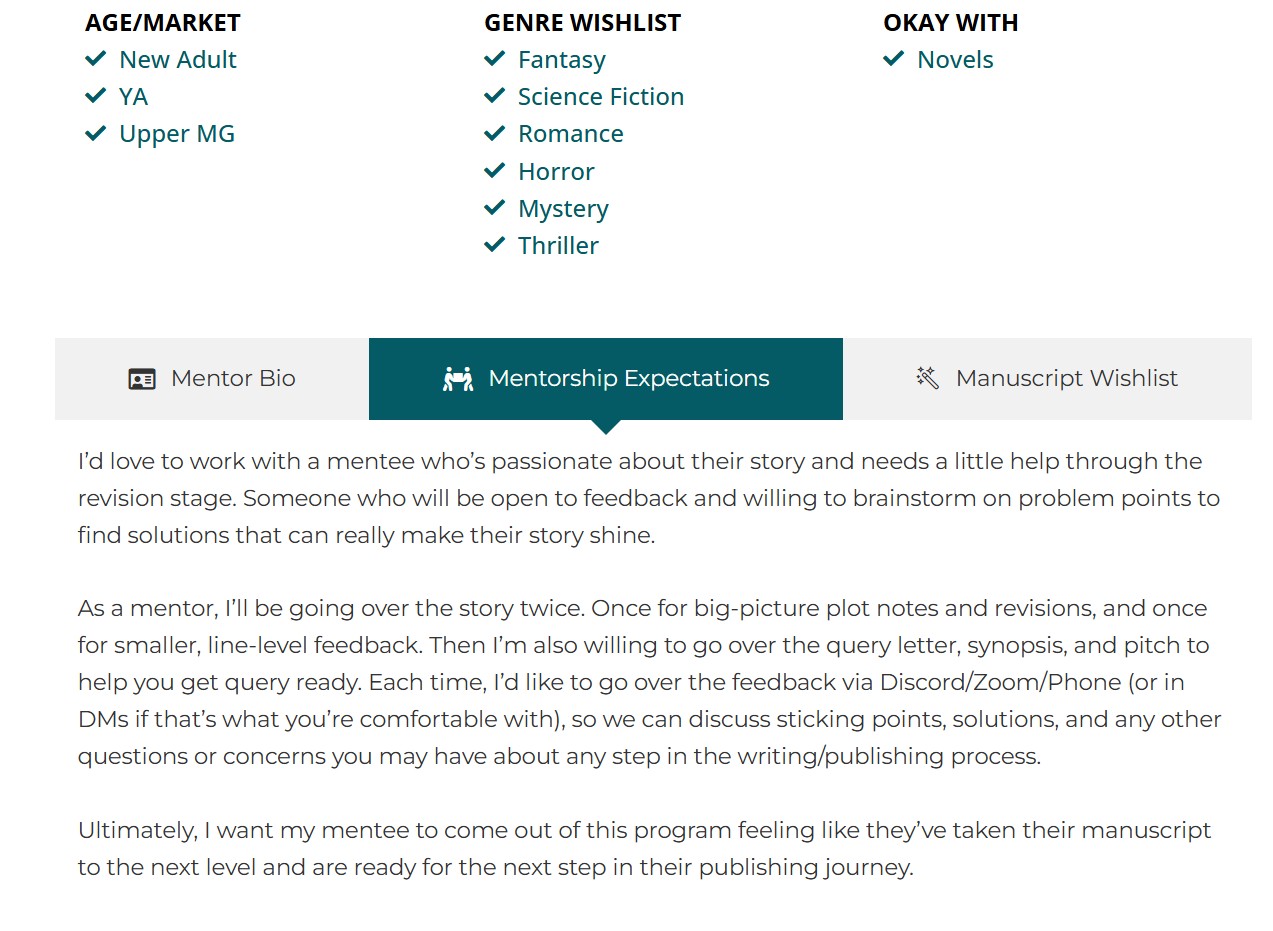
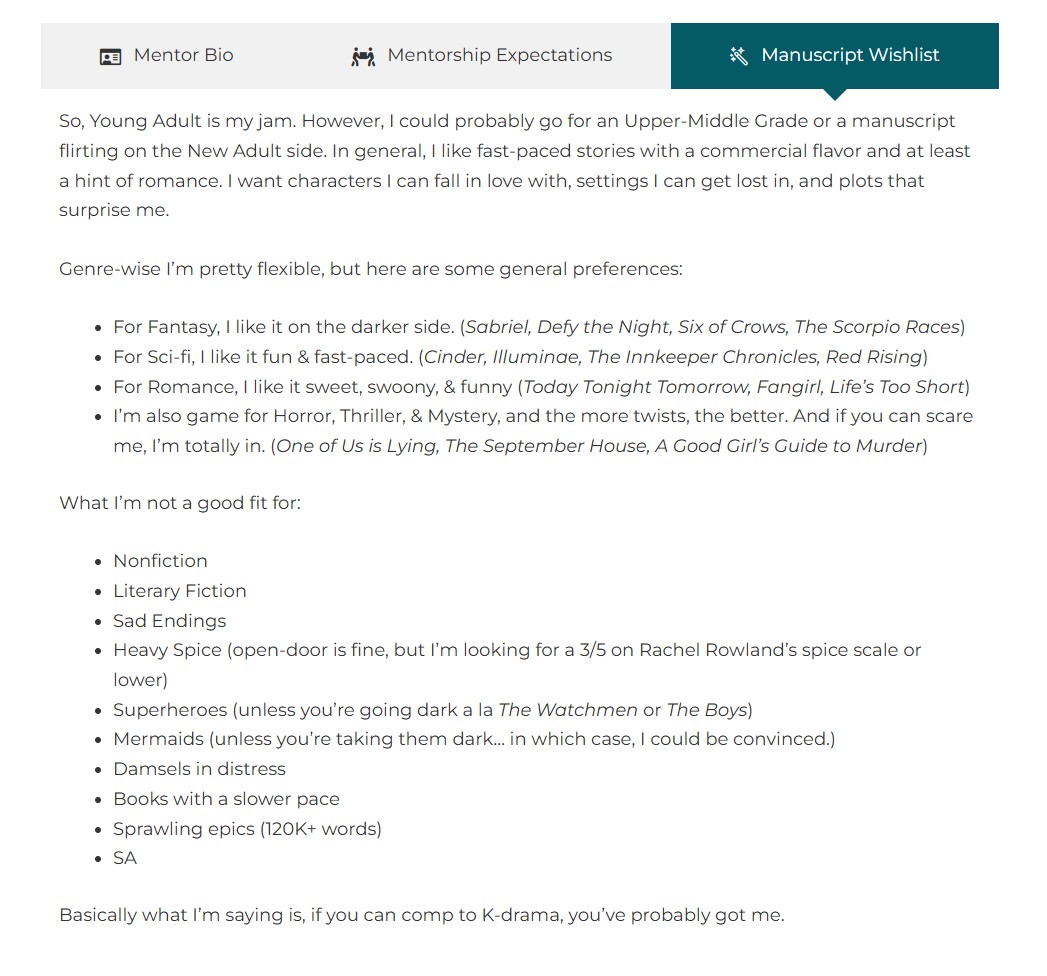
I’m so excited to announce I’ll be returning to the WriteHive Mentorship Program for my second year as a mentor. I had a great experience as a mentee in 2023, and again as a mentor in 2024, so I highly recommend this program to anyone looking for some help in whipping their manuscript into shape! I’ve included my mentor wishlist, profile and expectations below, but I highly recommend you check out all the mentor profiles here.
While you don’t submit to a specific mentor, I found it super helpful last year when applicants listed a few mentors they thought would be a good fit in their query/submission letters.
Also, if you’re curious as to what I’m looking for in submissions, you can find my breakdown of the submissions from last year here.
Last year, I went with Erin Scheuer‘s sweet new adult romantic comedy with YA crossover appeal which had huge K-drama vibes that I absolutely adored. But honestly this year, I’m pretty open when it comes to target audience and genre. There will be a Mentor AMA on WriteHive’s Discord & Bluesky next week if you have more questions, but if you’re on the fence about submitting, I hope you decide to take the leap!
Submissions will be open from Nov 14-16 and I can’t wait to see what comes in. If you’re submitting, good luck, and I’m excited to read your pitch!
So I became a WriteHive mentor because I wanted to pay forward all the wisdom and experience the writing community had gifted me over the years. And since I’ve done quite a lot of beta reading, critique swaps with partners, and also worked with quite a few editors over the years, I felt pretty comfortable that I’d be able to help someone improve their manuscript.
But what I totally wasn’t expecting was everything I learned during the manuscript selection process. I hadn’t considered that this was the first time I was on the other side of an acceptance/rejection decision. And what it brought it really home for me was that authors had actually requested me as a mentor in their queries!🤯I was so completely flattered and blown away.
In this article, I’m going to break down how I narrowed the submissions to select my mentee, the materials I looked at, and the questions I asked myself along the way. I found this a very enlightening process and thought it might be helpful for others going through the querying or submission trenches. However, please keep in mind, everyone has their own methods for selecting manuscripts for both representation, mentoring, and publication. This was simply the process and realizations I had during mine.
Here’s a quick breakdown of how many submissions came in for 17 mentors:
140 submissions (a 52% increase over 2024 – yay!)
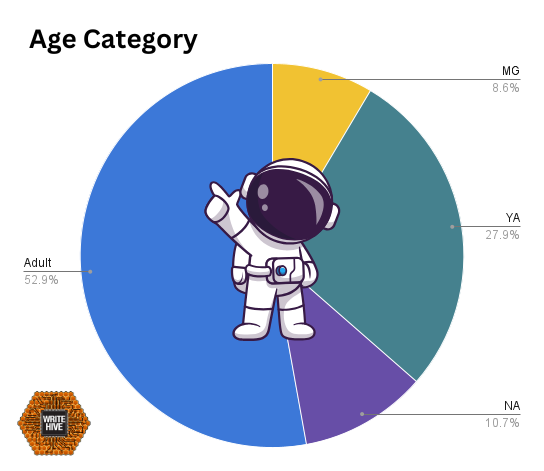
Age demographic submission breakdown:
MG: 12 (8.6%)
YA: 39 (27.9%)
NA: 15 (10.7%)
Adult: 74 (52.8%)
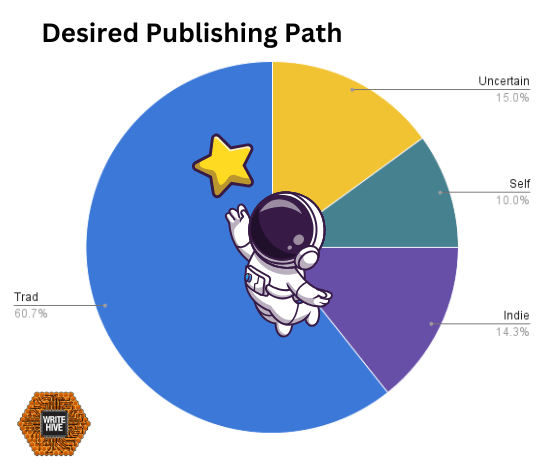
Publishing path submission breakdown:
Unsure about Publishing Path: 21 (15%)
Self Publishing: 14 (10%)
Indie / Small Press: 20 (14.3%)
Traditional: 85 (60.7%)
And genre breakdown:
Fantasy: 51 (36.4%)
Romance: 23 (16.4%)
Romantasy: 23 (16.4%)
Contemporary/Literary/Nonfiction: 17 (12.2%)
Horror/Suspense/Mystery: 16 (11.4%)
Sci-Fi: 10 (7.2%)
Each submission included their bio, the state of their manuscript (where was it in the writing process), pitch, their query letter, a synopsis, and their full manuscript. But how to narrow it down? I really wanted to make sure I picked the mentee who I could help most. A manuscript I could really fall in love with, but also one that I could help in a concrete way.
The first cut
So, even though I had outlined my general preferences in my MSWL (manuscript wishlist), I read the pitch, query, and first page of all 140 submissions, with one question in mind:
Does the premise grab me?
Based on that question alone (which, by the way, had *nothing* to do with the talent of the author or the quality of writing and everything to do with personal preference), I was able to cut my list down from 140 to 26.
That, in itself, blew me away. After all, I’ve received many rejections, and of course, every time, I assumed it was because I wasn’t a good enough author. My writing wasn’t good enough. The story wasn’t good enough.
But here I was, cutting 81% of the submissions with no regard to quality at all. Honestly, I probably could’ve done it based on the pitch alone.
Interesting.
So with that cut, my list was down to: 3/12 Middle Grade: 25% 9/39 Young Adult: 23% 2/15 New Adult: 13% 12/74 Adult: 16% Total Longlist: 26/140
The Second cut
For there, I reviewed the bio, the state of the manuscript, their synopsis, and their query again. From these materials, the mentees included information on if they’d started querying it, which paths – traditional, small press, or self-publishing – they’d consider pursuing, and what they were looking for in a mentorship.
On my second cut, I was asking myself: Is this a mentee I can help? Am I the type of mentor they’re looking for?
Once again, I was not considering the quality of the story or writing at all. I was simply trying to ascertain at this point if we could be a good match based on my strengths and the kind of mentor they were looking for.
In the second cut I went from a longlist of 26 to a longlist of 12.
So at this point, I had cut 91% of the submission without considering quality of writing or story.
The third cut
The third is where I finally read the entirety of the first chapter and then asked myself: Am I drawn to keep reading? This is the first question I’d asked that could have been attributed to writing quality.
The third cut took me from a longlist of 12 to a short list of 7: 2 Young Adult Manuscripts and 5 Adult Manuscripts. From there, I read further into the manuscripts, and once again, this time, looking for the manuscript that I thought would be most suited to my tastes. In the end, I chose the story I had extremely concrete recommendations for, one which was very much suited to my personal taste, and had an author who was searching for knowledge areas I had. And just as an aside, only one of my top 3 choices showed up on another mentor’s top 3. For the most part, all of our top 3 choices were radically different.
So what’s the point?
When it came to publishing, I’d often heard the phrase “right eyes, right time.” Meaning essentially, that there are tons of quality stories out there, but you need to find the right agent/editor that’s the best fit to champion yours at the right time in the market. Which… comes down to a lot of factors outside of your control.
But once again, every time I faced a rejection, it was so easy to take it as a sign that I wasn’t good enough to be an author. Or the story wasn’t good enough to be published. But the truth is, writing, as an artform, is so personal. No one book is for everyone – and that fact is as true before publishing as after it.
So, if you submitted to the WriteHive mentorship, please don’t be discouraged in any way if you weren’t selected as a mentee. It really has no reflection on your ability as a writer or a storyteller, but rather simply, if your story was a good match for the mentors reading submissions this year.
And as I continue to trudge on in the submission trenches, I’m trying to keep the very same lesson in mind. That my stories need to find the right eyes at the right time. Whether that’s next week or next year or in three years really isn’t up to me. All I can do is be patient and keep writing the best stories that I can.
Hopefully, if you’re in the query or submission trenches, this has been helpful in some way and can also help you to find the mindset and perseverence you need on your writing journey.
Rejections are tough. There’s no two ways about it. Just remember to take care of yourself, take lots of breaks, and keep on keeping on. Begin. Grow. Persevere.
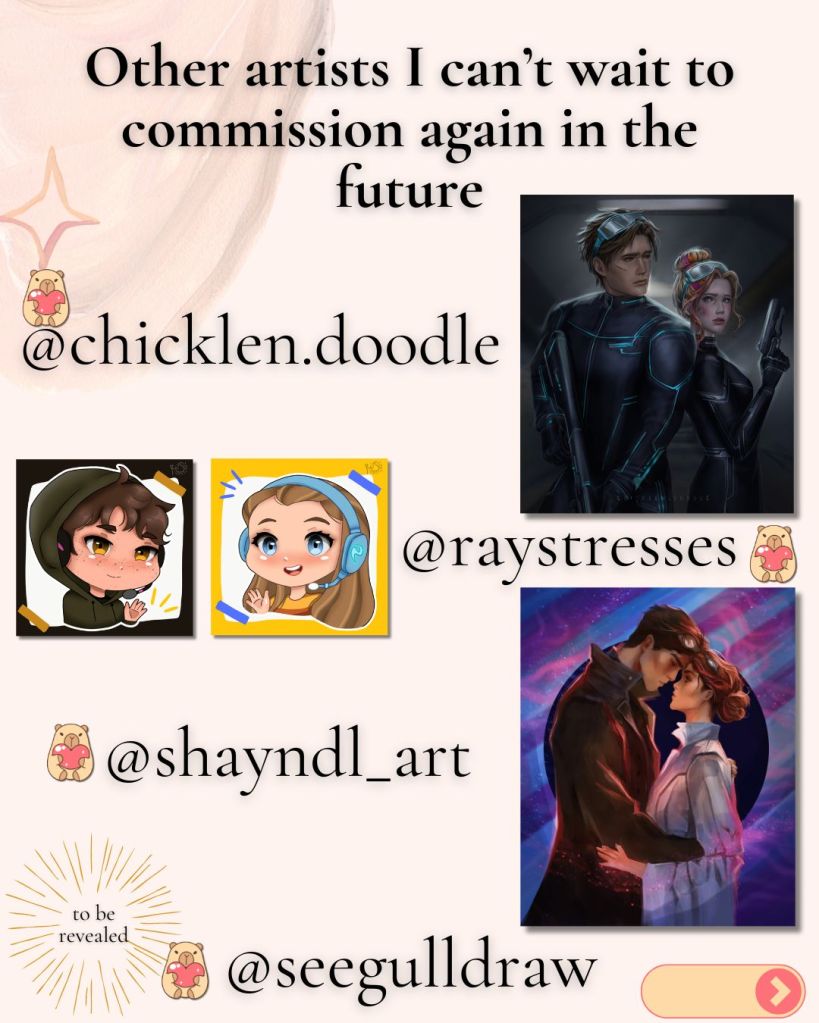
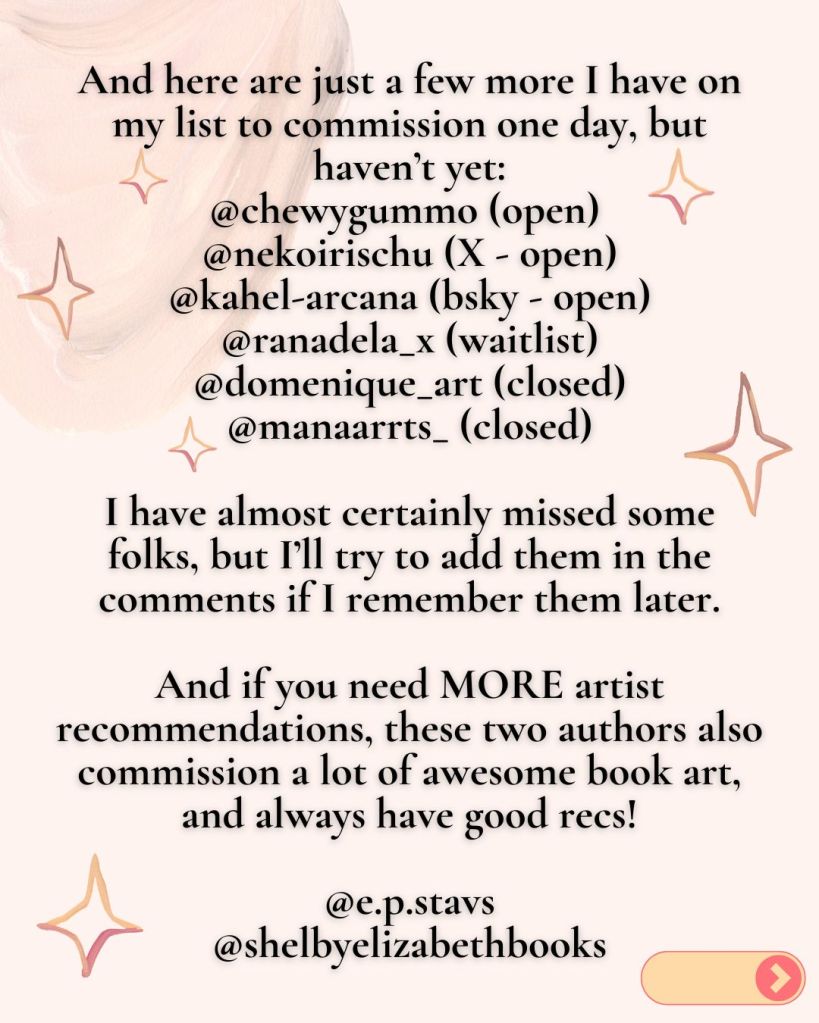
Okay, so this is the post I needed in my life as a budding author in 2019. I have always loved art since I was a kid, and now, as an author, I adore seeing books brought to life through character art, and use character art heavily when promoting my books. But when I first started out, I had no idea who to message about character art.
Over the years, as I admired other authors’ commissioned pieces, got recommendations from authors, and commissioned different artists myself, I began to gather quite a few art pieces of my books that I adored as well as a list of artists I enjoyed working with. I’m always on the look out for new artists and fresh styles, because I love to see how different people with different perspectives can bring to life characters in different ways.
And yes, I only work with human artists and likewise, human authors. In case you haven’t seen my thoughts on generative AI, you can find them in the graphic below.
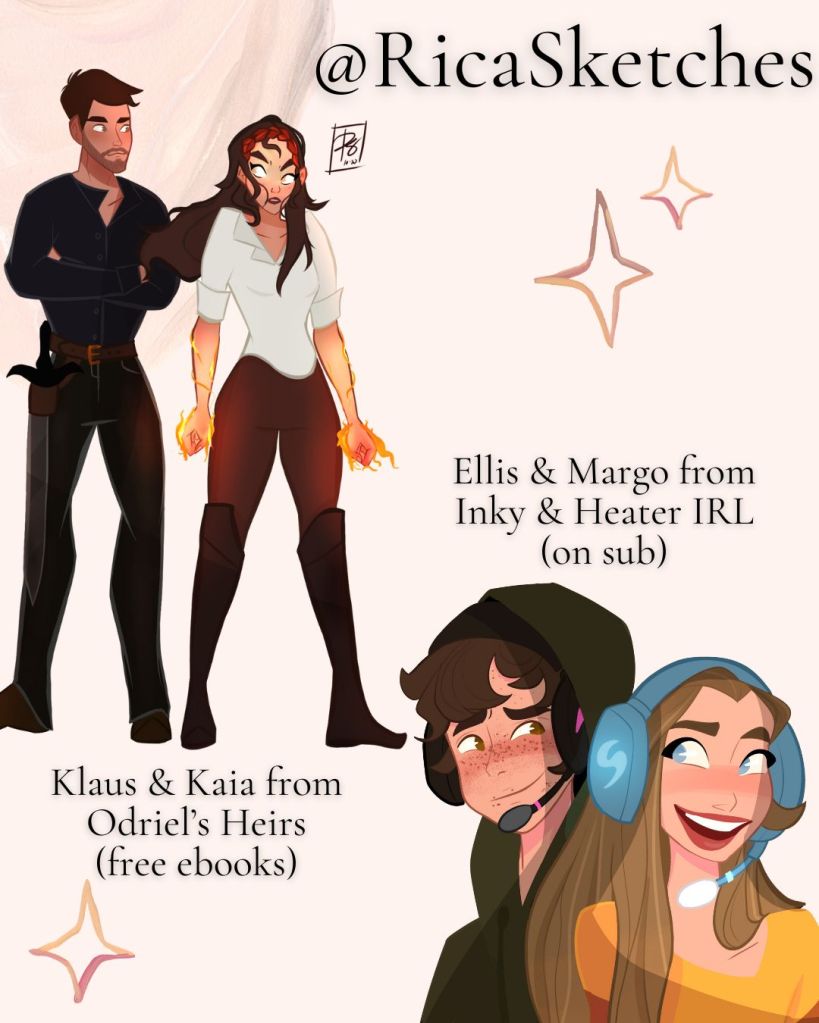
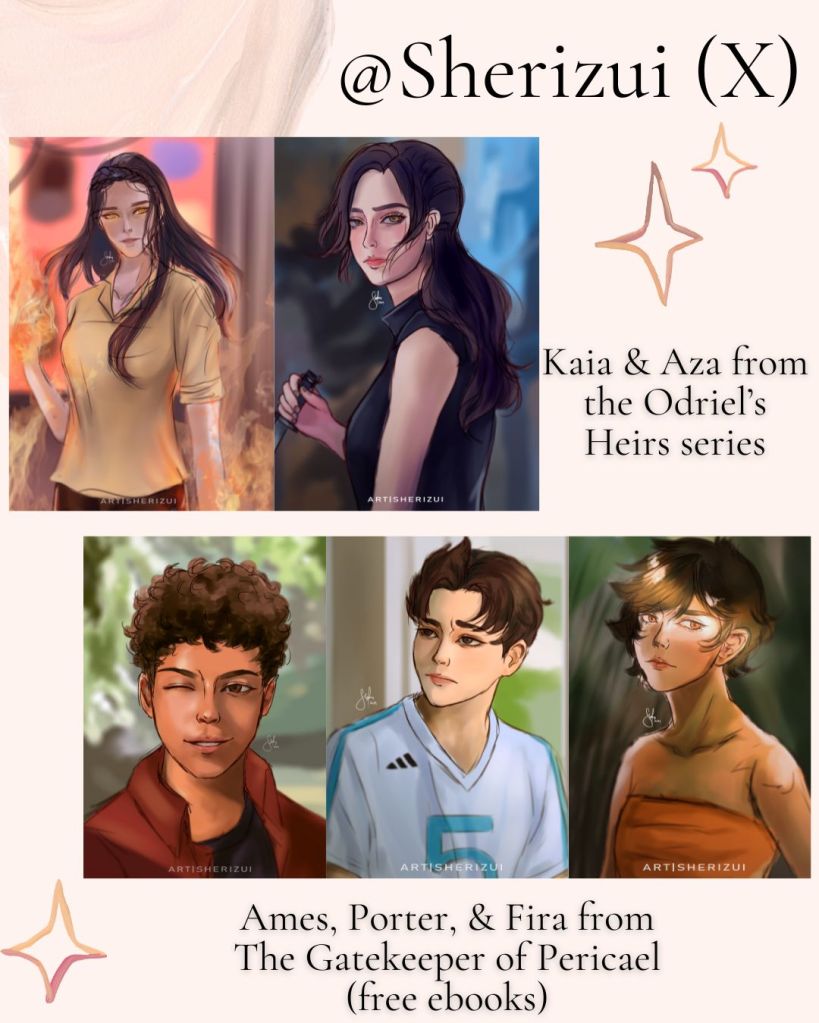
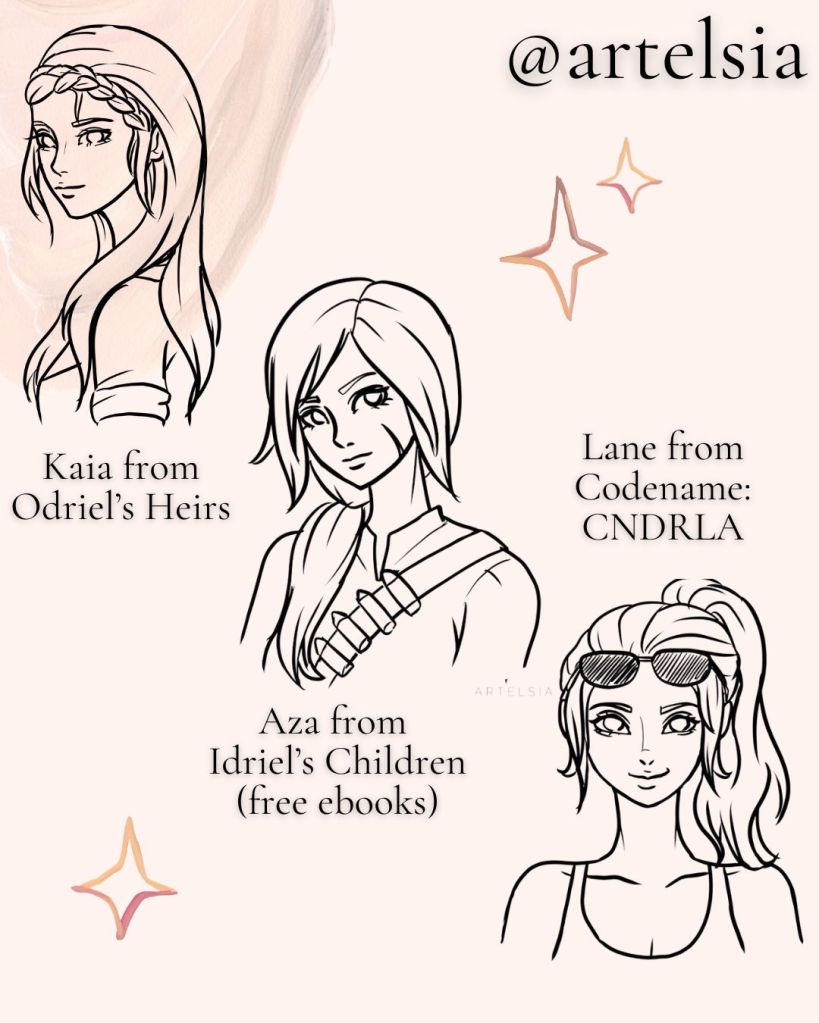
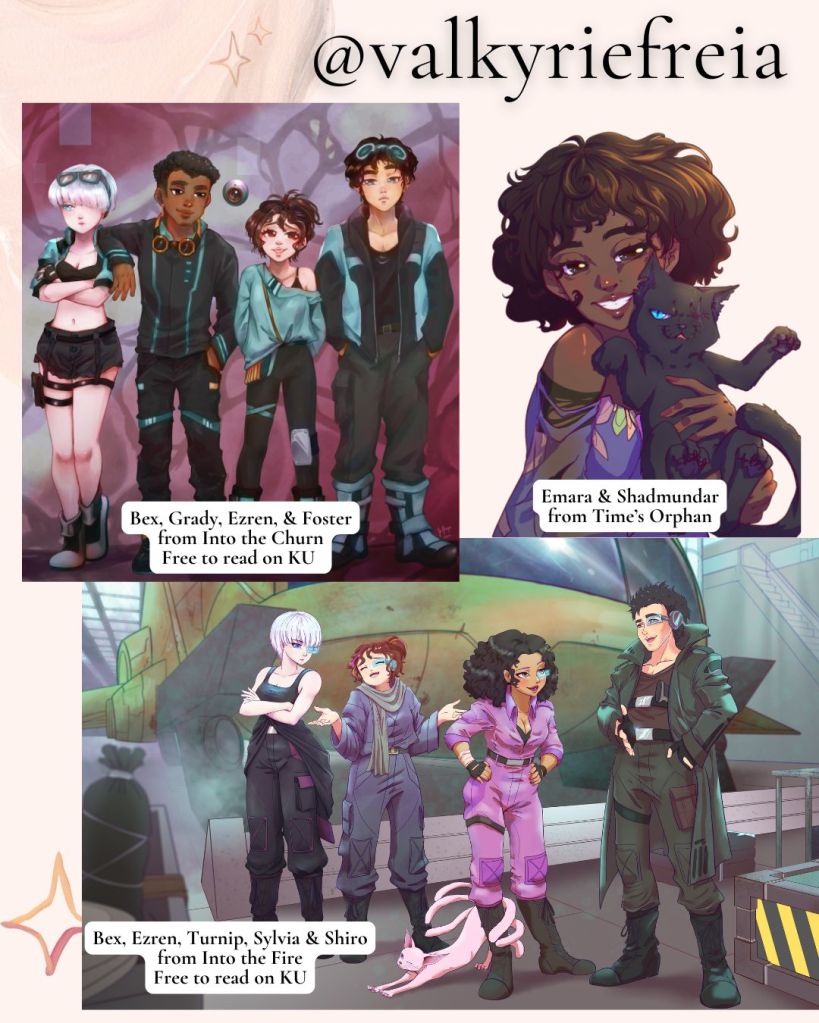
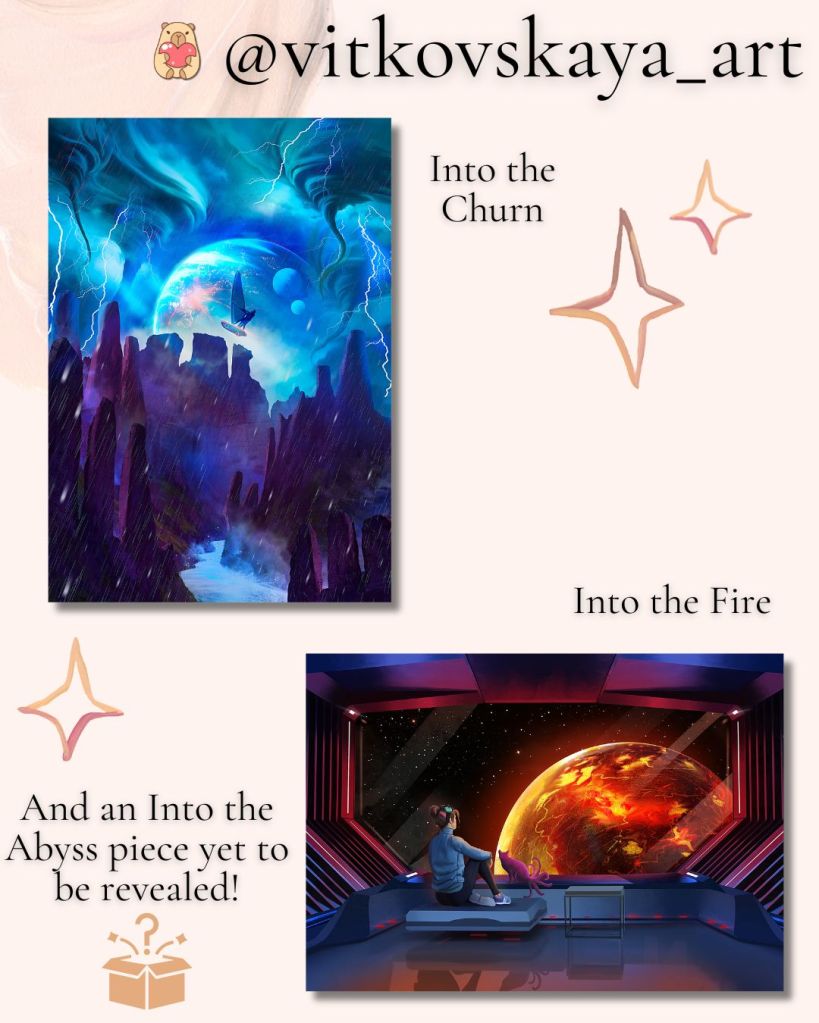
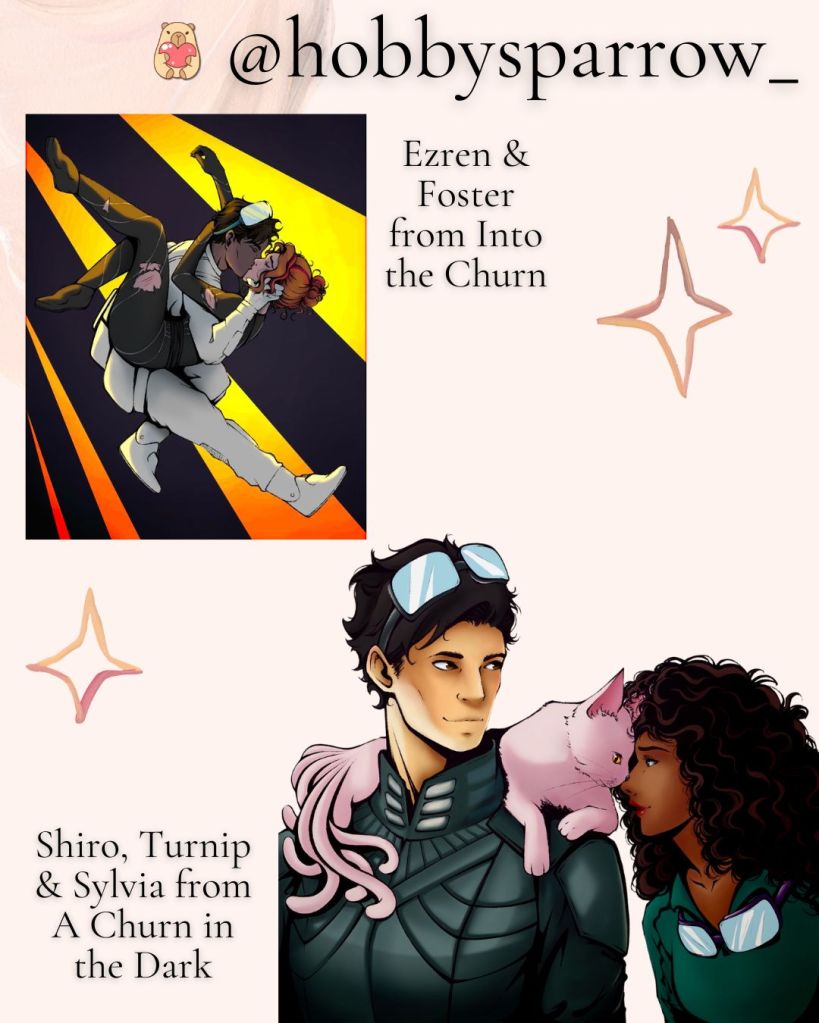
So in part, this is an artist appreciation post for the artists who I’ve worked with over the years, and it’s also a resource for those other authors out there looking for (human) artists to commission. Without further ado, the guide is below! All handles are from Instagram unless otherwise noted.
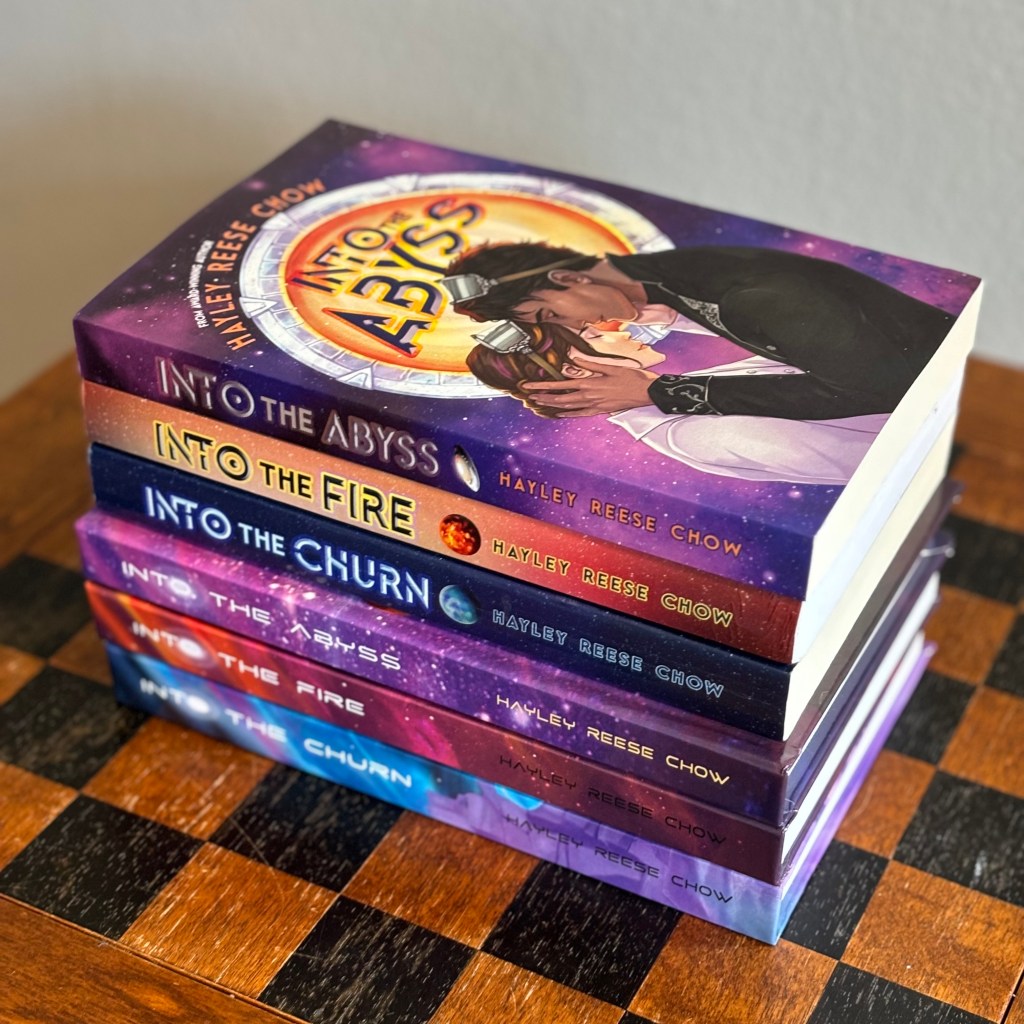
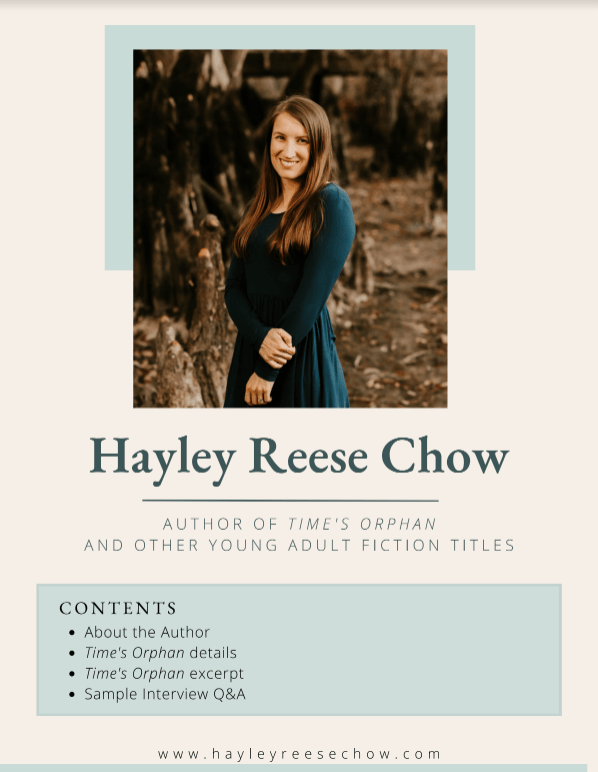
The first time I encountered the term “Media Kit” was when I was trying to figure out how to ask libraries and indie book stores if they’d like to carry my book. The internet recommended that I bring a media kit, but that sounded kind of intimidating, so I ignored it for a long time. But now that I’m working with Whimsical Publishing and I have more self-confidence than three years ago, I really wanted to try to pick up my self-promo game. (Especially because I really want Into the Churn to do well enough for me to write a sequel. 😭)
I knew Whimsical was going to arrange for me to do a book signing, and with looming fears of no one showing up, I wanted to see if I could get it listed in our local newspapers as an upcoming event. (By the by, It’s Saturday, April 15th from 12-2pm at Niceville Public Library, so if you’re around, definitely come say hi!) But…if I wanted to contact local newspapers, I knew I needed a media kit.
But I also still had no idea what went into a media kit. So I creeped on other authors’ media kits and did some intense googling. Not only did I find out what goes in a media kit, but I also found out that I should probably make a press release as well, and then I also apparently I needed like a whole media kit google drive folder to put my graphics and files in! Overall, actually creating it didn’t take too long, and I used Canva to put together the media kit portion.
Now, I’m still by no means an expert on these things, but I wanted to put my stuff out there in case some else needs inspiration or ideas for what they should put in there own. All my media kit materials and press kit stuff is located here.
But… then I also had to figure out how to email said local news and let them know that I existed. After querying the internet once again, I came up with an email that looks like this:
Subject Line: [Simplified Version of your Press Release Headline]
Dear [Local News Name]
I really appreciate [Local News Name] as a source of informative and relevant stories in our local area. I hope you’ll be able to use the below press release as a short news item or as an inspiration for an article on a related subject. Feel free to email me or call me at ### if you have any questions, and thank you so much for your time.
So, your next question is probably: did it work!? Well, I literally sent it out 1 business day ago, but I have had one taker so far, so huzzah! I also sent out my press release through PRLog and PRUrgent and called it a day. There are a ton of other free press release sites, but a lot of them require you to have a non-free email address (read: rejected my gmail), so that crossed the line of too much hassle for me.
Anyways, like I said, not exactly an expert over here, but since I spent a lot of time trying to figure out what goes in a press release, media kit, and email to the press, I figured I’d share what I cobbled together. Hopefully it’s helpful and good luck in your book launch!
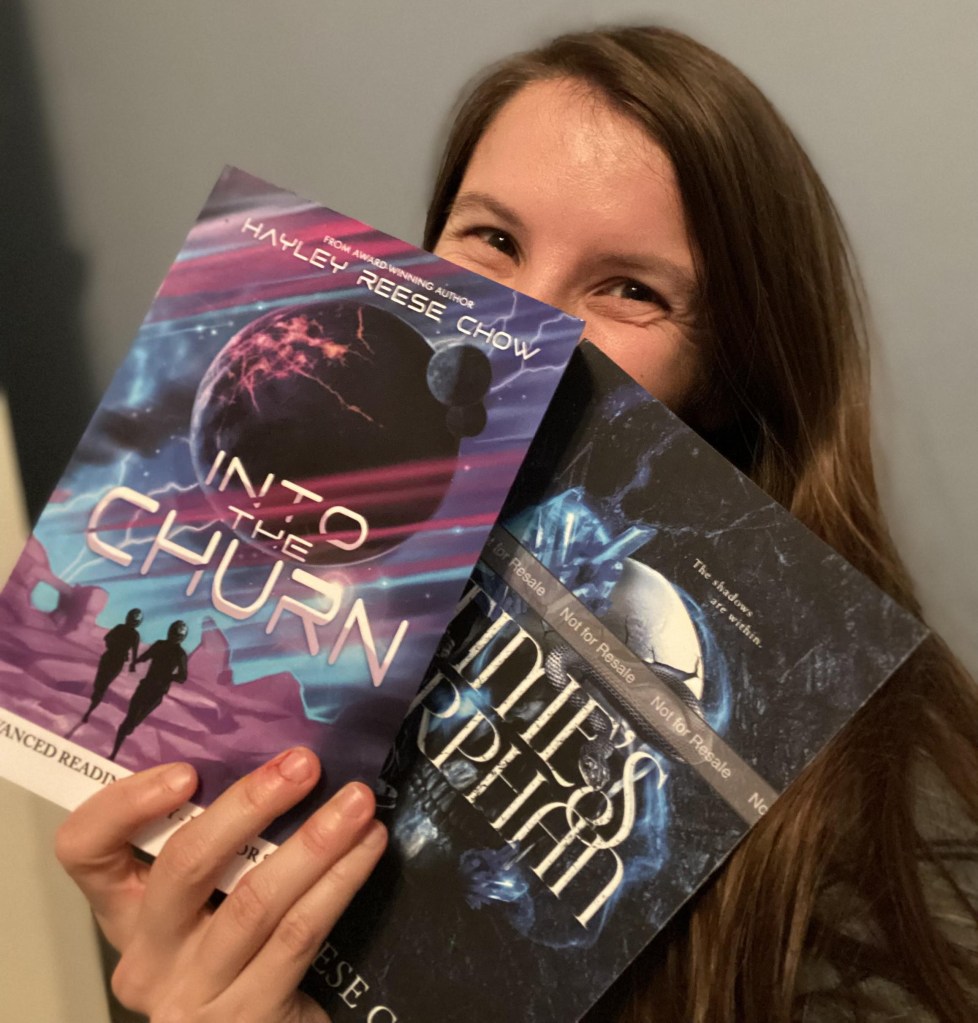
This week Whimsical Publishing officially revealed the title and blurb for my upcoming Young Adult Science Fiction, INTO THE CHURN, launching April 4th 2023! 🥳 So now, I’m thrilled to announce some other exciting news!
First, the Into the Churn Street Team is officially open for sign-ups here! If you’re willing to help with the December cover reveal & spreading the word, we’d love your help & can offer some fun perks—including the chance to win a *very* rare physical advance reader copy (ARC) in return! And if you’ve never seen Whimsical Publishing’s books, they’re absolutely gorgeous. 😍
Second, if you’re interested in an electronic advance reader copy (eARC) you can request one on Whimsical Publishing’s website here!
And lastly, if you’d like to check out a sneak peek of a scene from the book, you can find it on Whimsical’s back-up Instagram account here!
As a author publishing with a small press, we depend on readers to help spread the word, so any social media shares, retweets, posts are so greatly appreciated!
Thanks so much for reading, and the text-version of the blurb is included below!
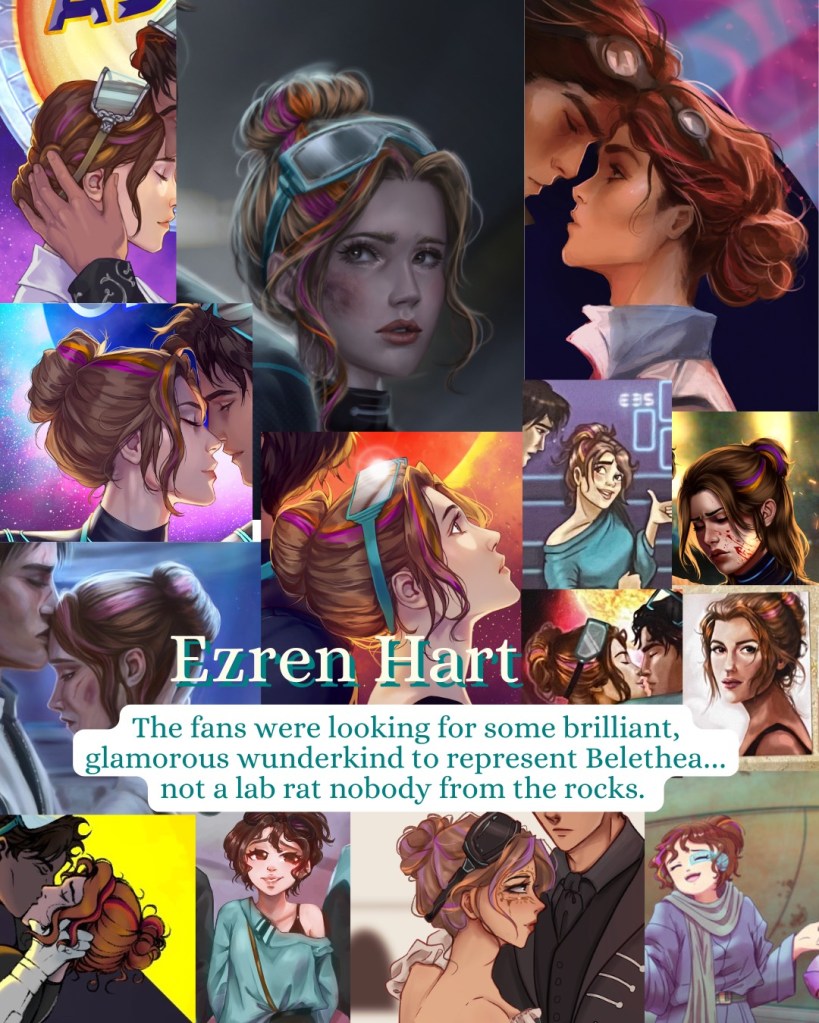
Seventeen-year-old Ezren Hart interns in her mother’s terraforming lab, studying Belethea’s deadly storms with the dream of giving her backwater planet open teal skies. But when budget cuts threaten to shut down her mother’s lab, Ezren enters Belethea’s Race Royale, the system’s deadliest and most lucrative race. To win, she’ll have to run, drive, and fight her way across Belethea’s barren landscape while navigating its savage and volatile storms. With her planet’s future, and her family’s, on the line, she can’t afford to lose. But first, she’ll have to convince her handsome royale partner that their planet is worth saving.
Foster Sterling is a jaded ex-prodigy royaler still reeling from the death of his partner in a training accident. When Ezren Hart comes charging into his life, her passion reminds him of what he once loved about racing and his dream of returning pride to their planet. Still, no matter how fast they go, they can’t outrun the mysterious string of deadly accidents following them like a curse. As Foster falls harder for Ezren, he races to piece the clues together. But with time running out and their survival on the line, he’ll have to decide if their dreams are worth their lives.
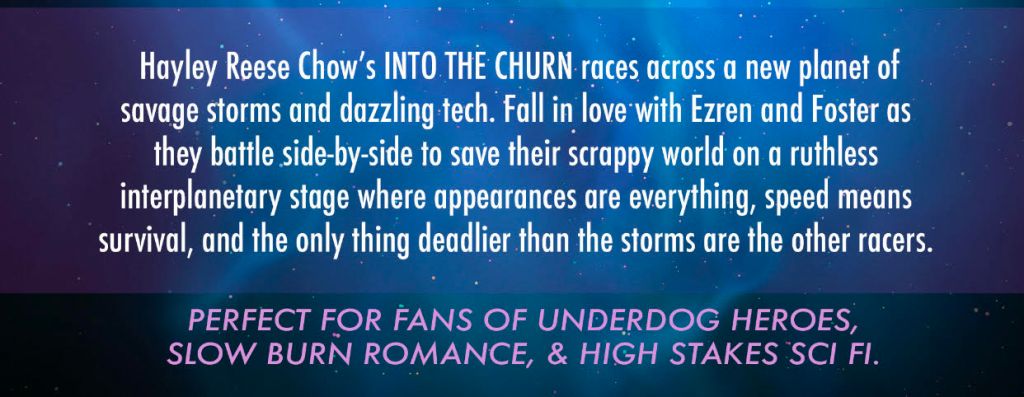
Perfect for fans of underdog heroes, slow burn romance, and high stakes sci fi, INTO THE CHURN races across a new planet of savage storms and dazzling tech. Fall in love with Ezren and Foster as they battle side-by-side to save their scrappy world on a ruthless interplanetary stage where appearances are everything, speed means survival, and the only thing deadlier than the storms are the other racers.
This is the Canva cover I put together when drafting. I can’t WAIT to share the real thing Whimsical Publishing created. It’s absolutely GORGEOUS!
So… I used to consider myself a “Turtle Writer.” And, my friends, it took me 8 years from when I started the first draft of my first book to when I published it. My second novel took me 4 years from start to publish.
For comparison, for my next release, Time’s Orphan, there will be 11 months between starting and publishing. And for my YA sci-fi launching in April, there were around 15 months from starting to when Whimsical Publishing acquired it.
And trust me, my two newest books are *way* better than my first two novels. (I still love my first two, but objectively, I’m a much better writer than I was 10 years ago, thank goodness.)
There are much faster writers than me out there, and much slower ones, but in any case, I halved my writing process time from Book 1 to Book 2, and by Book 8, I will have cut the time by 88%. One of my writing friends recently asked how I made that happen, so I thought I’d break it down here.
This answer’s pretty easy. First, I didn’t actually believe I would publish it. I thought it was unsavable, and I thought by writing it, I had accomplished my writing goals, so I shelved it.
In 2017, I picked it back up, but I was still lost. I revised and edited as best as I could, but I wasn’t until I found the writing community on twitter, that I even thought about getting critique partners and an editor. After getting that feedback, I ended up *heavily* revising the first half of the book.
And there so many stops and starts during that time. I would say it’s because life got busy, which is true, but it’s also because I hadn’t found a rhythm. And more importantly, I still was unsure of my commitment to writing. I still thought Odriel’s Heirs would be the only book I would ever write. (Oh, silly me. 😂)
With the second book, I found indie author friends online as well as consistent critique partners, and that changed everything.
We can break it out into a few important eureka moments:
I gained confidence. I’d put myself out there, been rejected dozens of times, had a few reviews that smarted, but had a lot more that encouraged me forward. With all that under my belt, I no longer had that paralyzing fear of failure that had kept me back. Even if the next book doesn’t get picked up by an agent, I can publish it myself – and that’s still very fulfilling to me.
Also, I realized I could work on multiple WIPs at one time. This was absolutely crucial. Right now I have *FIVE* (😱) WIPs – querying one, editing two, revising one, and plotting one. I cycle through them to give myself some perspective when I come back through drafts, and that way I can always be working on one thing while I’m waiting on responses to queries, CP feedback, editor feedback, etc.
Juggling WIPs also forced me to establish a process that worked for me. My experience allowed me to come up with realistic timelines and goals for myself to meet. It’s incredibly motivating for me to cross things off my list, and it lets me see the things I have to look forward to.
I found CPs & Betas I can depend on, and in a pinch, I knew how to find others quickly (psst critiquematch.com). Their objective feedback is invaluable to help me find problems EARLY in the process so I don’t get into the editing phase and have a huge “Oh Sh*t” moment. They also continued to teach me valuable writing lessons, and I hone my own editing skills on their work as well. These relationships are also a bulwark of support and encouragement which is also vital to a process heavy in critique.
I studied up on writing craft books which have given me epiphanies that also helping in every phase of the journey. But most critically, Save the Cat Writes the Novel gave me the framework I needed to learn how to plot effectively. Once again, it allowed me to identify problems very early, which eliminated a lot of time-consuming rewriting.
Inertia is powerful. I am *not* an every day writer by any means… but I usually do something writer-related (almost) every day, even if it’s something incredibly small like a tweet-sized story for vss365. The most difficult part of writing for me is starting *anything.* So by keeping that positive pressure, I can keep rolling without mentally having to do the thing where I show up to write and think “Um… how do I do this again?”
Anyways, those are just the tips that have worked for me. Ultimately, every writing speed is completely valid. As long as you’re enjoying the journey, that’s what’s most important.
Thanks for reading! I hope this was helpful, and if you have any other questions, let me know!


















 Hayley Reese Chow