NYC Midnight Challenge – YouMask: Curing the Faces Only a Mother Could Love!

Youmask: Curing the faces only a mother could love!

May 2023 (First Round)
Genre: Sci-fi
Action: Putting something in a washing machine
Word: Card
Time Constraint: 24 hours
Length: 100 words

I lean into my daughter’s dark room, proffering a hamper. “Laundry?”

I haven’t seen her face in weeks—her crooked smile and freckles discarded for today’s trending features projected from her omnipresent YouMask. And the stupid thing’s not even washable.

An idea flutters through me like a scrap of hope.

“Can I wash your YouMask before it stinks?”

With a sleepy grumble, she pulls it from her head and drops it in my basket. I force myself not to run as I cross the house and load the washing machine.

She’ll be furious tomorrow, but at least I’ll see her.


This one came in first in my group, getting me into the second round! The feedback is below!

WHAT THE JUDGES LIKED ABOUT YOUR STORY

{2024}  I enjoyed the illustrative language in this piece, as well as the mother’s narrative voice. I appreciated the context about the YouMask told to us through the title, and then through the mother’s perspective as her daughter’s “face” projects ‘today’s trending features.” I enjoyed how her nostalgia for her daughter’s features was at odds with her discomfort for ruining the technology for her daughter’s own good. i enjoyed how this piece explored themes of coming of age and social media / body dysmorphia.  

{2147}  The author’s strong theme of re-connection between mother and daughter in the face (no pun intended) of technology. That’s entirely a prescient reality and great subject matter. A clever use for the required word “card” – “discarded”. 

{2274}  This is very depressing and sad bur that’s what comes from the truth it is speaking. Children are becoming so stigmatized and judged for their appearance that this scenario is a plausibility in our future. The mother’s yearning to see her child is such a primal instinct and should be a joyous aspect of their bond. Instead an artificial barrier appears to disrupt the norm.   

WHAT THE JUDGES FEEL NEEDS WORK

{2024}  This piece has a great foundation. Moving forward, I am most curious about whether the daughter bought the mask, or whether the mother gifted it to her? I am curious what age her daughter is, and whether there is an age limit to the technology?   

{2147}  The daughter, sleepy though she might be, consents to have the mask washed. She herself takes it off and puts it into her mother’s basket. So tomorrow, why would she be furious? She’d be furious if the mother took the mask while she was sleeping. Under these circumstances, it’s more likely she’ll be surprised, irritated at best. To improve the story adjust this one way or the other so the daughter’s reaction is appropriate.  

{2274}  Creating a fully fleshed-out vignette within such a tight word count is very challenging. It’s difficult to explain all aspects of the moment, but I can tell that a genuine effort was made. However, I was left with the following question. How old is the daughter? This simple data point would add a great deal to the story since kids become even more self-conscious as they get older. So a ten-year-old wearing the mask would be even sadder than a sixteen-yea-old. This would only need to be a few words which could be taken from some of the adjectives and descriptive phrases in the story without diminishing any section.


You can find the rest of my NYC Midnight Challenge entries and feedback here.

Audiobook Review – Steggie Belle & The Dream Warriors


A well-written YA fantasy with a unique premise that imagines a world of lucid dreams where danger and adventure await. The audiobook narration was awesome and on the whole, this adventure definitely gave me strong Peter Pan vibes, with the mysterious Steggie Belle as the fearless leader of a band of children exploring a new, fantastical world. It’s told from first-person past POV with the main character looking back on his adventures as an adult, which I felt distanced us from the action, but that’s just a personal preference. I did have a little trouble with the pacing and found myself wishing for deeper relationships between the main characters. Though they were all likable, I felt like I wanted to know more about them. The world was well-developed though, and I definitely think this book would appeal to those looking for a YA fantasy with a classic feel revolving around a whimsical world of dreams. Thanks so much to the author for a free copy in exchange for an honest review! More information below!

⭐⭐⭐ ½

The author: Elias Pell

Steggie Belle & the Dream Warriors Audiobook is available for pre-order now!

Published by candlelight—surrounded by chanting Druids—at midnight on Summer Solstice back in 2020, this is Elias Pell’s debut novel. A semi-autobiographical Fantasy which delves behind the world we know, or like to tell ourselves we know.

Now, on the Autumnal Equinox—September 23rd, 2023—the unabridged Audiobook read by Jay Forrester arrives, pulsing through a pair of earphones near you! Listen to Zoofall’s incredible confession as the candlewax melts away and the shadows encroach ever closer upon the fragile, dwindling flame.

“What if our understanding of dreams is just a poor reflection of another place…

a real place?”

During a storm, a man who calls himself Zoofall has barricaded himself inside an attic. He has only seven candles worth of time to reveal his extraordinary secrets. How, when he was a child, he discovered the existence of a wild other world, where Reality and Mythology meet, beyond the limits of Lucid Dreaming.

As a boy, after a freak accident results in him making a peculiar acquaintance, a lengthy initiation follows, and Zoofall finally finds himself welcomed into a group of other young dreamers—who call themselves the Freedivers. They teach him hidden truths and the long-forgotten, true history of humankind. Of how the dream and waking worlds, although now separated, were once united as one, until the “cross-overs” began. They show him that the stuff of ancient myths and fairy tales, of folklore and urban legends have never been imaginary at all. These beings had simply migrated for their own safety, away from the waking world, and that these “crossings” are by no means one-way.

Within this magical and terrifyingly real realm, Zoofall must figure out if his own unusual powers make him a possible saviour or a dangerous burden. As dark forces rise up, threatening to engulf their group, he must uncover the greatest mystery of all. Who their incredible leader—Steggie Belle—really is, how she became so powerful, and if by any chance she can be saved?

About the Author:

Elias Pell is a London-born, previously published poet and self-confessed dreamer. Disguised as an adult (children have somehow always been able to see through this facade) Elias left England in 2016, putting all his savings towards the dream of writing full-time. Since then, he has sat, scribbling away on a rooftop in Barcelona, spurred on by the raucous cries of seagulls circling overhead.

Steggie Belle & the Dream Warriors is Elias’s debut Fantasy novel: a story inspired by his own lifelong Lucid Dreaming experiences. In 2020, it was awarded as a Finalist in the Fantasy category of NIEA’s global annual competition (the only self-published novel to reach that shortlist).

Elias has also published a collection of short stories for adults, entitled Scapegoats & Crowbars, and is currently working on the sequel to Steggie Belle, alongside other new writing projects. He is currently seeking representation, and can be contacted directly at elias.pell75@gmail.com.

For more info and updates, please visit www.eliaspell.com

Thanks for reading!

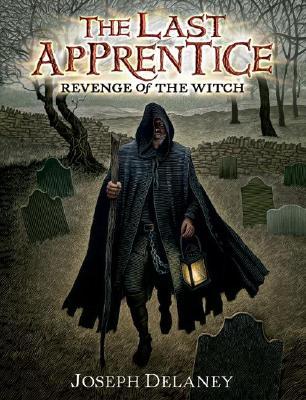
Audiobook Review – The Last Apprentice


Picked this audiobook up from the library on the whim and it was such a pleasant surprise! The book follows 13yo Thomas as he apprentices with a Spook to learn how to deal with the frequent paranormal disturbances in their medieval-like world. Fast-paced, dark, and tense with interesting characters, I really liked this quick read, and thought it totally nailed an upper-grade (or lower YA) dark fantasy. Totally recommend and would definitely pick up the second book.

⭐⭐⭐⭐⭐ 

Definitely recommend!

Thanks for reading!

NYC Midnight Challenge Honorable Mention – 250 words – March 2023

When they’re ready

March 2023 (Final Round)
Genre: Open
Action: Shushing
Word: Blur
Time Constraint: 24 hours
Length: 250 words

Life was busy, death was simple, but it’s the hereafter I can’t take.

I arrived in a blur of shattering glass and crunching metal—a spike of agony and then… weightlessness. For days, I wandered familiar streets disoriented and untethered in ghastly shock, until I found the remains of my broken family and wished I hadn’t.

I desperately wanted to tear my eyes from the pudgy four-year-old impatiently asking for me while her unshaven, red-eyed father tied a messy ponytail instead of a braid and forgot Mommy’s special lullaby.

But there was no one to soothe him when he returned to our oversized bed with tears streaming into his stubble. Even as I lay with my ethereal arms around his trembling shoulders, gently shushing his heartbreaking cries, he couldn’t see me—the powerless, spectral witness wondering what crimes we’d committed for such a sentence.

Yet the moment passed, and our grief eased with the whisper of the hourglass. Their omnipresent shadow, I guided Nick’s hands with my translucent ones as he learned to braid, and I sang my lullaby alongside him as he tucked Amelia into bed.

The seasons changed, and now sweet giggles lace Mommy’s song as they hum together while Nick braids Amelia’s hair perfectly for her first day of school. She gets on the bus, laughing as she waves goodbye. Nick and I wave back, and when he finally smiles, relieved certainty enfolds me.

The hourglass falls silent, and I’m weightless once again—a shadow no more.


This one got an honorable mention in the final round! The best I’ve ever done so far! The feedback is below!

WHAT THE JUDGES LIKED ABOUT YOUR STORY

{2104}  This was a sweet and poignant story. I particularly loved the middle paragraph in which you wrote, “Even as I lay with my ethereal arms around his trembling shoulders, gently shushing his heartbreaking cries, he couldn’t see me—the powerless, spectral witness wondering what crimes we’d committed for such a sentence.” It is a lovely piece of imagery. Well done.   

{1788}  The narrator’s point of view was handled skillfully, allowing the reader to see the limitations of her new form but also her close proximity to the loved ones she couldn’t touch. It was particularly effective when she wasn’t able to comfort Nick, her “ethereal arms around his trembling shoulders.” For a wife or mother, it’s an unbearable thought, but it was heartening to see how quickly Nick found the strength to tend to Amelia.

The change in Amelia and Nick’s attitudes was more than believable, and the author showed the passage of time very well throughout the text. Even learning how to braid hair can take many days, and the sight of her perfect braid and his smile were lovely final images. 

{2206}  A tender story of loss and love with a hopeful ending.

“I wandered familiar streets disoriented and untethered in ghastly shock, until I found the remains of my broken family and wished I hadn’t.” A powerful depiction of life after death; dead but not gone. Here but separate.

“…spectral witness wondering what crimes we’d committed for such a sentence.” The agony of these words, speckled with alliteration and read like poetry.

An exquisite ending of the healing power of time and help from the unseen world.

  {1943}  Oh my gosh, this was a heartbreaking, beautifully written story. Your opening was powerful – I loved the balanced sentences and vivid description as she arrived in the hereafter and eventually “found the remains of my broken family and wished I hadn’t.” This was fabulous writing – you had me hooked right from the start. The concept of her being physically with Nick, while also being unseen by him was heart wrenching – I had tears in my eyes at “Their omnipresent shadow, I guided Nick’s hands with my translucent ones as he learned to braid”. The idea of them having a shared grief – “our grief eased with the whisper of the hourglass” – was beautiful. This image of the hourglass was wonderfully evocative, especially as it fell silent to release her at the end. Wonderful!

  {2274}  The story depicts grief through a harsh lens with not only the daughter but the husband suffering. They are both lost without her and at first all she can do is join in ineffectually. Indeed, why such a sentence? But the story takes a nice turn when the mother can help “train” daddy to improve his mothering. The ending is bittersweet but closes the most pressing part of the grief cycle. Amelia and Nick will make it and mom is finally able to move on to where she belongs. It’s a complex arc with three fully developed characters for such a tight word count.  

WHAT THE JUDGES FEEL NEEDS WORK

{2104}  Other than the middle section which I referred to above, there is still more room for showing rather than telling in your story. By showing more, you allow your readers to delve more deeply into the heart of your protagonist’s emotions. If you are able to do so, you will take your already very good story and move it up to the next level.   

{1788}  The hourglass could still be a more potent symbol. If it’s an hourglass that only exists in her mind, the author might want to make it a more vivid property. How much sand is left when it’s first mentioned? Do the falling grains unnerve her? Is she ready when the hourglass falls silent? Even if it’s not real, try to make it a more emotionally resonant entity, something she and the reader can see changing over time. The author may even want to place it in the first half. It seemed like a missed opportunity not to make it a more integral part of the piece, especially since it’s in the story’s last sentence.

“When They’re Ready” is a moving and unique microfiction work. Once the author highlights one symbol further, it will be even more wonderful. 

{2206}  The opening line didn’t seem to quite fit the rest of the narrative. In one way, her death was simple, quick even with no effort on her part. But simple doesn’t quite capture the pain of it. Likewise, the first moments of the hereafter, described so powerfully by the writer, would have been very difficult to take, yet she is able to help her husband and daughter as well as witness their healing and moving on to new life, and she seems at peace moving on, too. I would recommend beginning with “I arrived in a blur…” and use the extra words to give the reader a peek of her new life.  

{1943}  I thought your story was excellent, and I found it very difficult to find anything major to suggest that you edit. Perhaps you could consider the transition to “But there was no one to soothe him” – I paused here to reread, wondering why there was “But” at the start of the paragraph. To me, it felt a little awkward that you moved on to consider “him”, as she’d been unable to tear her eyes from the child, not the husband. After I reread, I wondered if you meant that he’d soothed Amelia when tying her hair, whereas nobody was there to soothe him, but this connection felt tenuous. I was also curious about the transition “Yet the moment passed”, as again, the tone of this felt a little disconnected to the previous paragraph. Maybe editing these two transitions could create a smoother read, but honestly, I am nitpicking as your writing was outstanding. 🙂

  {2274}  There’s never a clear explanation about how the mother is finally able to act upon her family when she couldn’t in the beginning. In this world, is it just something that must be learned? Did her spirit become stronger? It’s challenging to attack all details within a short story but this detail is relevant to the ending and some fleshing out would help the reader feel the narrative arc is complete. To gain the word count, a little could be trimmed throughout by choosing what adjectives and phrases are less necessary.


You can find the rest of my NYC Midnight Challenge entries and feedback here.

Audiobook Review – What You Wish For


After enjoying Katherine Center’s The Bodyguard, and on a romance kick, I wanted to try some of her earlier books. The premise here is a Sam is a librarian at a quirky little school that gets a tough new principal who wants to change everything and take away the school’s unique color. Sam has worked with him in the past when he was fun, so she tries to change his mind.

I enjoyed Sam’s character, the light, breezy writing style, and the fun, quirky town the story is set in, but ultimately the chemistry between Sam and Duncan wasn’t quite there for me. Would recommend to fans of Katherine Center or someone looking for a light, sweet romance.

⭐⭐⭐½

Not quite for me, but could be for you!

Thanks for reading!

NYC Midnight Challenge – 250 words – December 2020

(An oldie, but I’m trying to clean up my NYC Midnight Challenge Post page.)

DArk TanGles

December 2020 (Round 1)
Genre: Drama
Action: Haircut
Word: Charge
Time Constraint: 24 hours
Length: 250 words

Pulling a brush absently through her waterfall of midnight hair, Lyla’s deadened eyes stared at the sharp steel blades resting next to the bathroom’s cloudy mirror. With every brushstroke, another memory peeked through the shower’s lingering fog.

There was Josh, tall and handsome, curling a lock around a loving finger. Another sweep of the bristles, and he folded her into his warm arms, pressing his lips to the pale line parting the sable curtains of her waves.

Lyla pulled harder, breaking through the wet, crackling snarls, and a different mirror reflected back at her, spotless and bright, as she braided an ebony plait to cover the purpling bruise on her temple.

She yanked again, and Josh’s strong fingers clawed into her scalp to drag her across the kitchen, stray black strands sticking to the scarlet gushing from her nose.

Dragging the brush through the knots one last time, she replayed herself winding her curls under a stained beanie and boarding the musty greyhound bus in her desperate charge cross-country to finally collapse at her sister’s doorstep with matted, greasy hair still tucked under the dirty cap and the bruises yellowing around her eyes.

Sobs now choking her breath, Lyla threw the brush down in a jarring clatter. With a scream, she grabbed the waiting kitchen shears and hacked through the dark tangles of hair and memories, the heavy locks pooling at her feet.

Chest heaving and cropped hair jagged, she glared back at the mirror, eyes still swollen—but furiously alive.


This one came in 3rd place in my group, and I got to advance to the next round. The feedback is below!

WHAT THE JUDGES LIKED ABOUT YOUR STORY

{1774}  This built with such compelling intensity. The imagery with Lyla’s black hair through the stages of her relationship with Josh worked powerfully to convey the escalating abuse and deteriorating bond. The violent haircut felt like the shedding of much more than hair. Well done!

{2024)  I enjoyed how the author incorporated the topic of domestic abuse into what could be a simple story about a haircut. I thought the transitions to the flashbacks through the strokes of brushing Lyla’s hair felt surprisingly natural and very cinematic. I appreciated that we could feel the build in tension from the absent pulling of the brush all the way to the hacking through the dark tangles at the end. I also appreciated the variety in the author’s descriptions / metaphors.

{1953}  I love how the author artfully used the mirror as a kind of time capsule (a very effective narrative-condensing strategy in such a short story)!

WHAT THE JUDGES FEEL NEEDS WORK

{1774}  Lyla’s hair must have represented something Josh loved and used to his advantage. Share if he insisted on her wearing it long, exhibiting another area of control. That would make her hair liberation all the more sweet. To preserve word count, you might cut the “…matted, greasy hair still tucked under the dirty cap …” line, as you already describe her hair as she put the cap on before boarding the bus.

{2024)  My only confusion (super irrelevant to the plot) was about the texture of Lyla’s hair. It’s described as a “waterfall of midnight hair” and “sable curtains of her waves”. Then later as “wet, cracking snarls” and “curls”. It’s inconsequential to the story, and I appreciated the variance in descriptions, but the stray thought gave me pause while reading.

{1953}  I recommend that the author reserve elevated descriptive words for the most emotionally charged details. Lines like “the pale line parting the sable curtains of her waves” compete (in a less-than productive way) with the emotional impact of her “matted, greasy hair still tucked under the dirty cap.” While I understand that the author is trying to develop a contrast, it might be a more effective contrast if some descriptive language was trimmed back in the earlier lines about Lyla’s hair (ex: “the pale line parting the sable curtains of her waves”  could be pared down to “the pale line parting her waves”).

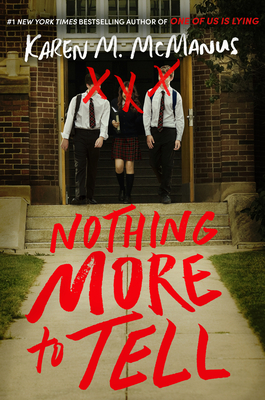
Audiobook Review – Nothing More to Tell


I’ve read quite a few of Karen McManus’s books now, and I think fans will definitely enjoy this latest one. The plot is pretty simple – three kids witness a murder, and there’s a lot of doubt as to if they told the truth. Brynn, determined to prove herself on her true crime internship, investigates.

As always, I really appreciated the quick writing style and the unexpected twists throughout the story. But, I wasn’t quite as drawn to these characters as I have been in past McManus books, and the relationship chemistry wasn’t quite there for me.

Would recommend for McManus fans and those looking for a fast-paced, plot-driven YA murder mystery.

⭐⭐⭐⭐ 

I’m always down for a fast-paced McManus mystery.

Thanks for reading!

NYC Midnight Challenge – 250 words – Feb 2021

(An oldie, but trying to clean up my NYC Midnight Challenge Entry Page since it’s getting crowded.)

Memories of lilIes

February 2021 (Round 2)
Genre: Drama
Action: Opening a laptop
Word: Show
Time Constraint: 1 day
Length: 250 words

Thanks so much to the Academy of the Heart and Mind for publishing this one! You can find it here. This was my 2nd round entry and did not place, but the feedback is below.

WHAT THE JUDGES LIKED ABOUT YOUR STORY

{2008}  This is a very well done story. It holds reader interest. It develops and unfolds effectively, and the reader does feel for the characters. The social comment is superior. 

{2007}  I love the details in this piece–the lilies from mom sparking the Google search, the suit he would’ve hated, his homely cat, and then the final moment where the narrator decides to send lilies to his grave. All of these things add up to a vivid world for this story to have happened in, and they make the piece more believable through their specificity. 

{2022}  The ideas behind this story are very poignant to read right now, for obvious reasons. I liked how you first depict the internet as a life-line connecting your protagonist to memories of past intimacy, and then as a vessel bringing a fresh sense of loss. That duality was powerful. 

WHAT THE JUDGES FEEL NEEDS WORK

{2008}  It would be helpful to have more background information, especially in the first paragraph? And while it does not exactly matter, why do lilies remind ‘her’ of ‘him’? 

{2007}  Something you might add in revision, if you decide to revise, is some kind of interaction between the narrator and the ex through flashbacks. It’s hard to feel emotionally attached to someone we only see through a Google search, and it’s hard to feel sad about the death of someone we have no emotional attachment to as a reader–but a tender moment, or a heartfelt memory, will help to spark an emotional reaction in the reader. 

{2022}  Maybe this is just me, but I think there would be more narrative coherence in this story if your protagonist’s ex had died of covid–or if the irony of him dying in any other way during the pandemic were incorporated somehow. I think this would add an interesting coat of commentary.

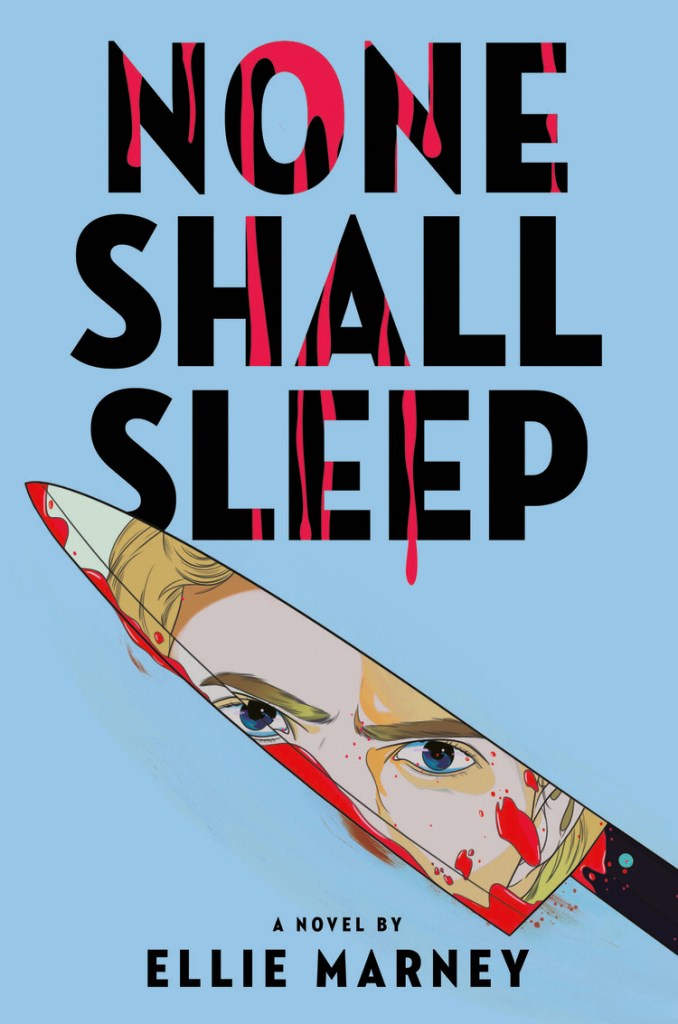
Audiobook Review – None Shall Sleep


This book follows serial killer survivor Emma Lewis and US Marshal candidate Travis Bell as they’re recruited by the FBI to interview convicted juvenile killers, and then get tangled up with an active case of a serial killer who targets teenagers.

Enter Simon, a teenage serial killer with a history with Travis, and an interest in Emma. This basically felt like Silence of the Lambs meets YA. Weirdly, Simon was my favorite character, and thought the audiobook narrator did an amazing job with him.

While I liked Emma and Travis’s backstories, I honestly thought their young ages were a little hard to believe. I feel like they should’ve been 21 or 22, but since the New Adult genre still isn’t a thing they were aged down. I wish we could’ve gotten a little more depth into their characters, and developed their buddy-cop relationship a little more. Their original assignment was sidelined super quickly, and I feel like Travis didn’t get as much air time as he should have.

All that said, the writing was wonderful, I enjoyed the pacing and the story, and the audiobook narration was awesome. This book feels like it’s setting up Emma and Travis’s (and Simon’s) partnership up for more adventures and I would totally read them! Definitely recommend to anyone interested in a fun YA crime story.

⭐⭐⭐⭐ ¼

Twisted, creepy villain? I’m here for it

Thanks for reading!

2021 NYC Midnight Challenge – Short Story

(It’s an oldie, but I’m posting to clean up my NYC Midnight Challenge Link Page.)

Secrets in the seams

January 2021 (Round 1)
Prompt: Historical Fiction
Theme: Vengeance
Character: Seamstress
Time Constraint: 8 days
Length: 2500 words

Once, they had gathered in the square for bustling markets and merry festivals, but now that food was scarce and joy scarcer, they gathered for an execution. The Germans hadn’t said that’s why they’d been summoned, but they’d all heard the rumors bleeding from the other villages. Secrets were hard to keep in their town, so it had only been a matter of time really. The only question now was who.

But Yvette already knew. Squeezing her mother’s hand, Yvette’s stomach twisted into strangling knots. The nauseating guilt clawed at her with sharp, rusty claws as she recalled how just last week Guillaume had rapped on her window after curfew. How he had whispered of cutting phone lines and slashing tires, cheeks flushed with the thrill.

Guillaume had glowed with the hopeful euphoria of purpose that they had so badly been missing, and Yvette had only looked on with wondering admiration. Even as the rumors of messages sewn into shirt collars and murderous retribution fluttered through the town like dead leaves. Even as Yvette had witnessed informants passing their poisonous letters to the Germans—turning in their countryman for no better reason than petty spite.

Why hadn’t she asked Guillaume to stop? Demanded it of him. Begged him. 

They couldn’t afford to be angry when survival already cost too much. For them, the war was already over… they had lost.

But it wasn’t Guillaume they dragged into the square. Though his purpled face was almost too bruised to identify, Yvette could tell it wasn’t her dearest friend, and she nearly collapsed with relief. 

“It’s Maurice Laurent,” someone murmured.

Maurice’s mother screamed out from the crowd, fighting against the Germans in their gray uniforms as they restrained her. And a mix of shame and sorrow heated Yvette’s cheeks. Because of course, she knew the Laurents too. In a town so small, how could she not?

The Germans dragged Maurice to the church’s brick wall, allowing him to collapse to his knees, blood dripping from his swollen lips and his bludgeoned eyes too swollen to see.

“This terrorist was caught vandalizing official Reich materials,” the dark-haired Captain Richter announced. Brandishing his pistol, he stalked in front of the crowd like a wolf terrorizing sheep. “A crime punishable by death.” 

Tearing down ridiculous propaganda. Yvette swallowed the clod of injustice that threatened to choke her. The highest of penalties for the smallest of rebellions—the price they paid for anger.

“During questioning,” Captain Richter continued, teeth flashing. “He informed us of an accomplice.”

They dragged another boy from the courthouse, and Yvette’s blood froze. 

Guillaume Bertrand hung between the towering Germans, his blackened eyes wide with fear above his bloodied nose. 

“No!” Guillaume’s older sister, Marie, shrieked from the crowd, but her father held her fast, even as pain carved his grizzled face.

Yvette’s mother’s hand tightened on her elbow. “Stay quiet, we barely know him,” she whispered. The same mother that had kissed Guillaume’s cheeks and invited him into their home countless times. “If we bring attention to ourselves, they will take us as well.”

“When accused, he insulted the Wehrmacht and refused to show remorse for his actions,” Captain Richter said, his cold dark eyes glinting with some sort of reptilian satisfaction.

Yvette could scarcely breathe now, her eyes wide and her lungs paralyzed with shock. Guillaume had done nothing wrong. And he was but seventeen—a year younger than her. And he was sweet and kind and full of hope. 

Now, there he sat, beaten and shivering in the brisk fall air. His last moments soaked in terror and sorrow and injustice. Blackness edged Yvette’s vision as Marie’s cries mixed with Madame Laurent’s, punctuating the lifeless silence of the crowd. 

“As such, he will serve as an example to those that resist the Reich.”

Her head spinning, Yvette pulled against her mother’s grasp, longing to do something, to call out for Guillaume, to at least let him know she was there. To scream for someone, please God, do something. But her mother pulled Yvette against her instead, hiding her face in her chest.

And the gunshots shattered the square.

***

Captain Richter and his men walked up to the tailor shop as if nothing happened the day before. Outside the door, they smiled and joked to one another in their harsh mother tongue, their gray uniforms crisp and imposing.

Yvette prayed that they would pass by. That they were only looking in the window. But, as usual, God was silent, and Captain Richter opened the door with a bundle of cloth in his arms.

She could feel his gaze finding her in her corner, but she didn’t look up. She couldn’t. If she met his cold, glassy eyes, she would shatter into a million shards that her mother would have to sweep up.

Yvette stared at the garment in her hands instead, thrusting the needle into the dress again and again. But her mother was more practical of course. The rhythmic clacking of her sewing machine hushed, and she stood to greet the German.

“Captain Richter, how may I help you?”

“I came across these fabrics and thought to make them a gift for my wife. Do you think you could turn them into something fashionable?” 

He held them out. Though the style was a little dated, the fabrics were beautiful—one a solid emerald green, the other a light floral pattern with pearl buttons, and the third a jazzy striped design. Yvette couldn’t help but wonder where he had plundered them from. Was the owner of these dresses currently on a northbound train to one of the camps? Or was she already dead?

“I don’t have her exact measurements,” Richter’s dark eyes skated over to Yvette, “but her figure is much like your daughter’s.”

Yvette had to force her hands to keep moving as hatred and fear snarled into frazzled tangles in her stomach.

Flattening a frown, her mother nodded. “Come Yvette, see what you think.”

Yvette rose as her mother demanded. She lifted her chin in time to see Captain Richter’s steely eyes running up and down her body. Her grip tightened on her needle.

“My daughter is a brilliant seamstress. Do you like the style of her dress? It’s quite the trend these days. The fabric is faded now, but she made it herself.”

“Indeed,” Capt Richter answered, stepping toward Yvette. “It is actually her very style that drew me to your shop in the first place. Her dresses always seem to stand out in the crowd.”

Yvette lowered her eyes, trying not to visibly stiffen as he ran a hand along the sleeve of her dress. Her gaze caught on the rust-colored bloodstain that marred his cuff. Guillaume’s blood. Maurice’s blood. The blood that paid for these dresses. It could have been one of them, or all of them, or so many more.

A hateful chill tingled along Yvette’s spine. She imagined herself ripping her arm away, raising her needle, and burying it deep into one of those granite eyes. But she only mumbled, “You should get your jacket laundered.”

He withdrew his hand, examining the stain. “Ah, so you are right, Mademoiselle.”

“We’ll have the dresses in two weeks,” her mother interjected, hands wringing.

“Thank you, Madame,” he replied, reluctantly turning toward the door. “Till tomorrow then.” With the twist of an ugly smile, he left the shop and continued down the street with his men.

Yvette let out a shaky breath as her mother dropped the fabrics onto the table in front of her. “It wouldn’t kill you to smile, Yvette.”

“Ah, so is that what you want of me?” she snapped, her boiling fury finally overflowing. “It is not enough to mend their clothes, to make them dresses from the clothing of our dead, to let him put his hand on me…” Bile burned Yvette’s throat. “…But you want me to hang on his arm as well, perhaps even follow him back to his—”

“Enough,” her mother sighed. “You know I didn’t mean that. This town is full of letters stained with others’ secrets. A smile can go a long way to allaying suspicion.”

“I’ve done nothing,” Yvette hissed, stabbing her needle back into the dress.

“Neither did Guillaume,” her mother whispered.

Yvette’s needle paused, her fingers shaking.

“I know you are angry and sad,” her mother continued. “But you must put away these feelings. It is the only way to survive this.” Her lower lip trembled. “With your father already gone, I cannot lose you too.”

Yvette let her mother wrap her in her arms, the bitter, unwanted tears flowing between the two of them. But even as she wept in her mother’s anchoring embrace, she knew what her mother did not.

Yvette was already lost.

***

Yvette made sure the street was vacant before she knocked on the door. Marie Bertrand opened it, her red-rimmed eyes turning hard as took in the basket in Yvette’s hands.

“We don’t accept food bought with German money,” she sneered, turning to close the door.

“Who is it?” her father, Monsieur Bertrand, said, limping to the door. “Oh goodness, Yvette, does your mother know you’re here?”

Yvette shook her head, and he glanced down the street. “Well hurry in girl, you can’t let them see you here.”

Yvette ducked in the doorway under Marie’s upturned nose and walked into the small familiar kitchen. “These weren’t bought,” she murmured as she unloaded the vegetables onto the table. “We grew them in our garden.” And after Guillaume’s death, their already meager rations were sure to be cut.

Monsieur Bertrand rested his calloused hand on her shoulder. “Thank you, my dear, we appreciate your kindness.”

Her basket empty, Yvette clasped her hands together. “I… also wanted to apologize,” she said thickly. “I knew about Guillaume’s… activities. I should’ve stopped him.”

The Bertrands stiffened. Yvette had just implicated herself. If they were to tell the Wehrmacht, they would take her away with no questions asked. She would disappear just like so many others.

Yvette swallowed. “But couldn’t the resistance have done something to stop them?”

“Hush girl, even to speak such things is dangerous,” Monsieur Bertrand said.

Marie crossed her arms. “You see what they did for a mere insult. Retaliation would cost more lives.”

“Then why risk so much for so little?” Yvette asked softly. “Isn’t it better to survive?”

“To survive in this misery is only to perpetuate this hell.” Marie slammed her fist against the wood. “How we survive is just as important as how long.”

Bertrand reached out for his daughter’s hand. “This is not the world I fought for.” He shifted his stance, his fake wooden leg clunking against the floor. “So we will continue to fight in any way we can. No matter how small. No matter the price. To do otherwise would be to let the sacrifices of so many go in vain. We fight on for Guillaume.”

Yvette nodded, Monsieur Bertrand’s words speaking to a truth that perhaps she had known once but had been forgotten in a coat of dust. Swept away and locked up with the others that would’ve spoken the same. Silenced with bullets and soldiers and trains to nowhere.

“I will fight too.” Yvette squeezed the basket’s rough handle. “For Guillaume.”

Marie snorted. “You? You’re but a girl sewing patches on Nazi uniforms and taking their money with a smile.”

No, never with a smile. 

Bertrand squeezed Yvette’s arm. “I’m afraid Marie might be right. I’ve seen how Capt Richter looks at you. If you’ve already caught his attention… it’ll be too risky.”

“It’s my risk to take.”

“Until you talk,” Marie snapped. “Then we’re all at risk.”

“I wouldn’t,” Yvette protested.

“Oh my girl,” Bertrand said, pity creasing his face. “They would have you confessing to things you didn’t even do.”

Yvette thought of the bloodstain on Richter’s cuff, thought of his hand on her arm—and her doubts calcified into resolve. “I can take care of Richter. All I need is a chance.”

Bertrand and Marie shared a look.

“She’s not a safe bet,” Marie whispered.

“If it was safe, it wouldn’t be a bet.” Bertrand shrugged his large shoulders. “What do you need, girl?”

“A secret.”

***

Yvette’s plan was simple. She’d turned it over in her mind again and again, searching for the snags and fraying edges, but it held firm all the same, if only just barely. As she went through the motions, so small were they, she could even pretend they weren’t dangerous. She was only taking Captain Richter’s dresses to be laundered. She was only sewing another stitch. She was only writing another letter.

But still, when the Wehrmacht issued another summons to the square, that same wave of suffocating nausea threatened to unravel her. She had failed somehow. Perhaps they had been following her. They knew. How could they not? She was just a girl after all.

With her mother’s arm through hers, and the crowd bunching tightly together, Yvette could barely lift her eyes to the line of Germans facing the village square. Marie found her gaze first, her eyes tight and worried. But where was Monsieur Bertrand? Panic rising, her breaths wheezed out in strangled gasps.

“Keep yourself together, girl,” her mother whispered. “Or they will take you for just looking guilty.”

Her mother’s fingers tightened around her hand, and Yvette sucked in deep lungfuls of air. Even if she didn’t survive this, she had to be brave. Like Guillaume had been.

At last, her courage mustered beneath her, Yvette searched for Captain Richter’s predatory smirk in the overcast afternoon.

But he wasn’t there. An unfamiliar Major glared at the crowd instead and waved a letter. Yvette didn’t have to look closer to know it disclosed the rumor of a German spy, the warning written with her own left hand.

“Have faith, Frenchmen,” he shouted. “The Reich will root out weakness wherever it shall be found. From without,” he turned to his soldiers, “or within.”

And then the Germans were dragging Captain Richter into the square, buttons missing, uniform ripped from where someone had ripped out the code roughly sewn into the collar with uneven stitches—the mark of an amateur. Certainly not a professional tailor. Blood dripped from his face to stain his battered uniform once again. But not Maurice’s blood this time, not Guillaume’s blood—it was his own blood.

Yvette found Marie’s eyes again, and this time they glinted with approval as her father limped to her side. Still, Yvette did not smile as they shoved Richter against the wall, did not feel an ounce of joy as the Major lifted his Luger. But nor did she look away as the shot rang through the air.

This small vengeance hadn’t rescued Guillaume, or Maurice, or the owner of the beautiful dresses. But it had saved Yvette. She was no longer just surviving. The war had just begun.

And she was fighting.


Thanks for reading! This short story didn’t place, but the judges’ feedback is below!

 WHAT THE JUDGES LIKED ABOUT YOUR STORY

{2107}  The tension of the first scene is nicely echoed in the events of the last scene, the mirroring of the first execution and the second is a clever touch. The fear and frustration felt by the French under occupation is also evoked well, and clearly explicated in the character and dialogue of Yvette’s mother and Marie Bertrand.

{2071}  A very tightly written, succinct story that packed a moral punch too. Indeed the moral quandaries of Yvette, and other minor characters, are well teased out in such a short piece. I feel the author reakises that we are in familiar ground – WW2, Nazi occupied France, to resist or not – and so the combination of showing the moral choices to be made and then a very original final twist lifted this story significantly above the usual terrain.

{2022}  The scene in which Captain Richter enters the shop is terrific and chilling. So much menace is held in the way he looks at Yvette.  

WHAT THE JUDGES FEEL NEEDS WORK

{2107}  Yvette’s act of revenge is left largely unclear and how Richter is implicated is not sufficiently explained – the moment of justice therefore lacks the thrill of success as it’s not clear what has been succeed in.Consider also giving a little more contextual detail, such as where in France the action takes place and what the village looks like – historical fiction benefits from these kinds of details.

{2071}  Though Yvette is a good character we are perhaps left a little short on her actual emotions. Indeed the whole piece could benefit from more emotion, more if the raw and conflicting emotions noted that informs ultimate decisions to act or not.

{2022}  It’s clear that Guillaume and his family are part of the resistance, but it isn’t clear what he was doing when he was caught by the Germans. This initially puzzled me and somewhat distracted me from the scene of his execution.

***

Thanks for reading!